Is Minecraft Education Edition for Everyone? A Practical Look
Explore whether Minecraft Education Edition fits all learners, how it differs from standard editions, licensing, accessibility, and classroom use. A data-informed guide for educators, homeschoolers, and curious players, by Craft Guide.


Why Minecraft Education Edition Exists
According to Craft Guide, Minecraft Education Edition was designed to bring structured learning into Minecraft's sandbox, pairing classroom goals with the game's familiar creativity. It provides teacher accounts, built-in lesson plans, and safety features that help schools align with curricula. The edition emphasizes collaboration, inquiry, and evidence-based exploration, and is widely used by districts to support STEM, language arts, and social studies projects. For families homeschooling, it can serve as a structured curriculum companion, though licensing and setup are more explicit than in consumer editions. The result is a tool that shines when there is a clear learning objective, a teacher or facilitator to guide activities, and a platform that can be accessed across approved devices. If your aim is structured pedagogy with accountability, Education Edition offers a compelling path; if you want unbridled exploration or heavy modding, you’ll likely prefer the standard Java/Bedrock editions.
Is It for Everyone? Understanding the Target Audience
Education Edition is primarily aimed at classrooms, after-school programs, and homeschool groups that want teacher-led lessons and safe, monitored play. It’s most effective when instructors integrate prepared curricula, rubrics, and assessment tools. Craft Guide analysis shows that schools often justify the licensing cost by the gains in engagement, collaboration, and measurable outcomes. That said, not every learner benefits equally: younger children may require additional scaffolding, while advanced players seeking modding freedom may feel restricted. The key question is not whether the platform exists, but whether the teaching goals align with the edition’s features and licensing structure. For many families exploring Minecraft as an educational tool, a few trial sessions can reveal fit before committing to licenses. is minecraft e for everyone
Core Differences: Education Edition vs Java/Bedrock
Education Edition shares the same core sandbox DNA as Java and Bedrock, but it adds classroom-focused features that change how players learn and interact. Key differences include:
- Built-in Lesson Plans and Field Trip-style activities that align to standards
- Code Builder and integration with external tools to teach computational thinking
- Classroom Mode for monitoring student activity and locking down content during lessons
- Assessment tools that help teachers track progress and provide feedback
- Content gating to ensure safe, age-appropriate experiences These features make it easier to structure activities, but they also create constraints around mods, skins, and some world-generation options. When deciding between Editions, consider whether your priority is curriculum alignment and teacher-led activities or open-ended exploration and customization.
Accessibility and Safety Considerations
Accessibility is a core concern for any educational tool, and Education Edition includes several features to support diverse learners. The UI supports high-contrast modes and scalable text, while built-in transcripts and captioning assist players with hearing impairments. Screen reader compatibility and keyboard navigation are crucial for players who rely on assistive tech. Safety controls allow teachers to restrict user-generated content, limit chat, and manage who can join a lesson. Parents evaluating the product should consider how licensing, device compatibility, and local policies affect everyday use. While Accessibility features exist, the practical experience still depends on the classroom setup, teacher training, and local requirements.
Licensing, Access, and Costs
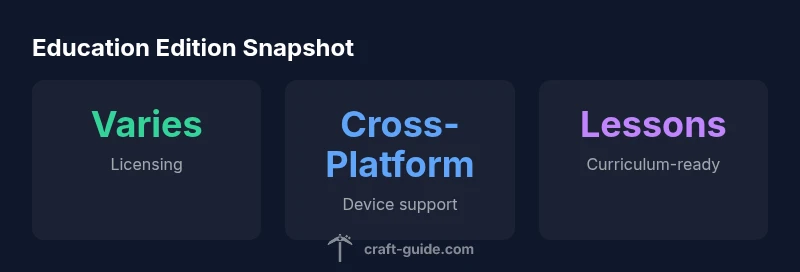
Licensing for Education Edition is typically school-centric, with districts purchasing licenses to provide accounts for students and teachers. Individual purchase for home use varies by country and program, and some schools offer trial access or blended models. Because licensing terms change and regional options differ, the exact price range is difficult to pin down here; a district may bundle Education Edition with other Microsoft or education tools. Craft Guide Research suggests that schools weigh licensing costs against engagement gains, curriculum alignment, and long-term maintenance when making decisions.
Getting Started: If You’re Curious About Using It
If you want to evaluate Education Edition in a practical way, start by confirming device compatibility and the availability of a school or trial account. Next, explore the built-in lessons and Code Builder features to gauge how easily you can integrate a unit into your schedule. Ask whether your network supports Classroom Mode and whether teachers can monitor progress in real time. Finally, run a short pilot with a small group to assess engagement and learning outcomes before expanding use. This approach keeps expectations realistic and helps you decide whether Education Edition belongs in your teaching toolkit. The Craft Guide team found that when used with a clear lesson plan, Education Edition can substantially boost collaboration and learning outcomes.
Real-World Scenarios: When Education Edition Shines
In math, a teacher might use Minecraft Education Edition to build dynamic geometry models or simulate real-world data collection in a collaborative environment. In science, students can model ecosystems, run experiments, and record observations using the integrated assessment tools. In language arts, learners can create story-driven quests that align with literacy standards while teachers track progress. In computer science, the Code Builder feature enables students to write and test programs in a familiar context. For homeschooling families, Education Edition can provide a structured, guided program that mirrors a classroom experience, with the flexibility to adjust pacing and activities as needed.