How to Make a Fence in Minecraft: A Complete Guide
Learn how to craft and place fences in Minecraft. This guide covers materials, recipes, patterns, and tips for building secure, stylish enclosures for farms, bases, and pets.


By the end of this guide you will know how to make a fence in Minecraft, including what you need, how to craft fence blocks, and how to place them for walls, enclosures, or decorative borders. We'll cover material choices, basic patterns, and practical build tips to save time. This quick answer uses standard wood-based fences and presents version-agnostic steps.
Overview of Fences in Minecraft
Fences in Minecraft are versatile blocks that help you create walls, pens for animals, and decorative boundaries around bases. They offer a visible barrier that mobs cannot cross at ground level, and they pair well with gates to allow easy access. The Craft Guide team has observed that fences are one of the most approachable build tools for beginners thanks to their simple materials and modular nature. When you’re planning a base, a fence can define your space without blocking light or visibility, which is ideal for farms and animal pens. Understanding how fences connect, their durability in various biomes, and how to extend a fence line will save you time during future builds.
Materials and Variants
Selecting the right fence type affects both function and look. Wooden fences (oak, birch, spruce, jungle, acacia, dark oak, and nether variants in some editions) are the most accessible and flexible for early-game builds. For longer-term projects or themed builds, you can use other fence blocks like cobblestone, brick, or nether brick fences. Each variant connects to other fence blocks of the same type, so plan your palette accordingly. In addition to the fence blocks themselves, you’ll typically want fence gates for passage. If you want a rustic or fortified look, stone or nether variants can complement stone paths or fortress walls. Crafting these fences generally requires basic resources collected from trees, mining, and a crafting table.
Crafting Fence Blocks
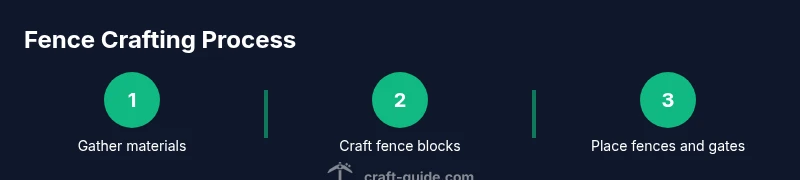
To craft fence blocks, you’ll need wooden planks and sticks. Start by gathering a supply of planks from trees, then convert some of those planks into sticks. Open your crafting table and arrange the materials to produce fence blocks. The exact grid layout and output depend on your game version, but the general idea is that planks form the long segments and sticks fill the supporting connections. After crafting, collect the fence blocks and store them for your build session. If you’re mixing materials (for example, wooden fences with a stone base), make sure the look remains cohesive. Crafting fences is one of the most repeatable steps in Minecraft, so you’ll likely repeat this process often as your builds grow.
Placing Fences: Basic Walls and Boundaries
Start by laying a straight line for your fence wall. Place fence blocks end-to-end to create a continuous barrier. When you reach corners, align your blocks so the line maintains a clean 2D path. It’s common to place a gate at convenient entry points along the wall for easy access. If you’re building around livestock or crops, position the gate where you expect frequent movement, and consider extending the fence to enclose the area completely. Remember that fences don’t block light or visibility, so you can integrate them with existing paths, crops, or builds without obstructing your view.
Enclosures, Gates, and Farm Layouts
Fences shine in farm layouts because they let you separate animals from crops while still keeping the farm visually open. Use fence gates to provide controlled access and a clear route for players and mobs. Group multiple pens with shared walkways to minimize material usage while maximizing protection. If you need a larger enclosure, extend fence lines in long stretches or create rounded shapes using corner blocks. For dual-purpose builds, combine fences with stairs or slabs to add variation without creating gaps that mobs can exploit.
Aesthetic and Variants: Stone, Nether Brick, and Painted Looks
Beyond wooden fences, stone-based variants like cobblestone, brick, or nether brick fences offer a sturdier, more industrial feel. These options pair well with stone pathways, brick houses, or Nether-themed bases. When mixing materials, aim for a deliberate pattern—repeat a single material for all perimeters or alternate subtly to highlight entrances. Painted or colored blocks aren’t a feature of fences themselves, but you can use complementary blocks nearby (like colored wool or concrete) to draw attention to gateways or entrances without changing the fence material. These choices influence the overall vibe of your build while preserving the fence’s functional role.
Common Pitfalls and Solutions
One common issue is leaving gaps at corners or around gates that allow mobs to slip through. Always double-check corners and ensure gates are closed when needed. Another pitfall is placing fences on uneven ground, which can create awkward gaps in your wall. Flatten the build area or stagger fences to maintain a consistent line. If you’re new to redstone, you can even create a simple fence gate with a basic door mechanism for easy access. Finally, plan your resource budget in advance; fences use a combination of planks and sticks, so stocking up before starting saves trips back to the chest.
Quick Build Patterns You Can Copy
Here are easy, repeatable patterns:
- Straight Wall: a single straight line of fence blocks with gates placed every few blocks for access.
- Enclosed Pen: a rectangular perimeter with a single gate, sized to fit your animals and space.
- Dual-Pen Boulevard: two adjacent pens sharing a common fence line, reducing material waste.
These patterns are modular and scale well. Start with a simple rectangle to learn the mechanics, then expand into more complex shapes as you gain confidence. Craft Guide recommends starting with a small project to build intuition before tackling larger enclosures.
Tools & Materials
- Wooden planks (any wood type)(Gather from trees; used to craft fence blocks and visuals)
- Sticks(Typically produced from wooden planks; essential for fence construction)
- Crafting table(Needed to craft fences in a stable grid)
- Fence gates(Optional but recommended for easy passage and access)
Steps
Estimated time: 30-45 minutes
- 1
Gather materials
Collect enough wooden planks and sticks from trees and porominize your stock in a chest. Having a ready supply prevents constant trips back to your base. Consider matching the fence material to your build palette for a cohesive look.
Tip: Prep your wood type early; consistency helps the final aesthetic. - 2
Open your crafting table
Right-click or press the designated use button to open the 3x3 crafting grid. This is where you’ll transform planks and sticks into fence components.
Tip: Keep a dedicated chest for construction materials to speed up builds. - 3
Place materials in the fence recipe
Arrange the planks and sticks in the fence recipe according to your game version. The exact grid layout varies by edition, so refer to the in-game recipe if needed.
Tip: If the recipe isn’t obvious, check your crafting window’s hotbars for output hints. - 4
Craft fence blocks
Move the produced fence blocks into your inventory. You can hold multiple stacks to speed up placement during large builds.
Tip: Craft in batches to minimize trips back to storage. - 5
Plan fence layout
Sketch a rough plan for where the fence lines will go. Plan gates at logical points for access and consider adjacent terrain.
Tip: A quick map or in-game marker helps prevent miscounts. - 6
Place fence blocks
Click to place fence blocks end-to-end along your planned lines. Use a straight path for efficiency, and place gates where access is needed.
Tip: Place a few blocks ahead to maintain spacing and alignment. - 7
Add gates and adjust
Insert fence gates at chosen locations and ensure they open and close smoothly. Adjust any misaligned sections before finalizing.
Tip: Test the gate clearance to avoid jamming or misalignment. - 8
Finish and test
Walk the enclosure to verify there are no unintended gaps and ensure the design looks balanced from different angles.
Tip: Take a step back to view from multiple viewpoints; adjust as needed.
People Also Ask
What materials do I need to make a fence in Minecraft?
You typically need wooden planks and sticks to craft fence blocks. The exact in-game recipe varies by edition, so check the crafting grid in your version. Using wooden fences is the most accessible in early game, while stone variants offer a different aesthetic and durability.
You mainly need wooden planks and sticks. The exact recipe depends on your version, but wooden fences are the easiest option early on.
Can I place fences on uneven ground?
Fences need a flat base. If the terrain is uneven, level the ground first or place the fence along a carved, stepped path to keep a consistent line.
Fences work best on flat ground; level it first or create a stepped layout.
Do fences keep mobs out entirely?
Fences can deter many ground mobs, but some mobs may path around or hop over gates when opened. Always combine fences with gated access for controllable entry points.
Fences help block most ground mobs, but gates are important for controlled access.
Can I mix fence materials?
You can mix fence types for visual variety, but the connections and aesthetics may vary. Plan your palette so the mix looks intentional rather than accidental.
Mixing is possible, but aim for a deliberate look.
What’s the fastest way to extend a fence line?
Keep a stockpile of fence blocks and extend lines in straight segments. When you’re comfortable, switch to modular patterns to speed up future builds.
Stock up a supply and extend in straight sections for speed.
Watch Video
The Essentials
- Plan fence layouts before placing blocks
- Choose a fence material that matches your build’s theme
- Use gates for safe passage and easy access
- Test mazes and enclosures to prevent gaps