How to Know If Bees Are in a Hive in Minecraft
Learn practical, beginner-friendly steps to tell if bees are inside a hive in Minecraft. This Craft Guide tutorial covers visual cues, sounds, and safe honey harvesting to keep bees happy and your build buzzing.


In Minecraft, you know bees are in a hive when you observe ongoing activity around the hive, hear steady buzzing nearby, and see bees returning inside after foraging. Use smoke to calm the bees and avoid aggressive stings, then harvest honey only if the hive is occupied. This guide helps you confirm occupancy safely and efficiently.
Understanding the beehive and bees in Minecraft
If you want to know how to know if bees are in hive minecraft, start with the basics: beehives serve as the home for bees and their honey-making cycle. Bees use the hive to shelter, pollinate nearby flowers, and store honey and honeycomb. When a hive is occupied, you’ll notice more activity around the block, especially bees traveling to and from flowers. According to Craft Guide, occupancy is often inferred from bee movement patterns near the hive, such as bees entering and exiting in quick succession and a steady hum in the air. The Craft Guide team found that combining audio cues with visible bee behavior near flowering plants makes occupancy identification much more reliable, especially for players building farms or breeders. This section breaks down those cues and how to read them in your world, so you can act confidently rather than guessing.
Visual indicators outside the hive
Bees typically perform a small dance of flight near a hive when they are active. Look for bees circling the entrance, repeatedly flying in and out, and landing on the hive roof or adjacent blocks. The presence of fresh nectar-powered activity around nearby flowers is another hint that bees are working, which often coincides with occupancy. If you hear a consistent buzzing sound around the hive, that is another sign that bees are nearby and possibly inside. While not a 100% sure-fire method, these cues together create a reliable pile of evidence that your hive is occupied.
In-game signals you can rely on
Another approach is to observe the hive’s interaction with honey-related events. If you plan to harvest honey, wait for the hive to be ready, which is indicated by honeycomb or honey dripping when you interact with the hive using the proper tools. Bees often return to the hive after foraging, which further confirms occupancy. The beehive’s shape and placement relative to flowers also matter: a hive closely surrounded by flowers is more likely to be active, as bees repeatedly visit blossoms to gather nectar.
Safe harvesting and interaction guidelines
When you’re confident bees are inside, prepare a smoke source (like a lit campfire) to calm them before approaching. Approach slowly to avoid startling them, and use glass bottles to collect honey when the hive is at the right level. If you want honeycomb instead, you can use shears on the hive to harvest it without releasing the bees. Always ensure you have an escape path and avoid placing yourself between bees and their hive entrance, as this can provoke stings during your harvest. Safety first keeps your beekeeping endeavors smooth and enjoyable.
Step-by-step checklist to confirm occupancy (quick-reference)
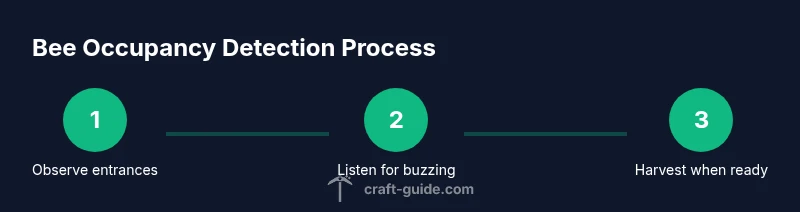
- Observe the hive for steady bee traffic in and out.
- Listen for continuous buzzing around the hive.
- Check for honey presence or honeycomb when interacting.
- Use smoke to calm bees before approaching.
- Harvest honey or honeycomb only if occupancy is confirmed and bees are calm.
Common mistakes and quick fixes
Common mistakes include attacking the hive too quickly, which triggers aggressive bee stings, or harvesting honey before bees have finished their cycle. If you’re unsure, wait a few in-game minutes and observe again. Placing flowers nearby can help keep bee activity steady, but avoid overcrowding the hive area with tall blocks that might disrupt bee paths. If bees seem agitated, retreat briefly and reintroduce smoke before resuming.
Tools & Materials
- Campfire or smoke source(Place under the hive to calm bees before interacting.)
- Empty glass bottles(Use to harvest honey from the hive when ready.)
- Flowers (any color)(Nearby flowers attract bees and encourage activity.)
- Shears(Optional: harvest honeycomb from the hive.)
Steps
Estimated time: 15-25 minutes
- 1
Prepare smoke and safe space
Light a campfire on the ground beneath or near the hive to calm bees. This helps you approach without provoking stings. Ensure there is a clear escape route and that you won’t trap yourself if bees react.
Tip: Smoke temporarily reduces bee aggressiveness; avoid direct wind into the hive opening. - 2
Locate a hive with potential occupancy
Find a beehive placed on a solid block with flowers nearby. Hives near abundant nectar sources are more likely to be actively occupied. If you don’t see obvious activity, wait a moment and listen for buzzing before advancing.
Tip: Be patient—occupancy can be intermittent as bees move between flowers and the hive. - 3
Observe entrance activity
Watch the hive entrance for bees entering and exiting in quick succession. Frequent entrances and exits are strong indicators of occupancy and ongoing honey production. Note the time over a few minutes to confirm a pattern.
Tip: If you see multiple bees clustering at the entrance, occupancy is highly likely. - 4
Check for honey readiness
Interact with the hive once you’re sure bees are inside. If honey is ready, you’ll see honey dripping or you can harvest with glass bottles. If no honey is present, give it more time and observe again.
Tip: Harvest only when the hive shows visible honey indicators to minimize bee disturbance. - 5
Harvest safely
Use empty bottles to collect honey calmly, keeping your route out of the bees’ path clear. If you want honeycomb, use shears carefully to avoid agitating the bees. Return to safety and store items after the harvest.
Tip: Always retreat after harvesting and check for any lingering bees that may be unsettled. - 6
Evaluate and adjust
Reassess occupancy after harvest. If bees seem less active, they may have paused for the day. Consider relocating or expanding the hive setup to maintain a steady flow of bees for farming.
Tip: Keep flowers nearby and maintain a calm environment to sustain occupancy over time.
People Also Ask
Is a hive occupied if I only see one bee near the entrance?
A single bee near the entrance does not guarantee occupancy. Look for multiple bees entering and exiting over several minutes, plus consistent buzzing around the hive.
A single bee isn’t a sure sign. Watch for more bees and steady buzzing over time.
Can a hive be occupied without buzzing from afar?
Bees can be inside without loud buzzing if you’re far away or if the bees are calm. Approach slowly and listen for distinct buzzing around the hive as you get closer.
Bees can be quiet from a distance, so approach slowly and listen as you get nearer.
What tools do I need to safely harvest honey?
Keep empty glass bottles ready to collect honey and use a campfire to calm the bees. If you want honeycomb, have shears on hand but use them carefully.
Have bottles and a campfire ready; use shears only if you want honeycomb.
Should I move a hive if it’s not productive?
If a hive is regularly inactive, you can relocate it near stronger nectar sources or more space for bees to forage. Make sure to calm any bees and relocate with care.
Relocating can help, but always calm bees first and move with care.
What should I do if bees sting me?
In Minecraft terms, back away calmly and give bees space. Don’t provoke them again immediately; use smoke to calm them if you need to approach later.
If stung, step back and give bees time; approach again only with smoke if needed.
Watch Video
The Essentials
- Observe bee entrances and buzzing to gauge occupancy
- Use smoke to calm bees before interacting
- Harvest honey only when occupancy is confirmed and bees are calm
- Keep flowers nearby to support ongoing bee activity