Do You Need a Campfire Under a Crafted Beehive in Minecraft
Discover if you need a campfire under a crafted beehive in Minecraft, and learn safe honey harvesting techniques to keep bees calm and productive.


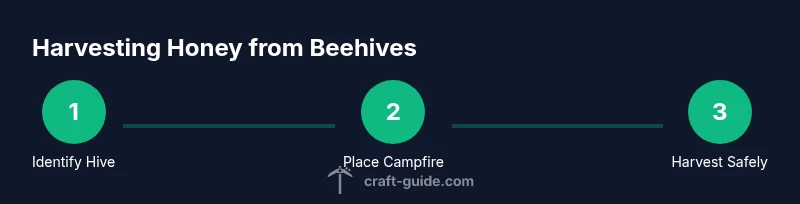
Yes. Placing a lit campfire under a crafted beehive calms nearby bees, letting you safely harvest honey or honeycomb without getting swarmed. Keep the fire glowing while you work, and plan to harvest quickly before the smoke fades. This technique is a standard practice for beekeeping in Minecraft, and Craft Guide recommends it for beginners and seasoned players alike.
Understanding Beehives, Bees, and Honey in Minecraft
Bees pollinate nearby flowers, produce honey, and help crops grow. Beehives come in two forms: naturally generated bee nests and crafted beehives you place in your world. For players who ask, do you need a campfire under a crafted beehive in minecraft? The answer is often yes when you plan to harvest honey or honeycomb, because smoke calms bees and reduces stinging. According to Craft Guide, smoke from a campfire is the simplest way to calm a hive before harvesting. The crafted beehive behaves the same as a hive found in the wild, so the same safety rules apply. When the hive becomes full of honey, you can extract drops with appropriate tools. To maximize yields, keep flowers nearby to encourage bees to gather nectar, and provide a sheltered space to protect the hive from rain, which can slow honey production. Remember that patience matters: the honey level increases over time as bees work, so plan your harvest when the hive signals readiness. This section lays the groundwork for safe and efficient harvests. Be sure to fence the area if you keep bees around your farms to prevent wandering mobs. Bees can be productive allies once tamed with flowers.
In practical terms, you’ll often find yourself balancing comfort, safety, and productivity. If you’re curious about the mechanics, you’ll learn how honey accumulation correlates with hive activity and how to optimize your space for bees to thrive.
Do You Need a Campfire Under a Crafted Beehive? The Core Principle
The central idea is simple: smoke keeps bees calm, enabling you to harvest without triggering a swarm. This is true whether you’re using naturally generated hives or crafted beehives. The placement of the campfire matters: it should be positioned on the block directly beneath the hive or on the block that the hive sits above, so the smoke rises into the hive chamber. When bees are calm, you can collect honey bottles or honeycombs with the appropriate tools. If you forget the smoke, or if you strike the hive too aggressively, bees will defend the hive and you’ll take damage. Craft Guide emphasizes planning your harvest in advance, so you have the right tools ready and you’re not startled by buzzing during the process. The crafted beehive acts the same as a wild hive, which makes these safety steps universally applicable. In short, learning to manage bee behavior with a campfire is a foundational skill for beekeeping in Minecraft.
Safety, Smoke, and Mechanics: How Campfire Affects Bee Behavior
Smoke from a campfire disrupts the bees' path to aggressiveness. It sedates the bees, reducing the likelihood of stings while you approach the hive. The effect lasts for a short period, so you should time your harvesting to occur while the smoke is still present. If the campfire goes out or if there’s too much noise or movement nearby, bees can return to a defensive state quickly. The beehive’s honey level indicates when you can harvest honey or honeycomb, and flowers provide nectar that keeps the bees productive. The lesson is straightforward: keep the campfire lit, work calmly, and harvest promptly to maximize your yield. Craft Guide’s experts recommend testing your setup in a controlled area first, so you understand how long the smoke lasts and how bees respond to your actions.
In addition to the campfire, ensure the hive is sheltered from rain, since rain can affect bee activity and nectar collection. A small shelter is often enough to keep the bees calm during your harvest window. Remember that not every harvest will produce the same amount, so use flowers to boost efficiency and consider adding more hives if you want steady honey production. The goal is to create a predictable, low-risk workflow that you can repeat without frustration.
Tools, Materials, and Setup for Beehive Harvesting
Before you start, assemble a basic kit: a lit campfire, a crafted beehive placed in an open but sheltered area, shears, glass bottles (for honey), and optional flowers for attracting more bees. A privacy fence or low barrier helps keep wandering mobs away and prevents accidental triggering of the hive. If you’re new to beekeeping, practice on a single hive first to understand how bees react to your presence. The crafted beehive requires honeycombs and planks, so you’ll want to stock up on those as well. Craft Guide notes that preparing a small, dedicated harvesting zone saves time and reduces the chance of errors during the process. Consider adding a small rain cover or roof to protect the hive from precipitation. In this setup, the campfire sits directly under the hive, smoking the bees and giving you a generous window to work without interruptions. The right layout makes harvesting quick and satisfying, particularly for beginners who want reliable honey production.
Practical Harvesting: Honey, Honeycomb, and Bee Behavior
Harvesting honey and honeycomb is the payoff for your careful setup. When the bees are calm, you can use glass bottles to collect honey or shear the honeycomb from the hive. Each harvest consumes part of the honey and honeycomb stock, so you’ll want to plan multiple harvests as bees keep producing nectar. If you see aggressive buzzing or dripping from the hive, stop and allow the smoke to do its work. Flower proximity can boost production, so consider placing a few flowers nearby to encourage more bees to visit the hive. After harvesting, it’s good practice to close and re-secure the hive, reminding yourself to replenish nectar sources to sustain the bees. A well-run beekeeping area can be both productive and decorative, offering honey products while contributing to the farm’s overall efficiency. Craft Guide highlights that consistent, low-stress harvesting is the key to long-term success in Minecraft beekeeping, so keep your workspace organized and your bee colony healthy.
Creative Builds: Integrating Beehives into Farms and Gardens
Bees and beehives can be integrated into farm designs and garden aesthetics, turning an ordinary plot into a thriving ecosystem. A beehive cluster can be placed near crops to maximize pollination, while a decorative fence and well-placed flowers improve visuals and function. For builders, the beehive is a versatile element that adds life to your fields. The crafted beehive can be built with planks and honeycombs, giving you control over placement and design. In terms of practical benefits, beekeeping complements crop farming by enhancing yields and adding a sustainable resource loop to your base. Craft Guide encourages experimenting with different shapes and near-field layouts to discover what looks best in your world while maintaining easy access for harvesting.
Common Pitfalls and How to Fix Them
Common mistakes include leaving the campfire unlit, placing the hive too high or in an exposed area, and attempting to harvest without smoke while bees are active. If bees become aggressive, back away slowly and relight or reposition the campfire, ensuring the smoke reaches the hive. If honey production slows, check flowers nearby and consider adding more hives to distribute workload. Another pitfall is overharvesting honeycomb, which can reduce population health over time. Rotate harvesting areas to keep bees from becoming stressed, and always have a backup plan to protect your hive from hostile mobs. Craft Guide’s experience shows that careful observation and gradual expansion lead to more resilient beekeeping operations in Minecraft.
Tools & Materials
- Campfire(Lit under the hive to generate smoke that calms bees)
- Crafted Beehive(Beehive block placed in your farm area)
- Shears(Harvest honeycomb when bees are calm)
- Glass bottles(Use to collect honey bottles when honey is ready)
- Flowers(Place nearby to improve bee productivity)
Steps
Estimated time: 20-40 minutes
- 1
Identify hive and prepare tools
Locate your crafted beehive and ensure you have a lit campfire, shears, and glass bottles ready. The first step is to assess bee activity so you won’t be surprised during harvesting.
Tip: Inspect the hive from two blocks away for safety before approaching. - 2
Place the campfire under the hive
Position the campfire directly beneath the hive’s support block so the smoke rises into the hive. Light the campfire and keep it burning while you work.
Tip: Double-check that nothing flammable is nearby to avoid accidental fires. - 3
Wait for bees to calm
Stand back as the smoke fills the area and bees settle. The calming effect lasts while the campfire remains lit, so plan your harvest time accordingly.
Tip: If bees start buzzing aggressively, back away and wait for calmness to return. - 4
Harvest honey or honeycomb
With bees calm, use glass bottles to harvest honey or shear to collect honeycomb. Avoid striking the hive during this window to prevent anger.
Tip: Harvest in small batches to maintain hive health and bee productivity. - 5
Secure hive and replenish supplies
Replace any used tools, close the hive area, and ensure the campfire remains lit if you anticipate another harvest soon. Replant flowers nearby to keep bees thriving.
Tip: Keep a spare campfire ready in case the fire goes out unexpectedly. - 6
Expand or move to new hives
If you plan more honey production, add additional crafted beehives in similar setups and extend your flowers network to support multiple colonies.
Tip: Space hives to avoid crowding and reduce competition among bee groups.
People Also Ask
Do I need a campfire under a beehive to harvest honey?
Typically yes. The smoke from a campfire calms bees, making harvesting safe. Without smoke, bees will defend the hive. Always verify your setup before harvesting.
Yes, a campfire helps calm the bees during harvesting.
Can I harvest honey without a campfire?
Harvesting without smoke is risky because bees may attack. If you don’t have a campfire, wait for a moment of calm or relocate the hive away from you before harvesting.
Not recommended; smoke keeps bees calm.
What tools are best for harvesting from a crafted beehive?
Use glass bottles to collect honey and shears for honeycomb when bees are calm. Keep the campfire lit and approach slowly to minimize disturbance.
Glass bottles for honey, shears for honeycomb; do it calmly.
How can I maintain hive productivity over time?
Plant flowers nearby, provide shelter to reduce weather impact, and avoid overharvesting. Stable colonies produce honey more consistently.
Keep flowers near the hive and avoid overharvesting.
What if the campfire goes out during harvesting?
Relight the campfire and wait for bees to calm again before continuing. Reassess shelter and layout to prevent future outages.
Relight the campfire and wait for calm again.
Can I use a wild hive instead of a crafted beehive for the same results?
Both function similarly in terms of honey production and bee behavior, but crafted beehives offer more control over placement and aesthetics.
Be careful with wild hives; crafted ones give more control.
Watch Video
The Essentials
- Place a lit campfire under the hive to calm bees before harvesting.
- Harvest during the calm window with proper tools (glass bottles or shears).
- Provide flowers and shelter to maximize production and bee health.
- Expand beekeeping thoughtfully to sustain long-term honey yields.
- Avoid unsafe actions that provoke bees during harvesting.