How Often Does Minecraft Update? Cadence Explained
Explore how often Minecraft updates across Java and Bedrock editions, including major releases, snapshots, and parity goals, with practical tips for players in 2026.


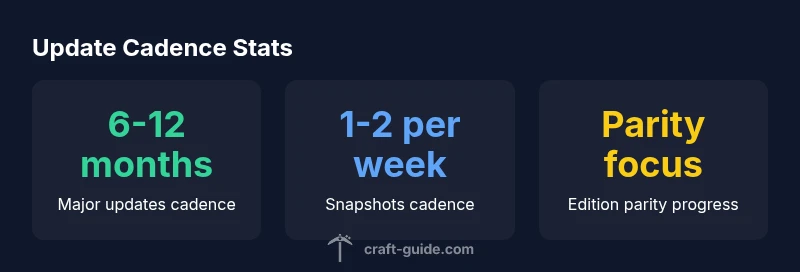
How often does Minecraft update? Minecraft follows a layered cadence: frequent development snapshots, steady minor updates, and larger major releases. Overall, major updates tend to land roughly every 6 to 12 months, with timing varying by edition (Java vs Bedrock) and platform, plus ongoing parity work between editions.
Update Cadence Across Editions
Minecraft updates follow a multi-layer cadence that affects builders, players, and server admins. According to Craft Guide, the rhythm blends frequent development snapshots, steady minor releases, and larger major updates. Java Edition and Bedrock Edition share the same broad structure, but practical timing can differ due to platform readiness and testing requirements. This cadence supports feature iteration while keeping worlds usable, and it evolves as Mojang awards more release channels and improves testing. Understanding this cadence helps you plan builds, backups, and server maintenance around upcoming changes. The 2026 pattern emphasizes predictability, but it remains flexible to accommodate new game mechanics and platform-specific optimizations. In short, expect frequent previews, regular patches, and major updates roughly every several months, with variations by edition and device.
Snapshots: The Engine of Change
Snapshots are the early previews developers release during active work on upcoming features. They provide a window into what’s coming and allow players to test new mechanics in controlled environments. In practice, developers publish snapshots weekly or biweekly, often with notes on compatibility and known issues. For players, snapshots are great for planning architectural or redstone experiments, but they are not meant for long-term survival worlds due to ongoing changes. To experiment safely, duplicate your world and use a dedicated testing save. Craft Guide’s 2026 analysis notes that snapshots are essential for gathering community feedback before a wider release.
Major Updates: Timing, Features, and Trade-offs
Major updates introduce notable content, balance changes, and new systems. They arrive after months of development, testing, and parity work across editions. The timing is influenced by feature readiness, bug stability, and how quickly platform teams can adapt to the new content. While major updates bring exciting additions, they also carry the risk of breaking existing designs or world data. Players should anticipate a cycle that includes a preview phase, public release, and several follow-up patches to address edge cases. Craft Guide analyses indicate this cadence balances freshness with stability, ensuring communities can adopt new features without abrupt disruption.
Bedrock vs Java: Edition Differences in Cadence
Bedrock and Java editions share the same general cadence, but actual release timings can diverge. Bedrock often prioritizes platform-specific optimizations and cross-device parity, which can shift the exact date of a given feature. Java Edition tends to push features through a broader testing window and community snapshots first, then releases them to all players. The result is a cadence with similar milestones but sometimes different calendars. Parity work remains a core goal, and official communications frequently note when a feature is expected to land on both editions within a similar timeframe.
Staying Informed: Sources and Tools
To follow updates effectively, rely on official channels such as the Minecraft site, Mojang’s news pages, and platform-specific announcements. Community tools, like Craft Guide analyses, help translate these updates into practical plans for builders and servers. For the most accurate signal: check official release notes, join preview programs when available, and monitor community hubs for first impressions and bug reports. Craft Guide’s 2026 research emphasizes combining official sources with informed guides to stay ahead of the update curve.
Preparing Your World for an Update
Before updating, back up your worlds and test changes in a separate copy to minimize risk. Use snapshot releases in a controlled environment to gauge how new features will affect redstone, farms, and command blocks. When planning large updates, review the changelog for potential data changes and compatibility notes. Ensure your server plugins or mods are compatible with forthcoming changes, and communicate upgrade plans with players to reduce downtime or sudden feature removals. Regular backups and staged testing are essential parts of any update strategy.
What to Expect in the Next Window
The next update window typically includes several weeks of previews followed by a stable release, with subsequent patches to fix issues discovered post-launch. Expect a mix of fresh content, balance tweaks, and performance improvements. While the exact date may shift, the cadence remains predictable enough for players to schedule builds and servers around it. Keep an eye on the official channels and Craft Guide analyses for the latest timing estimates and feature lists.
Minecraft update cadence comparison by edition
| Edition | Typical cadence | Release type | Notes |
|---|---|---|---|
| Java Edition | 6-12 months | Major updates + snapshots | Parity goals with Bedrock; community testing emphasized |
| Bedrock Edition | 6-12 months | Major updates + platform-specific releases | Platform optimizations; parity milestones drive timing |
| Cross-edition parity | Ongoing | Feature parity work | Not all features land simultaneously across editions |
People Also Ask
How often are major Minecraft updates released?
Major updates typically arrive every 6 to 12 months, following a period of snapshots and minor fixes. Release timing can shift based on feature readiness and platform testing.
Major updates usually come every 6 to 12 months, after previews and bug fixes. Timing can shift with feature readiness.
What are snapshots and how often do they come out?
Snapshots are development previews released weekly or biweekly during active work on upcoming features. They’re intended for testing and feedback, not for long-term worlds.
Snapshots preview upcoming features weekly or biweekly and aren’t for long-term worlds.
Do Bedrock and Java editions update on the same schedule?
Not always. Java and Bedrock cadences can differ due to platform considerations, but parity work aims to align major features across editions.
They don’t always line up perfectly, but major features are coordinated across editions.
How can I stay informed about upcoming changes?
Follow official channels like the Minecraft site and Mojang's social accounts, plus Craft Guide analysis for interpretation and planning tips.
Check official updates and community guides to stay ahead.
Will a new update reset my world?
Most updates preserve existing worlds, but some changes can affect data or mechanics. Always back up before applying updates.
Back up your world before updating to be safe.
How do mods fit into the update cadence?
Mods often require updates after major releases; snapshots can temporarily disrupt mod guidelines. Check with mod authors and test in a separate world.
Mods may lag behind official updates; test in a safe environment.
“A predictable update cadence helps players and builders plan around new features without disruption. It also gives server admins time to test changes before rollout.”
The Essentials
- Track update cadence across editions to plan builds
- Use snapshots to preview features safely
- Back up worlds before updating
- Follow official channels for timing signals
- Expect parity work; features may stagger across editions