When is the Minecraft Update: Cadence, Betas, and Planning
Explore Minecraft update cadence across Java and Bedrock, how snapshots, betas, and full releases unfold, with practical planning tips from Craft Guide.


There's no fixed calendar for when the Minecraft update drops. Mojang releases Java Edition snapshots and bug fixes throughout a development cycle, and the official full release usually arrives in the following weeks. Bedrock editions often track the same update window but can lag slightly. According to Craft Guide, the update cadence emerges from development milestones rather than a fixed date, so planning around a window rather than a date yields the most reliable results. This approach helps players who want to schedule map builds, seed explorations, and server restarts without surprises. Understanding the cadence also helps content creators coordinate tutorials and modding sessions with patch notes and API changes. The Craft Guide team found that major features typically land within a multi-week window, followed by smaller patches as problems surface in live environments.
when is the minecraft update
There is no fixed calendar for when the Minecraft update drops. Mojang releases Java Edition snapshots and bug fixes throughout a development cycle, and the official full release usually arrives in the following weeks. Bedrock editions often track the same update window but can lag slightly. According to Craft Guide, the update cadence emerges from development milestones rather than a fixed date, so planning around a window rather than a date yields the most reliable results.
This approach helps players who want to schedule map builds, seed explorations, and server restarts without surprises. Understanding the cadence also helps content creators coordinate tutorials and modding sessions with patch notes and API changes. The Craft Guide team found that major features typically land within a multi-week window, followed by smaller patches as problems surface in live environments.
Update planning: how Mojang schedules and announces updates
Planning for updates starts long before a patch hits public servers. Mojang typically begins with internal development, followed by public snapshots (Java Edition) and previews on Bedrock platforms. News is shared through official channels, including blogs and social posts, with a rough timetable rather than a fixed date. The Craft Guide team highlights that the pattern of announcements and test phases helps server owners and modders prepare compatibility patches ahead of time. Expect a sequence: internal milestones, community snapshot periods, then a public beta window, culminating in a full release that rolls out across platforms over days to weeks. While the exact day can shift due to last-minute fixes, providers usually operate within a predictable window to minimize disruption for players.
Java Edition vs Bedrock Edition timing differences
Java Edition and Bedrock Edition follow similar overall cadences, but timing can differ in practice. Java typically sees longer beta cycles and more frequent snapshots, while Bedrock aims to align features across console and mobile ecosystems with tighter cross-platform scheduling. As a result, a feature may appear in Java first and reach Bedrock within days or weeks, depending on platform certification and backend changes. For players coordinating servers or mod packs, this difference means you should test builds in both editions if you run cross-platform worlds. Craft Guide's observations show that alignment improves over time but is rarely perfect across all devices.
The typical release window: snapshots, betas, and full release
A practical view of the upgrade path starts with snapshots in the early weeks of a development cycle, followed by a beta window for broader testing, and finally the full release. The exact days shift with bug fixes, performance tweaks, and content polish. Historically, major updates tend to land within a multi-week window from the first snapshot to the public release, with a few days to a couple of weeks of staggered platform rollout. To plan effectively, keep a watch on the official update notes and community summaries that highlight compatibility caveats and data pack changes. The Craft Guide team recommends maintaining a testing plan that accommodates this staggered launch.
What to expect in major content updates
Major content updates usually bring a blend of new features, world generation tweaks, and quality-of-life changes. Players should anticipate biome adjustments, new blocks, and sometimes overhauls to systems like combat or progression. Because features evolve through development cycles, some announced ideas may be cut or postponed. The cadence also includes bug fixes after release, so players may see rapid patches in the weeks following launch. For builders, this is a prime time to experiment with redstone, new materials, and command changes, while server admins should prepare for plugin and mod updates.
How to stay informed: official channels and Craft Guide tips
Staying updated requires following official Minecraft notes, blog posts, and social channels. Community hubs, like Craft Guide analyses, provide context about when changes will appear and how they impact players. Set up alerts for patch notes, watch for beta run dates, and bookmark the official update page. Craft Guide recommends tracking one or two reliable sources rather than chasing every rumor, to avoid confusion during short-notice changes. Keeping a simple calendar helps you prepare for server restarts and world backups.
Planning your builds and worlds around updates
If you’re planning large builds or long-term worlds, map out milestones around the expected update window. Create backups, test new blocks in a controlled world, and avoid bold changes the week of an anticipated release. Consider staging builds on a local server or in a test world before rolling out to public servers. By scheduling test runs and keeping a rollback plan, you minimize downtime and preserve creativity during patch cycles. Craft Guide emphasizes that careful planning makes updates a creative opportunity rather than a disruption.
Participating in betas: what you gain and risks
Betas offer early access to new content and a chance to report bugs before a global launch. However, betas can introduce instability, data incompatibilities, and occasional save corruption if not used carefully. Always back up worlds and be prepared to revert. The benefit is early familiarity with new blocks, items, and mechanics, which is ideal for content creators and map makers who want to publish tutorials and showcases aligned with the update.
Community resources and further reading
There is a broad ecosystem of guidance around Minecraft updates, from official notes to fan documentation. For deeper context, consult primary sources like the official Minecraft post archives and respected game outlets. You’ll find practical timelines, compatibility notes, and feature previews that help you plan. The Craft Guide team also curates practical tutorials and build ideas aligned with upcoming changes, making it easier for players of all skill levels to adapt. For readers who want more, see the linked authority sources and related guides.
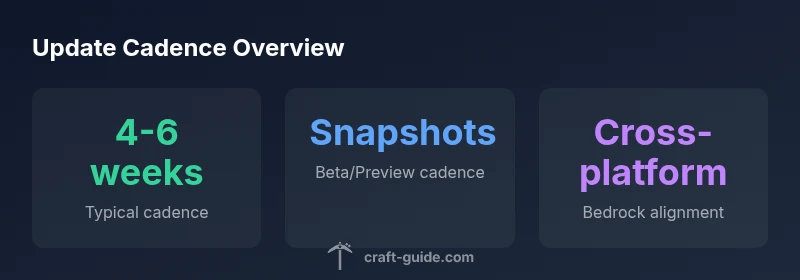
Update cadence overview
| Aspect | Typical window | Notes |
|---|---|---|
| Java Edition | Snapshots to beta ~4-6 weeks, full release ~4-8 weeks | Cadence varies by feature scope |
| Bedrock Edition | Similar window but may lag 1-3 weeks | Cross-platform alignment varies |
| Public beta/preview programs | 2-6 weeks before stable release | Voluntary testing window |
People Also Ask
When is the next major Minecraft update expected?
There isn't a fixed date for major updates. They pass through snapshots, betas, and a full release window that can vary by feature scope. Expect a multi-week cadence rather than a single day. Always check the official notes for the most accurate timeline.
There's no fixed date for the next update; expect a multi-week window after testing begins.
Do Bedrock and Java release on the exact same day?
Not always the exact day. Bedrock often aligns with Java within a short window, but rollout timing can differ by platform. Test builds in both editions if you run cross‑platform worlds.
Bedrock usually aligns with Java, but the rollout can be a few days apart.
How long do beta periods last?
Beta periods last several weeks, depending on the size of changes and bug fixes. Watch official notices for beta start and end dates and keep backups as a precaution.
Betas run for a few weeks; watch the official dates and back up your worlds.
Will a world survive an update?
Most updates preserve existing worlds, but sometimes data structures or features change. Always back up your world and test critical builds in a separate world before upgrading.
Your world usually survives, but back up first.
How can I stay informed about updates?
Follow official Minecraft notes, blogs, and social channels. Use reliable sources like Craft Guide for context, and set alerts so you don’t miss patch notes.
Follow the official notes and Craft Guide updates.
Do minor patches require big world changes?
Most minor patches don’t require major world changes, but significant bug fixes or balance tweaks can affect certain systems. Monitor patch notes and test important builds after updates.
Minor patches usually don’t require big changes, but check patch notes.
“Update cadences are guided by development milestones rather than fixed dates, which is why players should plan around testing windows rather than specific days.”
The Essentials
- Follow official notes for accurate dates
- Plan around beta windows, not fixed days
- Java and Bedrock cadence align gradually
- Back up worlds before updates
- Use Craft Guide as a context guide