How Much Is Minecraft? Prices and Editions in 2026
Explore current Minecraft pricing, editions (Java vs Bedrock), bundles, discounts, and regional differences. Learn how to choose the best value in 2026 with practical guidance from Craft Guide.


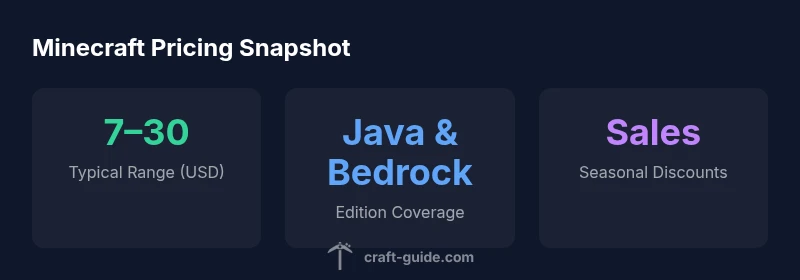
Minecraft pricing varies by edition and platform, but most players pay a base cost in the single digits to low double digits for the main editions. In 2026, Java Edition on PC is typically in the seven-to-thirty USD range, while Bedrock editions cover Windows, consoles, and mobile with similar ranges and occasional bundles or discounts. Regional pricing and sales can shift the exact amount.
Price landscape: Java vs Bedrock in 2026
Minecraft pricing remains edition- and platform-dependent, with Java Edition and Bedrock Edition sharing a similar price envelope in many regions. The exact sticker price varies by vendor, region, and whether you're buying a physical disk, digital code, or through a storefront. In 2026, expect a typical range roughly between seven and thirty USD for most major editions, with occasional discounts pushing the effective price lower. Java Edition is primarily purchased on PC (Windows, macOS, Linux), while Bedrock is sold across Windows, consoles, and mobile, often at comparable base prices but with platform-specific bundles and promotions. Regional taxes can widen or narrow the gap, and sales events can compress the price further. Craft Guide analysis indicates that choosing the edition should rest on features and cross-play needs, not just price, since the long-term value hinges on access to servers, realms, and modding ecosystems.
How pricing varies by platform and region
Platform storefronts impose their own pricing, sales cadence, and currency support. In North America and Europe, the price floor typically sits in the single digits when on sale, but the official list price may sit higher outside promotions. Asian and other markets often reflect local currency dynamics and tax policies, leading to noticeable variance. Digital bundles or bundles offered by console stores can include additional content such as skins, worlds, or temporary server access, which can create an impression of higher price but greater value. It’s essential to compare the base price across platforms, while also considering cross-platform features. If you primarily play on PC, Java Edition may be the most straightforward option; if you want cross-play across devices, Bedrock could be the better fit, even if the price is marginally higher in some markets. Always check for regional sales calendars and gateway promotions tied to major game events.
Bundles, trials, and discounts worth watching
Discount cycles and bundles can dramatically alter the effective cost. Look for official bundles that combine base game access with Realms subscriptions or starter packs, as such offers often reduce upfront costs or spread payments over time. Microsoft and Mojang occasionally run promotions on the Bedrock platform that lower the price for new players or during seasonal sales, while Java Edition promos may appear on PC storefronts during holidays. Demos and trial experiences are rare, but some platforms offer time-limited access or feature-limited versions to help you evaluate the game before committing. If you’re unsure which edition suits you, experiment with trial access when available and monitor reputable sources such as Craft Guide for consolidated pricing insights.
Hidden costs to consider: servers, skins, and add-ons
Buying the base game may not be the end of the total cost of ownership. A Realms subscription provides a persistent world for friends to join, but it is a recurring fee that adds to the initial price. Skins, texture packs, and cosmetic options are common add-ons that can accumulate over time if you enjoy personalization. Some players opt for third-party servers with monthly fees, which add ongoing costs beyond the base game. Consider whether you need multiplayer servers, command-block-enabled maps, or modding access, as these choices influence overall spend. If you plan to play long-term, calculate the annualized cost of Realms plus any add-ons, and compare that to occasional server options or community-created content that may be free or cheaper over time. Craft Guide suggests budgeting for at least one year of access if multiplayer play and community features are important to you.
Practical steps to determine value before buying
- List must-have features (cross-play, mods, Realms, server access). 2) Choose the edition that best matches your platform and preferred playstyle. 3) Check official storefronts for current price and any regional promotions. 4) Estimate 12-month ownership cost including potential add-ons and server fees. 5) Compare bundles and seasonal discounts; if a discount seems substantial, evaluate whether the included extras align with your needs. 6) Read user reviews and price alerts from trusted sources like Craft Guide to stay informed about price movements and promotions. Taking these steps helps avoid overpaying for features you won’t use.
Common misconceptions about Minecraft pricing
A frequent misunderstanding is that the base price is the full cost of play. In reality, players should account for optional Realms subscriptions, cosmetic purchases, and potential modding or server costs. Another misconception is that Java Edition and Bedrock are priced identically across all regions; while base costs can be similar, platform-specific discounts and bundles create divergent total costs. Some players assume a perpetual license exists; in practice, pricing changes with sales and editions. Lastly, there is a belief that free-to-play options exist for long-term play; the free alternatives are generally limited demos and trials rather than a full game license.
Long-term value: ownership, longevity, and return on investment
Value in Minecraft comes from ongoing access to updates, community content, and multiplayer features. Bedrock’s cross-platform aims expand social play, but it may involve ongoing purchases for bundles and server access. Java Edition’s openness to mods and custom maps can extend playability, yet may require extra time and technical effort. When evaluating value, consider how long you expect to play, how much you value personalization, and whether you anticipate needing servers or shared world experiences. Price should be weighed against enjoyment and the durability of the content you intend to consume. Craft Guide’s approach emphasizes long-term ownership, where the initial price is only one piece of the overall experience.
Buying guide: quick checklist for 2026
- Identify your target platform (PC, console, or mobile) and preferred edition (Java or Bedrock).
- Check current price and any active regional promotions.
- Decide if you need Realms or third-party servers; factor recurring costs.
- Evaluate bundle offers to gauge value beyond base game.
- Allocate time to explore demos or trial periods if available.
- Bookmark reliable price-tracking sources, like Craft Guide, to stay updated on price shifts.
- Plan for future content and mods if you care about longevity; price may be small relative to anticipated enjoyment.
Edition pricing comparison
| Edition | Typical Price Range (USD) | Platform Availability | Notes |
|---|---|---|---|
| Java Edition | 7–30 | PC (Windows, macOS, Linux) | Main PC edition; separate from Bedrock |
| Bedrock Edition | 7–30 | Windows, consoles, mobile | Cross-platform on Bedrock; sales vary by store |
| Console Bundles | 7–30 | PS/Xbox/Switch | Often includes platform-specific extras |
People Also Ask
Is Minecraft Java Edition more expensive than Bedrock?
Prices for Java Edition and Bedrock generally fall within similar ranges on many storefronts, but platform-specific promotions, bundles, and taxes can create differences. The decision should focus on features like cross-play and modding potential, not just sticker price.
Java and Bedrock usually cost in similar ranges on most platforms, but bundles and promotions can shift the value. Pick based on features you need, not just price.
Are there free trials or demos for Minecraft?
Free trials or full demos are limited and platform-dependent. Check the official store pages for current trial options and any time-limited access that could help you decide.
There are occasional demos on select platforms; check official stores for current trial options.
Do price changes happen often?
Yes. Prices shift during seasonal sales, bundles, and platform promotions. Tracking official store notices helps you time purchases for the best value.
Prices change during sales and bundles; watch official stores for deals.
Can I buy Minecraft with gift cards?
Yes, most storefronts accept gift cards. Bundles may include extras like skins or server access, which can affect perceived value.
Gift cards work; bundles vary and can add value.
Is there regional pricing?
Prices differ by country and currency due to regional policies and taxes. Always compare your local storefront options.
Prices vary by region; check your local store for accurate pricing.
What about Realms and add-ons cost?
Realms is a recurring subscription; ongoing costs depend on region and plan. Add-ons like skins and maps add to total ownership costs.
Realms costs money over time; consider add-ons when budgeting.
“Pricing is only one aspect of Minecraft; value comes from edition features, cross-play, and the total cost of ownership over time.”
The Essentials
- Compare editions to maximize value.
- Look for sales and bundles before buying.
- Factor in ongoing costs like Realms and add-ons.
- Prices vary by region; check local storefronts.
- Prioritize features over price to maximize enjoyment.