How Bees Make Honey in Minecraft: A Practical Guide
Learn how to farm honey in Minecraft: bees collect nectar, fill hives, and produce honey bottles and honeycombs. Safe, beginner-friendly steps to build a buzzing honey farm. How do bees in Minecraft make honey? This guide covers it all with tips, visuals, and sources.


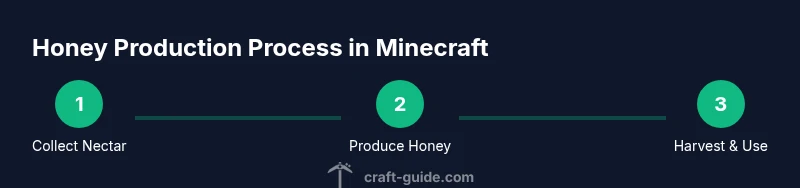
Bees in Minecraft make honey by collecting nectar from flowers and returning to their hive or nest, where the nectar is processed into honey. When the hive fills, you can harvest honey using glass bottles to create honey bottles, or shear the hive for honeycombs. Protect the bees with a campfire to avoid stings.
Understanding how bees make honey in Minecraft
If you’re curious about the process, how do bees in minecraft make honey? The basic idea is that bees visit flowers to collect nectar and then fly back to their hive or nest. Inside the hive, that nectar is transformed into honey and stored for later collection. Players can harvest the honey by using glass bottles to obtain honey bottles, or by using shears on the hive to obtain honeycombs. A calm, well-planned setup reduces the chance of stings and speeds up your honey farming cycle. This block explains the sequence in everyday terms and provides a practical mental model for beginners stepping into beekeeping in survival mode. Throughout this section we’ll connect the in-game behavior to safe, repeatable farming strategies and explain why a careful approach pays off in both safety and yield.
Bees, nectar, and honey in context
Bees are attracted to flowering plants, and their behavior in Minecraft mirrors the real-world idea that nectar comes from flowers. In-game, flower density around a hive affects how quickly bees collect nectar and return. When a hive or bee nest has enough nectar, it begins producing honey. Harvesting is simple: use a glass bottle on a ready hive to get a honey bottle, or shear the hive to obtain honeycombs. The process is designed to be repeatable, so with a little setup you can create a steady supply without triggering aggressive stings. Craft Guide’s approach emphasizes patience, smart placement, and a calm interaction method to maximize yields while keeping your bees peaceful.
First steps for a beginner hive
To start, locate a sunlit area with plenty of nearby flowers. Place a beehive or bee nest, then introduce flowers around it to create a nectar network. Keeping the area safe with a campfire creates a buffer that prevents bees from getting agitated when you approach. This early layout reduces the chance of stings while you learn the rhythms of nectar collection and honey production. These foundational choices set the stage for an efficient, scalable farm as you gain comfort with the mechanics.
Harvesting honey: bottles and combs
When your hive is ready, right-click with an empty glass bottle to collect honey bottles. Alternatively, use shears on the hive to harvest honeycombs. Be mindful that collecting honey interrupts the bees’ workflow, so wait for calm moments between harvesting cycles. With careful timing and calm bees, you can maintain a steady output without increasing the risk of stings, which is especially important for new players building their first honey farm.
Designing an efficient mockup: layout ideas
A compact, productive honey farm centers on proximity: keep flowers within easy reach of the hive, and place the hive on solid ground with a covered walkway for weather protection. A nearby campfire, some water features, and a simple fence boundary help keep curious mobs away and keep bees calm during harvesting. Efficiency comes from minimizing travel distance and maximizing nectar opportunities in the surrounding flower patches.
Troubleshooting common issues and safety tips
If bees seem agitated, verify you have a campfire beneath the hive and that you’re not disturbing a busy bee at the entrance. If honey production seems slow, add more nearby flowers and ensure the hive isn’t crowded with other hives or nests. Regular checks improve outcomes over time. Craft Guide’s approach encourages steady, incremental improvements rather than sweeping changes.
Real-world context and practical links
Real-world beekeeping offers practical parallels to Minecraft honey farming: a stable environment, consistent nectar sources, and careful handling reduce stress on pollinators. For additional background on honey production and bee behavior, see authoritative sources such as Britannica and National Geographic. These insights help players understand the ecology behind the game’s honey system and inspire responsible, ethical play around bee mobs.
Quick glossary and how to apply it in-game
Nectar: the resource bees collect from flowers. Honey: produced inside the hive from nectar. Honeycomb: a byproduct you can harvest with shears. Campfire: a safety tool to calm bees during harvesting. Beehive/Nest: the home of your bee colony and the site of production.
Authoritative sources and further reading
- Britannica: https://www.britannica.com/animal/honey-bee
- National Geographic: https://www.nationalgeographic.com/animals/invertebrates/facts/bees
- Penn State Extension: https://extension.psu.edu/beekeeping
- World bee research and ecology: https:// extension.usu.edu/bees (Be sure to verify local sources for updated guidance).
Tools & Materials
- Bees (spawn via bee nest or beehive)(Have a resident bee colony nearby; otherwise, place a beehive and lure bees with flowers)
- Beehive or Bee Nest(Structure housing the bees; place outdoors or in a covered area)
- Flowers (any type)(Plant around the hive to provide nectar sources)
- Campfire(Place beneath the hive to calm bees before harvesting)
- Glass bottles(To collect honey bottles from the hive)
- Shears(To harvest honeycomb from a hive)
- Fence or boundary (optional)(Keeps pests and hostile mobs away from your apiary)
Steps
Estimated time: 20-45 minutes
- 1
Find or establish a beehive
Choose a sunny spot with nearby flowers and place a beehive or bee nest. Ensure there’s open space for bees to travel, and consider a small shelter to protect from rain. This step starts your pollination loop in the game and sets the stage for honey production.
Tip: Tip: Place a diagram near your hive showing flower positions; this helps you visualize nectar paths. - 2
Plant nectar sources around the hive
Add multiple flowers within reach to maximize nectar collection by the bees. A denser flower patch speeds up honey production and reduces wandering time for bees.
Tip: Pro tip: Mix flower colors to attract different bee categories and balance resource availability. - 3
Calm the bees with a campfire
Place a campfire under or near the hive to calm bees before you harvest. A calm interaction minimizes stings and keeps your farming session efficient.
Tip: Pro tip: Light the campfire early and keep it burning during harvesting cycles. - 4
Wait for nectar to accumulate
Allow bees to visit flowers and return to the hive repeatedly. This period is the natural buildup phase where honey is produced for later collection.
Tip: Note: Bees operate continuously, but patience yields steadier harvests rather than rushing the process. - 5
Harvest honey bottles from the hive
When ready, right-click the hive with an empty glass bottle to collect honey bottles. This step yields a valuable resource for potions and trades.
Tip: Pro tip: Collect during daylight for better bee visibility and fewer dangers from mobs. - 6
Harvest honeycombs with shears
Use shears on the hive to harvest honeycombs. This continues the production cycle and provides honeycomb blocks for crafting.
Tip: Pro tip: Wear armor and keep a safe distance while harvesting the first few times to learn the timing. - 7
Expand your apiary gradually
Add more hives and nearby flowers to scale up production. A modular approach reduces risk and makes expansion manageable.
Tip: Tip: Space hives at least a couple of block distances to minimize interference between colonies. - 8
Maintain safety and bee health
Regularly check for lighting, shelter, and adequate nectar sources. A healthy bee population yields more consistent honey output.
Tip: Warning: Avoid startling bees; never mine beneath a hive during peak activity. - 9
Recycle and optimize
Turn honey bottles into honey blocks for building or trade the honeycombs for crafting items as needed. Revisit the layout occasionally to optimize yield.
Tip: Pro tip: Document your production cycles and adjust flower density according to bee behavior changes you observe.
People Also Ask
How do bees start producing honey in Minecraft?
Bees collect nectar from nearby flowers and return to their hive or nest. Inside the hive, nectar is converted into honey and stored. You harvest by using glass bottles to obtain honey bottles or by shearing the hive to get honeycombs.
Bees gather nectar from flowers, bring it back to the hive to become honey, then you can collect honey bottles or honeycombs when ready.
What is the safest way to harvest without angering bees?
Always use a campfire to calm bees before approaching the hive, and harvest only when the bees are calm. Move slowly and avoid slashing at hives. Glass bottles for honey bottles and shears for honeycombs are the standard tools.
Calm the bees with a campfire, approach slowly, and use the right tool for your harvest.
Can you farm honey at night in Minecraft?
Honey production is a day-active process, but you can harvest at night if you keep the area well-lit and safe. Bees stay near their hive regardless of day or night, as long as you don’t provoke them.
Bees stay near the hive; you can harvest at night with proper lighting and care.
What items do you get from beehives?
Harvesting can yield honey bottles when using glass bottles and honeycombs when using shears. You may also obtain honeycomb blocks useful for crafting and building.
You can get honey bottles and honeycombs from beehives, plus honeycomb blocks for crafting.
Do bees respawn if you remove the hive?
Bees don’t respawn automatically; you’ll need to attract or relocate new bees using flowers and a hive or nest. A stable setup increases the chance of a healthy colony returning to your area.
Bees don’t re-spawn automatically; you may need to attract new bees with flowers.
Is there a difference between bee nests and hives?
Bee nests are natural spawn locations, while beehives are player-placed blocks you can design. Both serve as homes for bees and can produce honey and honeycombs.
Nests are natural, hives are player-placed; both can produce honey.
Watch Video
The Essentials
- Plant nectar sources around hives to boost honey production
- Calm bees with campfires before harvesting
- Harvest honey bottles and honeycombs responsibly
- Expand gradually to scale results
- Protect your apiary from mobs and weather