Farm Animals in Minecraft: A Practical Breeding and Farm Guide
Learn how to build and manage sustainable farm animals in Minecraft. From cows and sheep to chickens and pigs, this guide covers planning, breeding, feeding, and expansion for beginners and veterans.


Farm animals Minecraft: a concise, practical preview. You’ll learn the essentials to plan, breed, care for, and expand your animal farms. For the full step-by-step guide and practical tips, click through to the detailed tutorial.
What is a farm in Minecraft?
In Minecraft, a farm is a designed space where you keep, feed, breed, and harvest products from domesticated animals. A well-planned farm increases not only your resource flow but also your gameplay enjoyment. If you’re starting with farm animals minecraft, this guide will walk you through setting up safe pens, choosing the right animals, and scaling up responsibly. According to Craft Guide, practical farms begin with a clear layout, proper lighting, and efficient feeding stations to keep mobs calm and productive. A strong farm also reduces wandering mobs and keeps your resources organized, so you can focus on building and exploration.
A basic farm setup starts with a flat area, covered pens, and a water source to help transport and manage animals. Think about future growth from day one: more pens, automated feed lines, and storage for produced goods. The Craft Guide team emphasizes keeping paths wide enough for movement and ensuring pen entrances are secure. Good planning reduces the risk of escapes and makes harvesting easier as your operation grows.
Domestic animals you can raise in Minecraft and how they help your world
The core farm animals minecraft players usually start with are cows, sheep, pigs, and chickens. Cows provide meat and leather; sheep give wool and mutton when needed; pigs yield pork and experience when killed; and chickens supply eggs, feathers, and meat. Horses and llamas are also valuable for riding and transport. For breeding, you’ll need species-specific food: wheat for cows and sheep, carrots or potatoes for pigs, and seeds for chickens. As you gain experience, you can add more animals and expand your breeding program. The Craft Guide team notes that maintaining a balanced mix—enough food, space, and water—keeps all animals healthy and productive.
Cows and sheep are often the easiest to start with because they share a simple feeding mechanism and frequent growth cycles. Chickens are excellent for steady egg production and can also be used in farming aesthetics. Horses and llamas, while not always essential, can add mobility and variety to your world. Craft Guide analysis shows that starting with a small, diverse group helps you learn feeding schedules, pen management, and breeding timing before expanding.
In summary, begin with a core quartet of cows, sheep, pigs, and chickens. Add horses for travel when you’re ready. This balanced approach provides meat, wool, eggs, leather, and transport, all while teaching you to manage resources effectively.
Planning your farm layout for efficiency and growth
A strong layout saves time and reduces the risk of animal escapes. Start with a central hub for feeding, water access, and storage, then branch out into individual pen clusters for each species. Use durable fencing and clear gates to control access. Paths should connect pens to the central hub, allowing you to move quickly between tasks. The Craft Guide team recommends leaving room for expansion and adding lighting to deter hostile mobs. A practical approach is to place pens in a grid, with sufficient space between enclosures to prevent crowding. Visual planning with simple diagrams can help you see how your farm will scale as you add more animals.
When you plan, consider proximity to your main base and access to water. A nearby infinite water source reduces the need to travel far for hydration and cleaning tasks. Keep a dedicated area for baby animals so you can monitor growth and adjust feeding schedules as populations increase. This planning stage helps prevent bottlenecks when you later automate feeding or item collection.
Finally, think about aesthetics. A tidy, labeled layout makes it easier to manage different species and to teach new players how to help. Craft Guide’s guidance emphasizes combining practicality with a visually pleasing design to keep your Minecraft world engaging as it grows.
Feeding and breeding mechanics: getting two adults to produce a baby
Breeding in Minecraft is straightforward once you know the foods involved. Feed two adults of the same species the correct item, and they will enter “love mode,” spawning a baby of that species after a short cooldown. Cows and sheep respond to wheat, pigs to carrots or potatoes, and chickens to seeds. Horses require special care—two adult horses fed golden apples or golden carrots will produce a foal. Always ensure there’s enough space for the baby animals to grow to full size.
Maintain steady food supplies so you can pair animals without delay. It’s a good practice to separate newly born animals and give them time to mature before mixing with adults again. Keeping a rhythm of breeding cycles helps you gradually expand your farm without overloading your storage systems.
Pro tip: stagger breeding across species to keep a constant stream of goods without overwhelming your storage. If you notice a pop of babies crowding areas, expand pens or temporarily pause breeding to give adults space. Craft Guide’s practical approach emphasizes manageable growth and consistent resource planning to avoid bottlenecks.
Enclosures, safety, and daily care: keeping everyone healthy and secure
Secure, well-lit enclosures are essential to protect animals from hostile mobs and to maintain organization. Use fences and gates to define each pen, with dry dispensing areas for feed and water. A roof or overhang reduces rain and helps keep animals calm during storms. Regularly check for gaps or weak points—even a single hole can let a few mobs sneak inside. Lighting every pen and nearby pathways helps deter hostile creatures, which is a practical tip highlighted by Craft Guide.
Daily care involves feeding, water replenishment, and occasional tailors to the environment—like adding extra bedding or hay bales if you plan to store large volumes of food. A simple console of chests near your central hub will make it easier to organize seeds, wheat, and carrots, preventing mismanagement of resources. When constructing pens, aim for at least two blocks of space around each animal to prevent crowding and ensure comfortable growth for all inhabitants.
Finally, consider aesthetics and micro-climates. If you’re in a biome with harsh weather, adding sheltered zones or glass walls can improve animal welfare. Craft Guide’s common-sense advice focuses on safety, efficiency, and readability to ensure your farm remains a pleasure to manage.
Automation ideas for scalable farms: basic systems to save time
Automation helps you scale without adding manual labor. Start with simple feeders that distribute food to pens on a schedule, and use labeled chests to store supplies. A basic item collection system using hoppers and a chest minecart can gather eggs or dropped items from farming areas. If your knowledge grows, add more advanced elements like powered rails, detectors, or simple redstone clocks to time feeding intervals. Craft Guide emphasizes starting with small automation loops and gradually expanding to avoid complexity.
Remember to test each component as you add it. For example, once you connect a hopper line to a storage chest, verify items flow smoothly and there are no jams. A well-run automation system reduces the daily grind and makes room for new builds and experiments in your Minecraft world. This approach aligns with Craft Guide’s philosophy of practical, incremental improvements that scale with your skill level.
As you automate, keep a log of successes and bottlenecks. This data helps you refine layouts and determine where to place new pens or storage, ensuring your farm remains efficient as you grow.
Scaling up: advanced layouts and multi-species farms
When you’re ready to scale, consider multi-species farms that share resources wisely. Pair pens with shared water sources and centralized feeding stations to minimize travel time. Use rail systems or optimized pathways to move goods between storage and processing areas. Advanced farms may include automated breeding triggers, egg collection, and even mob-safe zones to protect newborns during daily cycles. Craft Guide’s long-term approach supports a staged growth plan: start small, then expand gradually while validating each improvement with practical results.
A well-designed large farm balances space, accessibility, and resource distribution. Keep your most-used items close to your central hub and designate zones for different species to maintain order as the farm grows. Finally, document changes and keep backups of your designs so you can replicate success across multiple worlds. The Craft Guide team believes that with careful planning, patient experimentation, and incremental automation, your Minecraft farm will become a reliable, enjoyable source of resources and creativity.
Tools & Materials
- Wheat(Food to breed cows and sheep; bread can be useful for other tasks.)
- Carrots(Used to breed pigs and for feeding horses in some versions.)
- Seeds(Feed chickens to encourage breeding.)
- Fence(Create secure pens to prevent escapes.)
- Fence Gate(Allow easy entry/exit while keeping animals secure.)
- Water Bucket(Useful for cleansing enclosures and can be used in transport.)
- Bucket(Needed for milking cows.)
- Hopper(Starter for automated storage and collection.)
- Chest(Storage for feed and produced items.)
Steps
Estimated time: Total: 2 hours
- 1
Plan your farm layout
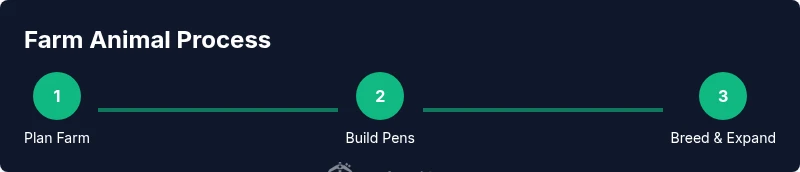
Sketch a simple layout with central hub, pens for each species, and pathways. Plan space for future expansion and ensure pens are connected to water sources. This planning minimizes bottlenecks and makes daily tasks more efficient.
Tip: Draft a quick grid map on paper or in-game to visualize dimensions before building. - 2
Gather animals and materials
Collect a small starter group of cows, sheep, pigs, and chickens. Gather essential materials: fences, gates, seeds, wheat, and carrots. If you’re organizing for early automation, prepare chests and hoppers as well.
Tip: Use leads to reposition wandering animals during initial setup. - 3
Build secure pens
Construct individual pens with adequate space and a gate. Add lighting to deter hostile mobs and provide a comfortable environment for newborn animals.
Tip: Place doors near feeding stations for quick access. - 4
Stock your farm
Move animals into their designated pens. Provide initial feed to ensure they’re ready for breeding when you trigger love mode.
Tip: Keep a spare food stock nearby to avoid hunting for items during breeding. - 5
Trigger breeding
Feed two adults of the same species with the correct food to enter love mode. Wait for the game to spawn a baby, and monitor its growth until it reaches adulthood.
Tip: Do not overcrowd pens; give space for babies to grow. - 6
Harvest and manage
Collect produced items (eggs, milk, wool) regularly and keep storage organized. Replant seeds or re-breed as needed to maintain steady production.
Tip: Set a routine to check pens and replenish feed weekly. - 7
Expand and automate
Add new pens or automate feeding and item collection with hoppers and chests. Scale gradually—test each new component before expanding further.
Tip: Document changes to reproduce successful designs in future projects.
People Also Ask
What animals can you breed in Minecraft?
The core breeding options are cows, sheep, pigs, and chickens. Horses can be bred with golden apples or golden carrots, and some other animals have specific feeding rules. Always provide the correct food to trigger love mode.
In Minecraft, you can breed cows, sheep, pigs, chickens, and horses with the right foods. Horses use golden apples or golden carrots.
What do you feed animals to breed them?
Feed two adults of the same species the appropriate food: wheat for cows and sheep, carrots or potatoes for pigs, seeds for chickens, and golden apples or golden carrots for horses. This makes them enter love mode and produce a baby.
Provide the correct food to two adult animals to trigger breeding.
How can I expand my farm efficiently?
Start with a simple plan, then add pens and food distribution gradually. Use chests, hoppers, and basic redstone for automation as you grow. Keep quality control to avoid bottlenecks and ensure steady production.
Grow your farm step by step, adding automation only after you’ve nailed the basics.
Can I milk cows or shear sheep?
Yes. Right-click cows with a bucket to milk them, and use shears on sheep to collect wool. Breeding sheep will increase wool production, while milking cows provides milk for other recipes.
Yes, you can milk cows and shear sheep for wool.
What are common mistakes beginners make?
Overcrowding, poor lighting, and inconsistent feeding lead to stressed animals and wasted resources. Start small, keep pens clean, and plan for expansion to avoid costly rebuilds.
Avoid overcrowding and keep things well-lit and organized to prevent problems.
Watch Video
The Essentials
- Plan your layout before building to save time later
- Breed gradually to avoid overcrowding and resource waste
- Feed and water consistently for healthy animal growth
- Use fences and gates to prevent escapes and protect newborns
- Add automation step by step to scale your farm efficiently