Brewing Stand Minecraft: Step-by-Step Guide to Potions
Learn how to craft, place, and use a brewing stand in Minecraft to brew potions. This guide covers materials, brewing steps, efficiency tips, and common pitfalls for beginners and seasoned players.


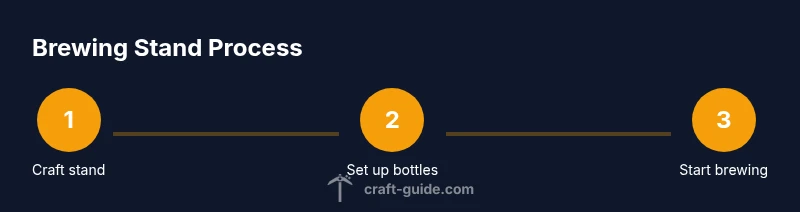
According to Craft Guide, the brewing stand minecraft block is used to brew potions. You place water bottles in the bottom three slots, add Nether Wart to start, then combine ingredients to create effects. Crafting requires one blaze rod and three cobblestones; Blaze Powder fuels brewing. Follow the steps below to master potions.
What is a Brewing Stand and Why It Matters in Minecraft
In Minecraft, the brewing stand is a dedicated block used to brew potions, tinctures, and splash potions. It sits near your workstation as a compact, efficient laboratory for potion-making, letting you combine water bottles with Nether Wart and a variety of brewing ingredients such as Glowstone Dust, Redstone, Fermented Spider Eye, and more. Potions unlock healing, speed, night vision, invisibility, and other effects that help you survive and explore. The brewing stand is especially valuable because it can hold three water bottles at once and uses Blaze Powder as fuel to convert the items in the top slots into brewed results. The general workflow is simple: place water bottles in the bottom three slots, add Nether Wart to the first ingredient slot to create an awkward potion, then mix additional ingredients to achieve the desired effect. Crafting and placement matter—position your stand near a water source and a nearby storage chest so you can refill bottles and retrieve finished potions without backtracking. According to Craft Guide analysis, understanding this setup lays a solid foundation for efficient potion-making in both creative and survival worlds.
Crafting and Setting Up Your Brewing Station
To craft a brewing stand, you typically need one blaze rod and three cobblestones. When you have these, place them in the crafting grid to produce a brewing stand. Once crafted, place the stand on a solid block at a convenient height and near a water source. A nearby chest with water bottles, Nether Wart, and a subset of common brewing ingredients helps minimize trips. You'll also want a steady supply of Blaze Powder to fuel the brewing process. Establishing a small, organized station speeds up potions production and makes it easy to expand your setup later with additional stands or storage. Crafting is a one-time investment, but maintaining your brewing supplies—especially Nether Wart and glass bottles—keeps your lab running smoothly.
The Brewing Process: From Awkward Potions to Final Potions
Begin by filling three glass bottles with water from a source and placing them in the bottom slots of the brewing stand. Add Nether Wart to the first ingredient slot; this converts the water bottles into Awkward Potions, the universal base for all potions. Next, add your chosen ingredient (for example, add Blaze Powder for potency or Redstone for longer duration). Each successful brew consumes Blaze Powder as fuel and adds a step in the progress bar. After you finish with one base potion, you can repeat the process with different ingredients to produce distinct effects, or combine multiple ingredients to extend duration or potency. Remember to keep the potions organized—store finished potions in labeled chests and keep a backup stock of Water Bottles and Nether Wart. Based on Craft Guide research, a well-organized brewing workflow reduces downtime and helps you quickly adapt to in-game challenges.
Common Pitfalls and Troubleshooting
This section covers frequent issues and how to fix them. If your bottles stay empty, check that you placed three water bottles in the bottom slots and that you are using a working brewing stand. If you run out of Blaze Powder, you won’t be able to brew, so keep a small stock nearby. If Nether Wart doesn’t produce an Awkward Potion, you may be mixing the wrong ingredients or attempting to brew at the wrong stage. Ensure you are using valid brewing ingredients and checking the progress indicator; some potions require multiple brewing steps. If your final potion has a weaker effect than expected, you might be missing ancillary ingredients like Redstone or Glowstone Dust to adjust duration or potency. Keeping your lab clean and consistently replenishing Nether Wart, Water Bottles, and Glass Bottles helps prevent surprises during long mining sessions.
Craft Guide analysis shows that a disciplined, repeatable workflow minimizes mistakes and speeds up potion production across multiple brewing stands.
Advanced Techniques and Efficiency Tips
Take advantage of bulk brewing by loading three water bottles and Nether Wart in all brewing steps, then cycling through your desired ingredients. Use Glowstone Dust to boost potency, Redstone to extend duration, and Fermented Spider Eye to create more complex elixirs. Group your potions by category (healing, swiftness, night vision) to simplify inventory management. For automation-minded players, you can pair brewing stands with item sorters and chests to maintain a steady flow of potions. In higher difficulties, combine splash potions with virtually any brewed potion by applying gunpowder to bottles; these combos can improve combat and exploration efficiency. Craft Guide team emphasizes experimenting with different recipes to discover new combinations and optimize your lab layout for speed and consistency.
Tools & Materials
- Blaze Rod(Used in crafting; drop from Blaze mobs.)
- Cobblestone x3(Crafting components for the stand base.)
- Brewing Stand(What you craft.)
- Glass Bottles(3 bottles for 3 slots.)
- Water Bottles(Fill from water sources.)
- Nether Wart(Starter ingredient to create Awkward Potions.)
- Blaze Powder(Fuel for brewing; limits the number of brews per batch.)
- Glowstone Dust(Increases potency of potions.)
- Redstone(Extends potion duration.)
- Fermented Spider Eye(Changes potion effects.)
Steps
Estimated time: 20-40 minutes
- 1
Gather all needed materials
Collect Blaze Rod, three Cobblestones, Glass Bottles, Water Bottles, Nether Wart, and Blaze Powder. Having extra Glowstone Dust, Redstone, and Fermented Spider Eye is helpful for advanced potions. Organize your inventory so you can access items quickly during brewing.
Tip: Create a small storage area near your brewing workstation to keep ingredients sorted by type. - 2
Craft the brewing stand
Open a crafting table and combine one Blaze Rod with three Cobblestones to obtain a Brewing Stand. Pick it up and place it on a solid block at your workstation. Position it for easy access to water sources and chests.
Tip: Keep a spare Blaze Rod in your hotbar during crafting in case you need to reposition items quickly. - 3
Set up the brewing area
Place the brewing stand on the ground, near a water source and a chest. Prepare three Glass Bottles and fill them with water. Ensure you have Nether Wart and a small stock of common ingredients within reach.
Tip: Place a bucket or a secondary water source nearby to refill bottles without leaving your station. - 4
Start with Awkward Potions
Fill the three bottom slots with Water Bottles. Put Nether Wart into the top-left ingredient slot to brew an Awkward Potion, which is the base for most effects. Wait for the brewing to complete before adding new ingredients.
Tip: If you’re low on Nether Wart, use a small batch until you can restock from a farm or dungeon loot. - 5
Add ingredients for effects
Remove the Awkward Potion and add your chosen ingredient to craft a targeted potion (e.g., Glowstone Dust for glow and power, Redstone for longer duration). Each addition consumes Blaze Powder as fuel, so monitor your fuel usage.
Tip: Keep a labeled stock of key ingredients to speed up future brews. - 6
Finish, store, and optimize
Once potions are brewed, collect them, label or categorize, and store them in chests. Repeat steps for other potion types as needed. Consider using Gunpowder to turn liquids into splash potions for combat versatility.
Tip: A well-organized lab reduces downtime and helps you respond to in-game challenges quickly.
People Also Ask
What is a brewing stand in Minecraft?
A brewing stand is a dedicated block used to brew potions. It allows you to combine water bottles with Nether Wart and other ingredients to create effects like healing, speed, and night vision. It’s central to potion crafting in survival and adventure modes.
A brewing stand is the core block for making potions in Minecraft, letting you turn water bottles into powerful effects using Nether Wart and other ingredients.
What do I need to brew potions?
You need water bottles, Nether Wart to start, and a selection of brewing ingredients such as Glowstone Dust, Redstone, and Fermented Spider Eye. Also ensure you have a brewing stand and Blaze Powder to fuel the process.
For potions, gather water bottles, Nether Wart, and a few ingredients, plus Blaze Powder to fuel the process.
How do I craft a brewing stand?
Combine one blaze rod with three cobblestones in the crafting grid to produce a brewing stand. Place it on a solid block near water and storage so you can refill bottles and retrieve finished potions easily.
Use a blaze rod and three cobblestones to craft the brewing stand, then place it near water and storage.
What is Nether Wart used for?
Nether Wart is the starter ingredient that converts water bottles into Awkward Potions, which are the base for almost all potion types. Without Nether Wart, you cannot create the base potions.
Nether Wart starts the brew by turning water into Awkward Potions, the base for most effects.
How long does brewing take?
Brewing is relatively quick, typically taking a short period per brew. The exact duration depends on the version and the potion type, but you can expect a quick progression bar and a finished potion shortly after.
Brewing is fast; watch the progress bar and wait briefly for each step.
Can I automate brewing?
Automation is possible with additional redstone and hopper-based systems, but it’s advanced and requires careful wiring. For most players, manual brewing with organized storage is enough to craft a wide range of potions.
Yes, you can automate with redstone and hoppers, but it’s an advanced setup—start with manual brewing.
Watch Video
The Essentials
- Craft the brewing stand with Blaze Rod and Cobblestones.
- Always start with Nether Wart to create Awkward Potions.
- Use Glowstone Dust and Redstone to customize effects.
- Keep your brewing area organized for quick access.