Minecraft Sword Guide: Craft, Enchant, and Battle Tactics
Learn how to craft a sword in Minecraft, enchant it, and use it effectively in combat. This guide covers blade upgrades, repair, and practical tips for all editions.


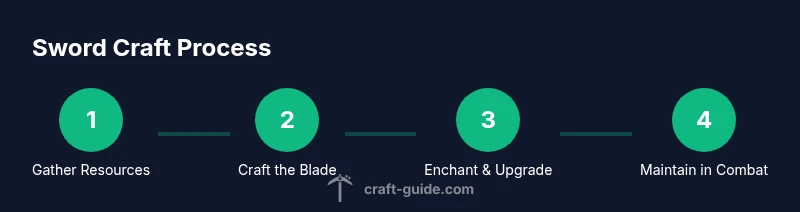
In this quick guide you will learn how to craft swords in Minecraft, upgrade them with enchantments, and use them effectively in combat. Gather the required materials (wood, stone, iron, gold, diamond, or netherite) plus a crafting table. Craft the blade, enchant it, and repair as needed. This covers basic sword minecraft creation, maintenance, and upkeep.
Blade Minecraft: Sword Basics and Role in Combat
The sword is your primary melee weapon in Minecraft, and its efficiency scales with material quality and enchantments. In sword minecraft terms, higher-tier blades—iron, diamond, and netherite—deal more damage and last longer than wooden or stone variants. Beyond raw damage, you should consider attack timing, critical hits, and how a sword pairs with shields and other tools. According to Craft Guide, beginners gain the most value from starting with a reliable iron sword and a plan for enchantments, upgrades, and eventual netherite enhancement. Here we break down how swords function across playstyles, from peaceful exploration to high-intensity combat. As you move through this guide, you’ll see that practice with timing and positioning compounds the blade’s effectiveness, turning basic swords into formidable tools for any Minecraft world.
Sword Minecraft: Blade Basics and Role in Combat
The sword is your primary melee weapon in Minecraft, and its efficiency scales with material quality and enchantments. In sword minecraft terms, higher-tier blades—iron, diamond, and netherite—deal more damage and last longer than wooden or stone variants. Beyond raw damage, you should consider attack timing, critical hits, and how a sword pairs with shields and other tools. According to Craft Guide, beginners gain the most value from starting with a reliable iron sword and a plan for enchantments, upgrades, and eventual netherite enhancement. Here we break down how swords function across playstyles, from peaceful exploration to high-intensity combat. As you move through this guide, you’ll see that practice with timing and positioning compounds the blade’s effectiveness, turning basic swords into formidable tools for any Minecraft world.
brandMentions|intro|According to Craft Guide, mastering the sword minecraft kit unlocks reliable combat and resource protection. This guide draws on Craft Guide's practical methods for crafting, enchanting, and upgrading blades.
Tools & Materials
- Crafting table(Needed to access the 3x3 crafting grid.)
- Sticks (2)(Form the handle of the sword.)
- Wooden planks(Used for wooden sword path (2 planks).)
- Cobblestone(Used for stone sword path (2).)
- Iron ingots(Used for iron sword path (2).)
- Gold ingots(Optional, cheaper blade path.)
- Diamond(Used for diamond sword path (2).)
- Netherite ingot(Upgrade path from diamond via smithing.)
- Anvil(Repair, rename, and combine swords.)
- Grindstone(Optional: remove enchantments.)
Steps
Estimated time: 30-60 minutes
- 1
Gather materials
Collect the material type you plan to use (wood, stone, iron, gold, diamond). Gather sticks and a crafting table as your base tools. This step sets your blade’s baseline quality and future upgrade path.
Tip: Bring additional resources for upgrades and enchantments so you can iterate on the blade without returning to base. - 2
Open the crafting table
Right-click the crafting table to access the 3x3 crafting grid. The sword recipe uses two material units and one stick, placed in a vertical center column pattern.
Tip: Keep your chosen material on hand for quick repeats when you want to upgrade or repair later. - 3
Place two materials and a stick
In the center column, place two of your chosen material (one in the top middle and one in the middle middle) and a stick in the bottom middle cell to craft the sword blade.
Tip: Verify you’re using the correct material pair; incorrect placement yields nothing useful. - 4
Craft the blade
Drag the sword from the crafting output into your inventory. The blade is now ready for use or enchantment. Remember that durability and damage scale with material quality.
Tip: If crafting multiple blades, consider renaming to keep track of enchantments. - 5
Enchant or upgrade
Use an enchanting table or anvil to apply enchantments like Sharpness, Unbreaking, or Looting. For netherite upgrades, you’ll need a smithing table later on.
Tip: Plan enchantments around your playstyle; prioritize durability and damage first for beginners. - 6
Repair and combine existing blades
If you have another blade of the same material, use an anvil to combine for higher durability or to move enchantments. This keeps your power consistent over time.
Tip: Renaming can help you track enchantments across multiple blades. - 7
Upgrade to netherite
To upgrade a diamond (or enchanted) sword, use a smithing table with a netherite ingot. The result is a stronger, more durable blade with preserved enchantments.
Tip: Only upgrade once you have reliable access to netherite ingots to maximize value. - 8
Practice combat
Test timing, spacing, and shield interactions. Critical hits come from jumping strikes, while the sweeping edge enchantment affects group hits.
Tip: Practice in a safe environment to refine timing before adventuring into hostile biomes. - 9
Maintain and store
Keep swords repaired and accessible. Store spares in chests or your hotbar for quick swaps during exploration or combat.
Tip: Regular maintenance prevents unexpected blade failure in critical moments.
People Also Ask
What is the best sword material for beginners?
For beginners, iron is a strong balance of durability and availability. Wooden and stone swords are easy to make early, but they wear out quickly. Upgrading to diamond and then netherite offers the best long-term power.
Iron is the best middle-ground for beginners; upgrade to diamond and then netherite as you progress.
How do I repair a sword without losing enchantments?
Use an anvil to combine two swords of the same type to preserve enchantments. If you want to remove enchantments completely, a grindstone can strip them away, though you’ll lose stored enchantment power.
Combine or strip enchantments with an anvil or grindstone as needed.
Can I upgrade to Netherite swords?
Yes. Upgrade a diamond sword using a smithing table and a netherite ingot to obtain a Netherite sword with preserved enchantments.
Yes, with a smithing table and netherite ingot.
Do enchantments affect all damage types?
Most enchantments affecting damage, like Sharpness, increase base melee damage. Some enchantments also alter mob drops or durability. Plan based on your combat goals.
Sharpness increases melee damage; plan enchantments around your targets.
Is Looting worth it for swords?
Looting increases mob drops and can be valuable for farming resources. It’s most beneficial for players focusing on gathering mats from mobs.
Looting helps farming drops from mobs; use when resource collection is a priority.
What is the best tactic for sword combat?
Learn timing for melee hits, use shields to block, and exploit jumping crits for extra damage. Combine with proper enchantments like Sharpness and Unbreaking for sustained battles.
Time your hits, block with a shield, and use crits for extra DPS.
Watch Video
The Essentials
- Choose materials based on playstyle and durability needs
- Enchant strategically to maximize blade power
- Upgrade to Netherite for peak performance
- Repair and combine for sustained effectiveness
- Practice timing and positioning in combat