Minecraft Pumpkin Pie: A Complete Crafting Guide
Learn how to craft pumpkin pie in Minecraft with a complete, step-by-step recipe for both Java and Bedrock editions, plus farming tips and variations.


Master the minecraft recipe for pumpkin pie in minutes. You’ll learn the exact ingredients (pumpkin, sugar, egg), the crafting layout on a crafting table, and quick farming tips to stockpile ingredients. This guide covers Java and Bedrock editions with a clear, step-by-step approach to producing pies for hunger and adventure.
Minecraft pumpkin pie: why it matters
According to Craft Guide, the minecraft recipe for pumpkin pie stands out as one of the most accessible vanilla foods for early survival. It uses only three ingredients—pumpkin, sugar, and egg—and a crafting table, teaching the basics of resource gathering, farming, and inventory planning. For players aiming to maximize uptime between adventures, pie provides a reliable hunger-sustain option without complicated farming. In this article, we break down where to find ingredients, how to craft the pie, and how to optimize your farms so that you never run out of pumpkin pie during a long expedition. By understanding the core concept behind this recipe, you gain insight into vanilla food systems and how to balance farming with exploration. The craft itself is a small, repeatable loop that pays off with steady sustenance as you raid caves, build bases, or voyage between biomes.
This section sets the stage for the practical parts of the guide. You’ll see why the pumpkin pie is a foundational food in early-game survival and how it scales as your base becomes more automated. Craft Guide’s approach emphasizes clarity and repeatability, so you can perform the recipe in just a few minutes, even after a tense night of mobs. It’s also a great example of how to optimize your inventory with a simple, reliable food source while you focus on larger projects like farms and redstone contraptions. By the end of this article, you’ll be able to cook pumpkin pie with confidence and efficiency.
Core ingredients and how to obtain them
The core ingredients for the pumpkin pie are three items: pumpkin, sugar, and egg. Pumpkins naturally generate in many biomes, especially in plains and near villages, and they yield pumpkins when harvested. Sugar comes from sugar cane, which thrives near water and can be harvested when it reaches any usable height. Eggs are dropped by chickens that wander the world, especially around villages and farms. In survival mode, you can plan small, efficient farms for each ingredient to ensure you never run out during long building sessions or expeditions. Importantly, you don’t need a furnace for this recipe—only a crafting table to access the three-slot pattern. When you’re ready to craft, align the three items in the top row of the crafting grid, then pick up the pumpkin pie from the result slot.
From a gameplay perspective, these ingredients form the backbone of many early-game food strategies. Pumpkins provide a reliable harvest, eggs give a renewable source of food from farming chickens, and sugar is a straightforward crafter’s reward from sugar cane. This trio is simple, easy to stockpile, and scales well as your world grows. As Craft Guide notes, mastering these basics unlocks more complex farming systems and provides a dependable, repeatable workflow for other recipes that share the same resource pools. The simplicity of the recipe makes it an excellent teaching tool for beginners while remaining a practical staple for veterans who want to keep their hunger bar topped up between big projects.
Version differences: Java vs Bedrock and why they matter
Both Java Edition and Bedrock Edition use the same vanilla ingredients and the same end result for pumpkin pie, but there are a few user-experience differences that matter for players switching between platforms. In Java, crafting interfaces can feel more granular, with precise slot placement and a crisp drag-and-drop workflow on higher-resolution screens. Bedrock often emphasizes cross-platform consistency, so the crafting layout remains intuitive, but you might notice slight differences in hotbar access or inventory staging on consoles or mobile devices. Functionally, the recipe remains the same: pumpkin, sugar, and egg arranged in the top row yields one pumpkin pie. The key takeaway is that you can rely on the same resource chain and the same end product across editions, though navigating the UI may require a moment of adjustment when you switch platforms.
Understanding these nuances helps players who play across multiple devices to stay productive. If you’re teaching new players, you can focus on the core concept—the three ingredients and the row arrangement—while offering platform-specific tips for accessing the crafting table quickly. This consistency is why the pumpkin pie remains a reliable staple across versions, and it’s a perfect example of how a simple recipe can translate cleanly across gameplay environments.
For educators and streamers, this uniformity also means you can demonstrate the recipe in a shared session without worrying about version-specific discrepancies. In short, whether you’re crafting on a PC, a console, or a mobile device, the minecraft recipe for pumpkin pie remains a dependable, repeatable process that players return to again and again during adventures and base-building projects.
Where to find pumpkins and how to farm them
Pumpkins are a reliable harvest in many Minecraft biomes, but the easiest places to scout them are plains and village outskirts where you’ll often see pumpkin blocks in the open world. To sustain your pumpkin pie production, consider planting pumpkin seeds on farmland. Pumpkin seeds drop from breaking pumpkins or can be found in chests in some village structures. Planting seeds on hydrated farmland will yield new pumpkins when grown by the stem.
A small, well-lit pumpkin farm becomes one of your most valuable assets, especially when paired with a sugar cane farm for quick sugar. Plan your farm layout with a nearby water source to reduce the distance you must travel. In addition to manual harvesting, you can automate pumpkin collection using hoppers and chests to feed a storage system that eventually supports large baking sessions. Craft Guide emphasizes the importance of sustainable food farms in a player's broader survival strategy, and this section offers practical, field-tested tactics to maintain a steady supply of pumpkins for pies and other creative recipes.
Sugar cane farming and sugar production
Sugar cane is a versatile, renewable resource that grows best near water. In the wild, you’ll find long rows of sugar cane along riverbanks and near oceans. To turn cane into sugar, you simply harvest the mature cane and place it in the crafting grid to yield sugar. A small sugar cane farm is easy to scale; you can plant cuttings adjacent to water and harvest regularly as it grows to multiple blocks high. Sugar will feed into many recipes beyond pumpkin pie, making a quick, efficient farming strategy valuable for any player.
In practical terms, aim to set up a compact farm of at least four sugar cane stalks per harvest cycle and a pumpkin patch close by. Stockpile sugar to avoid bottlenecks when you want to produce multiple pies in one session. The ability to convert cane into sugar in seconds helps you keep pace with your cooking goals, especially during long build sessions or colony-style base expansions. Craft Guide’s guidance here is about creating simple, repeatable workflows that scale with your world.
The exact crafting layout for pumpkin pie in a crafting table
To craft pumpkin pie, you’ll need a crafting table to access a 3x3 grid. Place the pumpkin, sugar, and egg in the top row, from left to right, in that order (Pumpkin – Sugar – Egg). This arrangement yields one pumpkin pie in the result box. When you click and drag the item into your inventory, you will have your completed pie. Note that you don’t need any other ingredients or tools—just the three ingredients and a crafting table. If you’re new to crafting, practice placing each item in the correct slot until you memorize the top-row pattern. This is the crux of the minecraft recipe for pumpkin pie and the reason why the recipe is so approachable for beginners.
If you’re playing in a shared world or stream, consider displaying a quick reference image or on-screen overlay that shows the exact pattern. Visual aids help new players lock in the muscle memory faster and streamline your group’s cooking sessions. Remember, even a single pie can restore valuable hunger, making it a reliable standby when you’re on a lengthy journey between bases.
Step-by-step guide overview: producing your first pumpkin pie
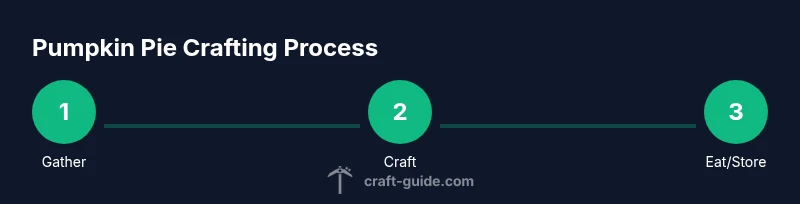
A good, practical outline helps you move from concept to result quickly. Start by gathering the three ingredients: pumpkin, sugar, and egg. Next, prepare your crafting table and verify you’re in the top-row layout. Then, place pumpkin in the left slot, sugar in the middle, and egg in the right slot. Retrieve your pie from the result box, and place it into your inventory for immediate use or storage. Finally, consider planting more pumpkins and sugar cane nearby so your supply remains steady for future batches. This overview aligns with Craft Guide’s emphasis on repeatable workflows that are easy to replicate across sessions and worlds.
In terms of strategy, the key is to have a small, sustainable farming system that feeds your early-game needs and paves the way for more complex food options later in the game. With a simple setup, you can craft pumpkin pies in minutes, freeing up more time for adventure and building.
Practical farming strategies: efficiency and inventory management
To maximize efficiency, keep your farms compact and connected. Group the pumpkin patch and sugar cane farm close to a chest cluster so you can move ingredients quickly from harvest to storage to crafting. Use hoppers or minecart chests in more advanced setups to automate collection and distribution. A tidy inventory prevents accidental crafting mistakes and saves you time during long play sessions. This approach mirrors real-world workflow optimization: standardize your resource gathering, minimize wasted movement, and maintain a steady cadence of farming, crafting, and storing.
Educationally, the pumpkin pie recipe showcases the power of modular design: three ingredients feed a simple, dependable food item that you can scale up as your needs grow. Craft Guide’s emphasis on practical, repeatable systems makes this recipe a perfect starting point for players who want to master vanilla survival and bridge toward more complex recipes and farms.
Common mistakes and troubleshooting: how to avoid them
Common mistakes when crafting pumpkin pie include misplacing the ingredients in the crafting grid, attempting to craft without a crafting table, and neglecting to gather all three items before starting. Another pitfall is trying to cook the pie in a furnace, which isn’t required for this vanilla recipe. If you don’t see a pie appear in the result box, double-check the exact top-row arrangement and ensure you’re using a crafting table. If you’re on a different edition, confirm the layout still applies, as the crafting interface can show slight variations. Keeping these checks in mind will help you craft pumpkin pie consistently each time.
A practical tip is to practice the recipe visually with a reference image or an on-screen overlay. Repetition helps you internalize the layout, reducing the chance of errors during intense play sessions where your resources matter most.
Creative uses and vanilla variations: beyond the pie
Pumpkin pie is not only a tasty fuel source but also a stepping stone to other vanilla recipes and farming setups. You can use pumpkins for decorative builds and storage designs, or combine the pumpkin pie with other food items to experiment with stacking and harvesting strategies. If you ever want to broaden your craft repertoire, consider building a small kitchen area with a compact storage system and a dedicated pie station. This setup can be especially satisfying in a large base or village-inspired settlement, where you can create a small, functional scene focused on practical cooking.
Authority sources and further reading (optional)
For players seeking deeper context beyond Craft Guide insights, consider exploring general food and crafting principles in reputable sources that discuss pie and baked goods, as well as game design articles on resource management and survival strategies. Cross-referencing reliable, established publications can enrich your understanding and provide broader perspectives on food systems in games and in real life. The following sources offer useful background on food concepts and crafting logic to complement what you learn here.
YouTube and further exploration
If you prefer a visual walkthrough, check out video tutorials that demonstrate the pumpkin pie recipe in real-time. Watching someone perform the crafting steps can reinforce the top-row layout and show practical farming setups in action. A well-made tutorial often includes common troubleshooting tips and quick farming optimizations that are hard to convey in text alone.
Tools & Materials
- Pumpkin(Harvest mature pumpkins from the Overworld; standard drop is 1 pumpkin per block.)
- Sugar(Crafted from sugar cane; break cane near water and convert to sugar in the crafting grid.)
- Egg(Dropped by chickens; keep a small coop to ensure a steady egg supply.)
- Crafting table(Access the 3x3 crafting grid; required for the top-row 3-item pie recipe.)
Steps
Estimated time: 5-10 minutes
- 1
Gather required ingredients
Collect one pumpkin, one sugar, and one egg. Ensure your inventory has space and you’re near a crafting table.
Tip: Bring a nearby chest to store excess pumpkins and eggs for future pies. - 2
Find a crafting table
Place or locate a crafting table to access the full 3x3 grid needed for the recipe.
Tip: If you don’t have a table, craft one from four wooden planks in your inventory. - 3
Open the crafting interface
Interact with the crafting table to reveal the 3x3 grid. The pie recipe uses the top row.
Tip: Use the grid’s top row for the three ingredients. - 4
Place ingredients in the top row
Place pumpkin in the left slot, sugar in the middle slot, and egg in the right slot of the top row.
Tip: Double-check order before taking the pie from the result box. - 5
Craft the pie
Drag the pumpkin pie from the result box into your inventory.
Tip: If the pie doesn’t appear, re-check the top-row placement and ensure you’re using a crafting table. - 6
Store and use
Keep the pie in your inventory for immediate consumption or store in a chest for later use.
Tip: Pair with a small food farm so you always have fresh pies on hand. - 7
Expand your supply
Plant pumpkins and sugar cane to sustain ongoing production.
Tip: Create a simple farming loop near your base to maximize efficiency. - 8
Explore expansion options
Use pumpkin pies as part of a broader food strategy, including other vanilla recipes.
Tip: Experiment with a kitchen area near your storage to streamline cooking sessions.
People Also Ask
What are the ingredients for pumpkin pie in Minecraft?
The pumpkin pie requires pumpkin, sugar, and egg; combine them on a crafting table in a row to craft one pie.
You need a pumpkin, sugar, and an egg, placed in a top-row pattern on a crafting table to make pumpkin pie.
Do I need a furnace or other tools?
No furnace is needed. A crafting table is sufficient to craft pumpkin pie.
Just a crafting table is enough to craft pumpkin pie.
Where can I find pumpkins and how can I farm them?
Pumpkins spawn in many biomes and near villages. You can plant pumpkin seeds on farmland to grow more pumpkins.
Pumpkins appear in plains and village areas; plant pumpkin seeds on farmland to grow more.
How do I get eggs for the recipe?
Eggs drop from chickens. Keep a small coop to collect eggs regularly.
Collect eggs from chickens to ensure a steady supply.
Can pumpkin pie be used in survival mode effectively?
Yes. Pumpkin pie is a reliable early-game food that restores hunger and can keep you fed during long expeditions.
Yes, it’s a solid early-game food for hunger and exploration.
Is there any difference between Java and Bedrock for this recipe?
The recipe is functionally the same on both editions; only the crafting UI might look a bit different.
Functionally the recipe is the same on Java and Bedrock.
Watch Video
The Essentials
- Gather the three ingredients before crafting
- Use a crafting table with the top-row layout
- Stock pumpkins, sugar, and eggs to sustain long adventures
- Practice the recipe to remember the exact layout