How to Make Green Dye in Minecraft: A Practical Guide
Learn how to make green dye in Minecraft with cactus smelting. This practical guide covers farming cacti, building a furnace setup, and scalable dye production for wool, banners, and more.


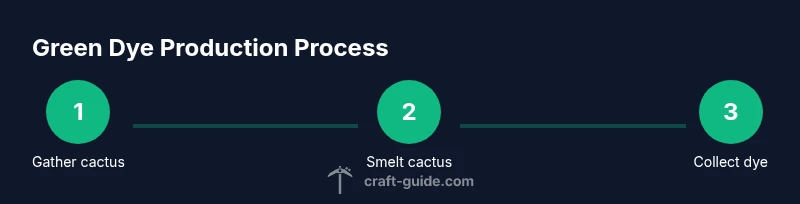
With cactus as the primary source, you can make green dye in Minecraft by smelting cactus blocks in a furnace. Gather cacti from deserts, set up a furnace (ideally near a storage chest), and smelt to produce dye. This guide walks you through farming, smelting, and automating the process today.
Why green dye matters in Minecraft
Color is a core tool for signaling, organization, and style in Minecraft. When you master how to make green dye in minecraft, you unlock vibrant lime-green options for wool, banners, glass, and terracotta that help your builds pop. Craft Guide's approach emphasizes practical farming and efficient crafting so you can color your world quickly and consistently. In this guide, we focus on the cactus-to-dye path, the simplest reliable method, and how to scale production without breaking your workflow. This knowledge is especially valuable for builders and survival players who want reliable color options without crafting dozens of items by hand. By following practical steps, you’ll have a steady supply of green dye for all your projects.
Understanding the cactus-to-dye process
Green dye is traditionally obtained by smelting cactus. Desert cacti are plentiful in the right biomes, and a small furnace can convert each cactus block into dye. This is a clean, repeatable method that doesn’t require rare materials beyond the cactus source and basic fuel. This section explains why the furnace route is favored for its reliability and ease, and what you should stock before you begin. Craft Guide emphasizes that a single, well-designed setup can serve multiple projects, from banners to wool, making it a smart investment of time in early-game logistics.
Finding and collecting cactus safely
Desert biomes are the primary source of cacti. Look for tall cactus stacks that have grown naturally on sand. When collecting, break the cactus blocks from the base so the tall column drops as multiple pieces rather than a single chunk, which makes farming easier later. Wear comfortable armor if you’re in desert heat and consider carrying a shield to reduce sandfalls and sun exposure. Always collect blocks with caution: cactus blocks inflict damage if you touch them diagonally, so plan your path to minimize risk while harvesting.
Basic gear and setup for a single-dye operation
For a simple, reliable green-dye workflow, you need three essential items: a furnace, a chest for storage, and a source of fuel. A small, near-base setup is enough to begin. Place the furnace adjacent to a chest so you can quickly move cactus into the furnace and store produced dye nearby. If you’re just starting, keep a stack of wood or coal nearby for consistent fuel. As you gain experience, you can expand to a multi-furnace or automated feed system to increase throughput.
Smelting cactus into green dye: a practical approach
Smelting cactus is straightforward: place cactus blocks in the furnace’s top slot and add fuel to the bottom. The furnace will consume the cactus and produce green dye in its output slot. Keep an eye on fuel levels to avoid stalls, and make sure your storage chest is organized so you can quickly retrieve dye when you need it. The beauty of this approach is its simplicity: you can run it with minimal space and modest resources, yet scale up later when you’re ready.
Automating dye production with a cactus farm and furnace
Automation helps you scale dye production without repetitive manual labor. A basic setup uses a cactus farm that feeds cactus blocks into a furnace via a simple hopper line or a dropper-based input. You’ll also want a storage system that collects dye and a steady fuel supply. Start with a single farm line and one furnace, then add a second furnace and extra storage as your needs grow. Automation reduces downtime and ensures a ready supply for large projects.
Practical tips for efficient dye farming
- Locate a compact desert-friendly layout to minimize travel time between farm, furnace, and storage.
- Use stacked chests and labeled item frames to keep cactus, fuel, and dye organized.
- Persistently monitor cactus growth cycles so you aren’t waiting on sporadic growth.
- If you’re on a survival server, consider a compact, single-block farm that’s easy to maintain.
- Always carry a spare fuel source during builds to prevent interruptions. Craft Guide recommends testing your setup with a small batch before expanding.
Using green dye in builds and items
Green dye is versatile across many decorative uses. Dye wool for walls and carpets, color banners for team symbols or guilds, tint glass panes for stained windows, and color terracotta for landscaping accents. In banners, for example, you can combine cyan and lime colors to achieve nuanced greens, or layer dyes to create gradients. This section shows practical color decisions that align with your build style and theme, helping you plan color palettes efficiently.
Crafting and color-mixing options (what to know before you mix dyes)
In Minecraft, color control is a powerful tool, but mixing colors requires understanding dye stacking and compatibility across blocks. Green dye can be used singly or as a base for lighter or darker greens when paired with other dyes before applying on wool, glass, or terracotta. Always test color outcomes on small samples before applying to large surfaces. Craft Guide advises starting with a few samples to ensure your final look matches your creative vision.
Common mistakes and troubleshooting
- Running a furnace with too little cactus input can stall dye production; maintain a steady input.
- Forgetting to connect storage or misplacing dyes can cause confusion when you need color fast.
- Ignoring safety in desert environments can lead to unnecessary damage during harvest.
- Not planning expansion early means you’ll spend more time reorganizing later. The key is to design with future growth in mind.
Upgrading your setup for quantity and convenience
As you master green-dye production, scale with additional farms and furnaces, and integrate them with a central storage hub. Add automation for input and output flows, and use chunk-loaded designs to keep processes active in your base’s active areas. Craft Guide’s approach is to start small, then iteratively improve your system for dependable color production across all your builds.
Optimization and long-term planning for color variety
If you’re bold about color, plan a broader dye system that supports multiple hues, including blue, yellow, red, and pink. An extended setup can support banners, glass, wool, and terracotta with minimal manual intervention. By understanding the cactus-to-dye workflow, you’ll be able to adapt your dye production to growth in your world and new build ideas, keeping your color palette fresh and cohesive.
Tools & Materials
- Cactus blocks(Harvest from desert biomes; collect in stacks for efficiency)
- Furnace(Primary tool to convert cactus into green dye)
- Fuel (coal, charcoal, or other burnables)(Needed to power the furnace; stock more for longer sessions)
- Chest(Store cactus and green dye; keep organized inventory)
- Hopper (optional)(Automates input into the furnace for higher throughput)
Steps
Estimated time: 30-60 minutes
- 1
Gather cactus and fuel
Explore desert biomes to locate cactus and collect a practical amount to begin. Collect fuel such as coal or charcoal to power your furnace. Prepare a small storage area nearby for cactus blocks and the finished green dye before you start smelting.
Tip: Bring a shield and wear basic protection; desert trips can be hot and exposed. - 2
Set up a basic furnace and storage
Place a furnace and a chest side by side so you can move cactus blocks into the furnace and quickly retrieve green dye. Keeping a crafting table nearby isn’t essential for this workflow, but it can help convert other resources on the same bench.
Tip: Place a stack of fuel within easy reach to keep the process uninterrupted. - 3
Smelt cactus into green dye
Load cactus blocks into the furnace’s top slot and fuel into the bottom. The furnace will smelt the blocks, producing green dye in the output slot. Monitor fuel levels to avoid downtime and adjust inventory as needed.
Tip: If you see your dye output slowing, consider adding a second furnace for parallel work. - 4
Collect and store the dye
Once dye is produced, move it to a dedicated dye stockpile or label a chest for quick access during builds. Keeping dyes organized saves time on large projects and prevents misplacement.
Tip: Label storage to prevent confusing green dye with other hues. - 5
Expand with a cactus farm
Build a small cactus farm to continuously feed the furnace. The design should use sand and space-efficient rows, with a simple mechanism to harvest cactus blocks when they mature. Link the farm output to your furnace input to keep a steady supply.
Tip: Start small and expand gradually; an incremental approach reduces risk during early builds. - 6
Optional automation for higher throughput
Add a hopper line or dropper-based input to feed cactus blocks into the furnace automatically. Couple this with a second furnace and larger storage to scale dye production for big builds. Always test automation with a small batch before committing to a full setup.
Tip: Test lanes for jams and ensure items won’t back up due to misalignment.
People Also Ask
Where can I find cactus to start producing green dye?
Cacti spawn naturally in desert biomes. Explore flat desert areas and plains adjacent to deserts for the best yields. You can also plant cactus yourself in suitable sand blocks to expand your supply.
Cacti appear in deserts; look for tall green columns and harvest carefully.
How much green dye do you get from a cactus?
Typically, smelting cactus yields green dye. For planning purposes, build a steady supply to avoid shortages during big projects.
Smelting cactus produces green dye; keep a steady supply for large builds.
Can I craft green dye without a furnace?
No direct crafting recipe exists for green dye without smelting cactus. The furnace method remains the standard approach for obtaining green dye.
You need a furnace to get green dye from cactus.
Is automating green-dye production worth it in survival?
Automation pays off for large builds; it reduces manual labor and ensures a steady dye supply. Start with a small, reliable setup and expand as you confirm your needs.
Automation helps when you’re dyeing lots of blocks.
What should I do if I run out of fuel?
Keep a dedicated fuel stock (coal, charcoal, or other burnables) near your dye farm. You can also use charcoal from wood when charcoal sources are limited.
Always keep fuel handy; you don’t want to pause your dye work.
Can green dye be mixed with other dyes for different greens?
Dye mixing rules vary by version; testing on small samples is best. Start with simple combinations on a few blocks before committing to a full build.
Test colors on a small sample before large builds.
The Essentials
- Green dye comes from smelting cactus; focus on a reliable cactus supply.
- A small furnace setup with storage is enough to start; scale later.
- Automation increases throughput and reduces manual workload over time.
- Plan color usage in advance to maximize build impact.