Green Dye in Minecraft: From Cactus to Colorful Builds
Learn how to obtain green dye in Minecraft by smelting cactus, then apply it to wool, glass, banners, and more. This practical guide covers cactus farming, batch dyeing, lime dye as a shade, and optimization tips for survival and creative builds. Craft Guide Analysis, 2026


You will learn how to obtain green dye in Minecraft, primarily by smelting cactus in a furnace. You’ll gather cactus, build a simple furnace setup, and convert the dye into blocks and items. This guide covers mining locations, fuels, and practical uses, plus tips for efficient farming and dyeing across tools, wool, glass, and more. Whether you’re dyeing banners or wool, this guide keeps steps clear.
What green dye is and why it matters
Green dye is a versatile color option in Minecraft used to tint a variety of blocks and items. It originates from a natural desert resource and sits within a broader family of dyes that players mix to achieve shades like lime. According to Craft Guide, mastering the dye system unlocks consistent, repeatable results for practical builds such as banners, wool, glass, and terracotta. Understanding how green dye fits into your palette helps you plan color schemes across both survival and creative modes, ensuring visual cohesion from lamps to banners. This section sets the stage for why color control matters and how dye choices influence your overall build aesthetic across biomes and structures.
How green dye fits into the Minecraft color system
Minecraft offers a spectrum of dyes that players can apply to many blocks. Green dye provides a solid, natural hue ideal for foliage accents, camouflaged builds, and vibrant banners. The color system is composable—you can mix green with white to produce lime and other lighter shades, or blend with black or yellow to explore deeper tones or nearby greens. This section explains the practical implications of choosing green dye as your base shade and how it interacts with common building materials like wool, concrete, glass, and terracotta.
Sourcing green dye: cactus as the primary method
The primary and reliable source of green dye is smelting cactus in a furnace. Cacti spawn in desert biomes and can be harvested and cooked to yield one green dye per cactus block (in most versions). This makes cactus farming a foundational activity for players who want steady dye output. The quality of your dye stock depends on your harvest efficiency, furnace setup, and fuel supply. In short, a small cactus farm paired with a simple furnace makes green dye production predictable and scalable.
Lime dye: shades beyond green
If you want a lighter shade, you can create lime dye by mixing green dye with white dye. White dye generally comes from bone meal, which you can obtain from bone blocks dropped by mobs or from farming bones. The result is a distinct color that sits between green and white on the spectrum, handy for banners and decorative blocks. This section highlights shade options so you can plan palettes that transition smoothly between greens and lighter tones across items and blocks.
Tools & Materials
- Cactus(Harvest desert cacti; one cactus yields dye when smelted.)
- Furnace(Smelt cactus to produce green dye.)
- Fuel (coal or charcoal)(Used to smelt cactus; ensure you have enough for batch processing.)
- Bone meal(Optional white dye for lime dye mixing.)
- Crafting table(Helpful for lime dye mixing and dye applications.)
Steps
Estimated time: 25-35 minutes
- 1
Collect cactus in the desert
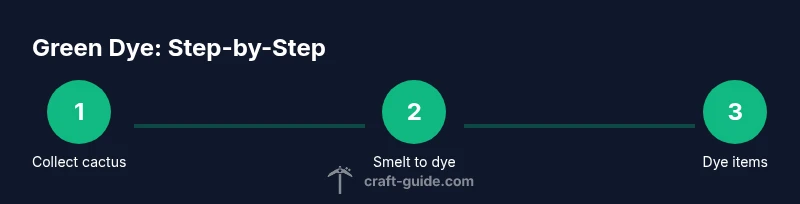
Travel to a desert biome and harvest several cactus blocks. Cacti break instantly and drop cactus items, so bring a good tool or punch through quickly without taking damage. Gather enough for your initial batch and future projects, planning several batches to keep a steady dye supply.
Tip: Bring a spare weapon to handle the occasional cactus ender and avoid self-damage from nearby plants. - 2
Set up a furnace and fuel
Place a furnace on a solid block and stock it with fuel such as coal or charcoal. Keep some extra fuel nearby to enable batch processing. A small furnace line makes it easy to feed cactus without interrupting your workflow.
Tip: If you plan multiple batches, set up a second furnace or a simple furnace array to speed production. - 3
Smelt cactus to green dye
Put cactus into the furnace input slot and ignite. Wait for the smelting process to complete and collect the green dye from the output. Repeat for batches until you reach your desired stock level.
Tip: Batch-smelt several stacks at once to maximize efficiency and minimize downtime. - 4
Create lime dye (optional)
If you want lighter greens, craft white dye from bone meal and combine it with green dye in the crafting table to produce lime dye. This expands your palette and is especially useful for banners and lighter accents.
Tip: Test small batches first to ensure the shade aligns with your build plan. - 5
Dye items in your world
Use green dye to color wool, banners, glass, concrete powder, and terracotta. Each dye application has its own crafting recipe—for example, dyeing wool is 1 dye + 1 wool in the crafting grid. The consistent output helps you plan a cohesive color scheme across blocks.
Tip: Organize dyed blocks in a dedicated storage area to easily reuse the color on future projects. - 6
Batch processing and organization
Maintain a dye station with chests for cactus, green dye, lime dye, and dyed items. Keeping dyes organized reduces time spent searching and ensures you can scale your builds quickly.
Tip: Label chests by color family and storage type to streamline your workflow.
People Also Ask
How do you craft green dye in Minecraft?
Green dye is produced by smelting cactus in a furnace. You’ll need cactus, a furnace, and fuel. Collect cactus from deserts, start a furnace, and monitor the output for your initial dye stock.
Green dye comes from smelting cactus in a furnace; just gather cactus and fuel the furnace, then collect the dye.
Can you get green dye without cactus?
Not directly. Green dye is derived from cactus. If you want a lighter shade, you can make lime dye by mixing green dye with white dye.
No, you need cactus for green dye. Lime dye requires mixing green with white dye.
What can I dye with green dye?
Green dye colors wool, banners, glass, terracotta, and concrete powder. It helps you create cohesive color schemes across blocks and decorative items.
You can dye wool, banners, glass, and more with green dye.
Is lime dye the same as green dye?
No. Lime dye is a lighter shade created by mixing green dye with white dye. They are distinct colors with different applications.
Lime dye is a lighter green made by mixing green and white dye.
Does dye color differ between Java and Bedrock editions?
Basic dye crafting is consistent across editions, but shade rendering can vary with lighting. Most players won’t notice major differences in practical builds.
Dye basics are the same, with minor lighting differences between editions.
Watch Video
The Essentials
- Smelt cactus to obtain green dye reliably.
- Lime dyeshades: mix green with white to get lighter greens.
- Dye a variety of blocks for cohesive builds (wool, glass, banners, terracotta).
- Organize a dye station to optimize batch production.