How to Make Obsidian in Minecraft: Step-by-Step Guide
Learn how to make obsidian in Minecraft with clear steps, safety tips, and smart uses for portals and builds. Expert guidance from Craft Guide to help you gather, craft, and deploy obsidian effectively.


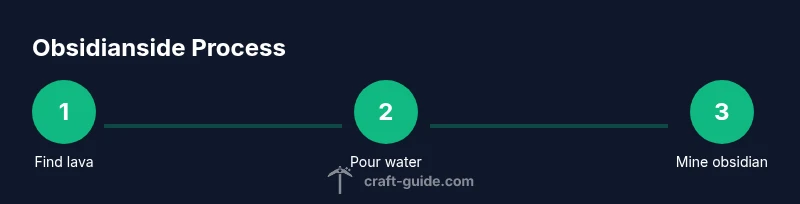
To make obsidian in Minecraft, you convert lava into obsidian by pouring water over a lava source block. Then mine the obsidian with a diamond pickaxe (or better) to collect blocks. Obsidian is ideal for portals, blast resistance builds, and decorative blocks. Gather a water bucket and a sturdy pickaxe before you start.
What obsidian is and why it matters in Minecraft
Obsidian is a uniquely durable block that serves multiple roles in Minecraft. It’s prized for its high blast resistance, usefulness around lava, and its role in creating Nether portals, which unlock access to the Nether dimension. In addition to practical safety applications, obsidian offers a distinct aesthetic for builds, especially when polished for decorative surfaces. When players ask, "how do you make obsidian in minecraft?", the reliable answer is simple: combine water with lava to form solid blocks that can be mined later with a strong pickaxe. Craft Guide has found that understanding these interactions early helps beginners plan efficient resource runs and avoid awkward accidents around lava pools.
In practice, obsidian is not obtained by smelting or crafting from other materials. It appears where water meets a lava source block and forms a solid block that can be collected with the right tool. This makes obsidian a skill-building material that rewards careful planning and precision. The Craft Guide perspective emphasizes practicing the water-on-lava technique in a controlled area before attempting larger harvests for portals or giant builds.
As you develop your Minecraft workflow, remember that obsidian is more than a block; it’s a functional cornerstone for safe lava work and late-game infrastructure. The question, how do you make obsidian in minecraft, is answered by mastering water placement, mining with a sturdy pickaxe, and then using your obsidian in practical, purposeful ways across your base and Nether explorations.
Forming obsidian is a water-on-lava interaction
In the core interaction, water poured onto a lava source block creates obsidian. If water touches flowing lava, you’ll often end up with cobblestone instead, so precision matters. This is a core concept for any player who wants a reliable, repeatable way to harvest obsidian blocks. Craft Guide notes that placing water with care over a lava source block is the fastest route to consistent obsidian production, and it minimizes the risk of lava exposure. By understanding this interaction, you can start planning efficient runs to gather the blocks you need for portals, decorative columns, or lava-protected bases. The practical takeaway is clear: water placement controls the outcome, and reliable mining depends on a proper pickaxe and strategy.
Tools and basic strategy for collecting obsidian
A water bucket, a sturdy pickaxe (diamond or better), and safe working space around lava pools are your essential tools. Avoid mining directly over lava and consider building a small, fireproof platform so you don’t fall in. Craft Guide highlights that players who bring extra blocks to build around lava pools can harvest obsidian more quickly and with fewer interruptions. If you’re building a large obsidian project, lay out a grid so you can systematically place water, create obsidian blocks, and mine them without backtracking. Remember to keep your water bucket filled and ready, since you’ll likely perform several water-on-lava interactions to accumulate enough obsidian blocks for your goals.
Practical uses: portals, polish, and protective builds
Obsidians’ strongest use is for Nether portals, which unlock access to new dimensions and resources. It’s also a go-to block for blast-resistant bases and decorative surfaces that need to withstand environmental hazards. Polished obsidian, created by a compact crafting texture, offers a sleeker look for modern builds. Craft Guide emphasizes planning your builds with obsidian in mind, since this material is relatively abundant once you understand lava-water interactions, yet requires care to mine safely. The material’s durability makes it ideal for both functional and aesthetic applications throughout your Minecraft world.
Common mistakes and how to avoid them
One common mistake is placing water on flowing lava, which can produce cobblestone instead of obsidian. Another is attempting to mine obsidian with a lower-tier pickaxe, which yields less or damages the block. Always use a diamond pickaxe (or better) to harvest obsidian blocks reliably. Don’t stand directly over lava or attempt multi-block mining without securing the area first. Craft Guide’s experience shows that taking small safety steps—like building a protective platform and keeping water handy—reduces the risk of injury and lava spills dramatically.
Advanced tips for efficiency and safety
For larger projects, build a dedicated obsidian farm setup with clearly marked lava pools and water sources. Consider creating a workstation with a perimeter of non-flammable blocks and a water stream to direct lava flow away from your mining zone. If you’re aiming for a Nether portal or large decorative sections, map out the number of obsidian blocks you need and create a plan to mine in batches, minimizing exposure and downtime. Craft Guide’s insights emphasize methodical planning, disciplined mining, and careful water management to optimize obsidian collection while keeping you safe.
Tools & Materials
- Water bucket(Filled with water from a nearby source)
- Diamond pickaxe (or better)(Needed to mine obsidian without breaking the block)
- Extra building blocks(Used to create a safe workspace around lava pools)
- Flint and steel(Optional for activating portals or other fire-related tasks)
Steps
Estimated time: 25-40 minutes
- 1
Prepare your tools and locate lava
Gather a water bucket, ensure you have a sturdy pickaxe, and locate a lava source block. Plan a safe path to approach the lava so you can place water without slipping into the pool.
Tip: Always keep a block under your feet as you approach lava to avoid accidental falls. - 2
Pour water on a lava source block
Right-click (or use your platform’s action key) to pour water onto a lava source block. This will form obsidian blocks. Avoid pouring onto flowing lava to prevent cobblestone formation.
Tip: If water flows into multiple lava blocks, place a wall to guide the flow and create clean obsidian blocks. - 3
Mine the obsidian with a diamond pickaxe
Equip your diamond pickaxe and start mining the obsidian blocks. Mine blocks individually or in small batches to avoid lava exposure. Collect the obsidian as they drop.
Tip: Take breaks if you’re mining many blocks to prevent fatigue and maintain focus on safety. - 4
Repeat to build your supply
Continue identifying lava pools and repeating the water-on-lava method until you’ve gathered enough obsidian for your project, whether it’s a Nether portal, decorative features, or bases.
Tip: Organize your blocks into stacks to speed up future mining sessions. - 5
Optionally, prepare a nether portal frame
If your goal is entering the Nether, use obsidian blocks to craft a standard portal frame and ignite it with flint and steel.
Tip: Plan your portal location away from hazards and ensure surrounding space is clear for activation. - 6
Store and use obsidian responsibly
Store your obsidian in secure chests and incorporate it into your builds or portal designs. Ensure your mining area remains safe for future sessions.
Tip: Label storage to avoid misplacing obsidian amid other blocks.
People Also Ask
How do you properly obtain obsidian in Minecraft?
Obsidian forms when water is poured onto a lava source block. Then you mine the obsidian blocks with a diamond pickaxe. This method is reliable for gathering materials for portals and safe builds.
Obsidian forms when water hits a lava source block, and you mine it with a diamond pickaxe.
Can you obtain obsidian without a diamond pickaxe?
No. Obsidian blocks require a diamond pickaxe (or better) to mine effectively. Using a weaker tool will either fail to drop the block or drop fewer resources.
You need a diamond pickaxe or better to mine obsidian.
What are the best uses for obsidian?
The primary uses are crafting Nether portals, building blast-resistant structures, and decorative blocks like polished obsidian for modern aesthetics.
Obsidian is best for Nether portals, strong builds, and decorative uses.
Is obsidian safe to mine around lava?
Yes, with precautions. Build a safe workspace, use blocks to shield lava, and never stand directly over the lava while mining.
Yes, but be careful around lava and use a safe workspace.
How many obsidian blocks are needed for a Nether portal?
A typical portal frame uses obsidian blocks arranged in a rectangular shape; the exact number depends on the chosen portal size.
A portal is built with obsidian in a rectangular frame; the total blocks vary by size.
The Essentials
- Pour water on lava to form obsidian.
- Mine obsidian with a diamond pickaxe.
- Protect yourself from lava with a safe workspace.
- Obsidian supports portals and durable builds.
- Plan your collection to minimize hazards.