What Minecraft Update Came Out in 2014: The 1.8 Adventure Update Part II
A detailed analysis of Minecraft's 2014 Java Edition milestone, the 1.8 Adventure Update Part II, its ocean overhaul, new blocks, and its impact on builders and servers.


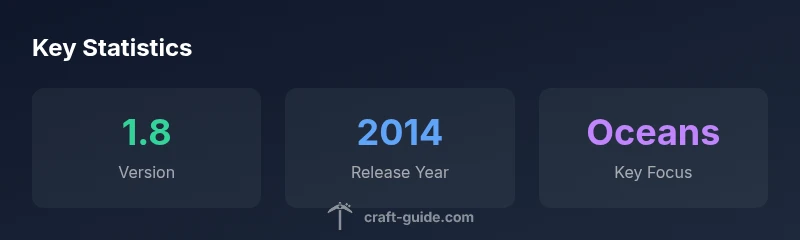
In 2014, the Minecraft Java Edition update released was 1.8, known as Adventure Update Part II, launched on September 2, 2014. This update overhauled oceans, added new blocks and mobs, and refreshed world generation to emphasize exploration and adventure. It introduced ocean monuments, guardians, and key blocks like prismarine and sea lanterns, reshaping how players approached builds and navigation. For builders and map creators, 1.8 set the stage for deeper underwater biomes and more varied seed ideas.
The 2014 milestone: What exactly released in 2014
What minecraft update came out in 2014? The answer centers on Minecraft Java Edition 1.8, commonly labeled the Adventure Update Part II. Released on September 2, 2014, this update followed the earlier 1.7 era and shifted the game's focus toward exploration, immersive environments, and richer world-building. The 1.8 patch redefined how players approached oceans, biomes, and underwater exploration, making seeds valuable for map-makers and servers alike. Craft Guide’s analysis emphasizes that 2014’s release marked a turning point from purely surface-level builds to intricate, story-driven landscapes, with a pronounced emphasis on underwater content and varied terrain generation.
From a design perspective, 1.8 expanded the player’s playing field beyond surface biomes. The update introduced a new bar of complexity for adventure maps, letting creators craft more ambitious experiences without requiring external mods. The timing of this release also aligned with broader player interests in exploration and discovery, catalyzing new community projects and custom maps that leveraged the updated oceans and blocks.
This section lays the groundwork for understanding how 1.8’s features translated into practical builds and server experiences, highlighting why players—and content creators—still reference the 2014 update when discussing Minecraft’s evolution.
Ocean Overhaul: Oceans, Structures, and Mobs
The 2014 update brought a comprehensive ocean overhaul that changed both aesthetics and gameplay. Oceans received expanded biomes, more varied terrain, and new underwater structures. Guardians and elder guardians emerged as guardians of these underwater ruins, offering new challenges for divers and combat enthusiasts alike. The introduction of ocean monuments provided structured exploration goals and unique loot paths, encouraging players to design underwater bases and farms that could thrive in these new environments.
In terms of world-building, the addition of water-centric blocks like prismarine, sea lanterns, and dark prismarine gave builders a broader palette for underwater aesthetics. Coral blocks and sea grass opened new opportunities for reef-inspired builds, while kelp and other sea crops supported farming-oriented designs. The overall effect was a richer, more immersive underwater space that rewarded exploration and experimentation, not just establishment on land.
Prismarine, Coral, and More: The Block Catalog Expands
Prismarine and sea lanterns became icons of undersea architecture, offering a cohesive visual language for underwater structures. Coral blocks introduced color variation and texture to reef builds, enabling more realistic seabed scenes. The new blocks weren’t just decorative; many had practical uses in lighting, color schemes, and trap design for adventure maps.
Beyond blocks, the update included several related resources that builders could harvest for decorative purposes, such as coral fans for aquariums, underwater torches, and ship wreck remnants. These items created a more layered theme for Minecraft builds—from sunken ruins to coral reefs—allowing players to craft immersive nautical adventures and seed-rich underwater exploration.
World Generation and Exploration: Seed Maps and Ocean Biomes
With 1.8, world generation behaviors expanded to emphasize underwater diversity. Ocean biomes gained depth, with new terrain features that rewarded divers who mapped and catalogued underwater regions. The update shifted seed selection strategies, encouraging players to seek out ocean monuments or to design maps where underwater exploration would be central to the gameplay loop. The new environmental variety complemented existing terrain, inviting more layered, expedition-style builds and story-driven maps.
This section explains how the ocean-focused changes influenced how players approached world-building, seed selection, and long-term project planning. It also discusses practical tips for starting underwater builds, from early prismarine stabs to creating safe enclaves within deep marine biomes.
Impact on Builders, Servers, and Custom Maps
Server operators and map-makers quickly adopted the 1.8 feature set to craft more diverse experiences. Underwater biomes and monuments presented new raid-style challenges and treasure hunts, while the expanded block palette enabled more ambitious aesthetic palettes. Builders could design reef towns, sunken ships, and underwater temples that integrated with surface landscapes. Seed diversity improved as players sought oceans and unique coastal worlds. For multiplayer communities, new content sparked fresh event ideas, from underwater treasure hunts to deep-sea expeditions, encouraging cross-server collaboration and community-driven challenges.
How Craft Guide Analyzes the Update: Practical Takeaways for Players
From Craft Guide’s perspective, the 2014 update is best understood through three lenses: design, play balance, and community impact. Design-wise, 1.8 offered a richer visual language for underwater builds, enabling more vibrant and varied exploration maps. Play balance shifted to reward exploration, navigation, and resource gathering in ocean biomes. Community-wise, new blocks and monuments created abundant content for server adventures, tutorials, and seed showcases. For players looking to recreate or adapt the 2014 experience, focus on underwater infrastructure, reef-inspired aesthetics, and ocean-pointed seed exploration. Our team highlights that the update laid the groundwork for subsequent revisions and spurred a wave of creative tutorials and build guides.
Long-term Legacy: Why the 2014 Update Still Matters
The 2014 update remains a touchstone for Minecraft world-building discussions. It established oceans as viable, content-rich domains rather than mere decorative spaces, expanding creative possibilities for builders and modders alike. Even as newer updates introduced additional features, the 1.8 era is often cited as the point where exploration and architectural storytelling became central to Minecraft’s identity. For players revisiting older maps or seeking to understand seed history, acknowledging the 2014 1.8 release helps explain why certain builds feel more expansive and why ocean-focused projects are a recurring favorite in the Minecraft community.
Key features introduced in Minecraft Java Edition 1.8 (2014)
| Feature Area | Version Included | Notes |
|---|---|---|
| Ocean Biomes | 1.8 (2014) | Expanded oceans and underwater content |
| New Blocks | 1.8 (2014) | Prismarine, Sea Lanterns, Coral, Sea Pickles |
| Underwater Structures | 1.8 (2014) | Ocean Monuments and related ruins |
| World Generation | 1.8 (2014) | Deeper ocean landscapes and terrain changes |
People Also Ask
What Minecraft update came out in 2014?
Minecraft Java Edition 1.8, 'Adventure Update Part II', released September 2, 2014, introduced oceans, guardians, prismarine blocks, and numerous world-generation enhancements.
The 2014 update was Java Edition 1.8, the Adventure Update Part II.
What were the major features of 1.8?
Oceans and underwater structures, new blocks like prismarine and sea lanterns, coral varieties, and ocean monuments added depth to exploration.
Major features included oceans, monuments, and new blocks.
Did 1.8 affect Bedrock Edition?
1.8 was released for Java Edition with a distinct feature set; Bedrock Edition followed its own release timeline and feature parity over subsequent years.
This update was for Java Edition; Bedrock had separate timelines.
How did this update affect builders and servers?
Builders gained access to a richer underwater palette and new monuments, while servers saw more underwater maps and event ideas leveraging ocean content.
Builders got more blocks; servers gained new underwater content.
Is 1.8 still playable today?
Yes. Players can run 1.8 in legacy profiles or on servers that support older versions; many players use compatibility options to explore that era.
Yes—it's still playable via legacy options and compatible servers.
“The 2014 update is widely regarded as a turning point for Minecraft's world-building potential, especially with the ocean content that encouraged exploration.”
The Essentials
- Recognize 2014 as the year of 1.8 Adventure Update Part II
- Oceans and underwater content defined the era
- New blocks expanded building palettes for underwater design
- Seed and map exploration gained deeper importance
- The update set foundations for future world-building changes