Spruce Biomes in Minecraft: Taiga, Snowy Taiga, and Mega Taiga
Learn which Minecraft biomes host spruce trees, with focus on Taiga, Snowy Taiga, and Mega Taiga. Discover how to identify spruce forests, gather spruce wood, and build with this warm, dark-toned timber.


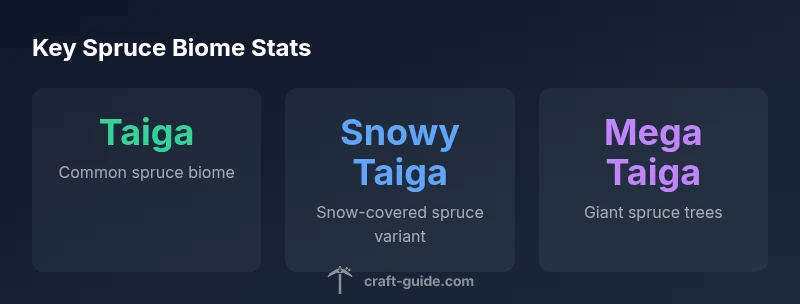
Spruce trees appear most prominently in the Taiga family of biomes. In standard Taiga, Snowy Taiga, and the Mega Taiga (giant spruce taiga), you’ll find dense spruce forests and tall spruce trees. If you’re farming spruce wood or saplings, these biomes are your easiest sources, with occasional pockets near hills and river valleys.
What spruce biomes in Minecraft look like
For many players, the first question is practical: what minecraft biome has spruce? The answer centers on the Taiga family of biomes. Spruce trees are one of the defining features of Taiga, Snowy Taiga, and the Mega Taiga variant. In practice, this means you’ll encounter dense stands of dark-green conifers in snowy and non-snowy variants alike. The spruce wood you obtain here is a staple for early shelters and rustic builds, thanks to its warm, compact color. Craft Guide’s guidance emphasizes that identifying these biomes by terrain and flora—dark pines, mossy groundcover, and cool, flat landscapes—will speed up resource gathering. In addition to trees, you may notice wolves and sparse grasses. Understanding where spruce grows helps you plan expeditions, stockpile saplings, and map out future builds with consistent wood tones. Remember, what minecraft biome has spruce is best understood by visiting the taiga regions and noting the coniferous canopy in both day and night conditions.
Taiga: the core spruce biome
The Taiga biome is the quintessential home for spruce. It features needleleaf evergreens, cool temperatures, and relatively flat to gently rolling terrain. Spruce trees here are dense enough to create natural shaded groves, ideal for concealing a starter base or setting up a woodland outpost. If you’re planning a long-term build, the Taiga provides reliable access to spruce logs, planks, and craft-ready timber without venturing far into harsher climates. Terrain often includes podzol patches, ferns, and occasional lakes—elements that help create authentic wilderness aesthetics. Builders who favor a cozy, understated look will gravitate toward Taiga’s dark-toned timber and compact trunk forms, which blend well with stone accents and cobblestone paths. Craft Guide notes that Taiga remains a perennial favorite for spruce-centric survival playthroughs due to resource density and accessibility.
Snowy Taiga and Mega Taiga: variations with spruce
Snowy Taiga introduces snow cover, cold air, and spruce species that retain their evergreen color beneath a white mantle. This biome variation allows you to harvest spruce in a frost-kissed setting, which is perfect for winter builds and festive themes. Mega Taiga, on the other hand, delivers giant spruce trees that dwarf standard specimens. These towering trees create dramatic canopies and provide substantial timber blocks for large-scale builds or canopy-based shanties. Although Mega Taiga is less common, it compensates with high visual impact and plentiful wood once located. Craft Guide highlights that these variants expand spruce utilization—from compact interior details to monumental exterior structures—while encouraging careful navigation of the biome’s rugged foothills and occasional river valleys.
How to identify spruce trees in the wild
Identifying spruce trees in the wild is straightforward. Look for conical trees with dense, vertical trunks and dark green needles that stay vibrant year-round. Leaves are arranged around a tall, straight trunk, typically with a slightly lighter bark tone. The ground cover in Taiga biomes often includes podzol or coarse dirt, withered grass, and moss patches along damp edges. In Snowy Taiga, you’ll notice snow on the ground paired with evergreen canopies. In Mega Taiga, the standout feature is sheer height; expect some trees to tower well over standard conifers. A practical tip: bring a map or chunk-loader to keep track of your spruce forests, which can be far from your starting point but are highly rewarding for sustainable timber farms.
Gathering spruce resources and early-game strategies
To maximize spruce yields, establish a forward camp within walking distance of spruce groves. Collect logs, saplings, and some leaves for rapid farming. Saplings drop from the leaves of mature spruce trees; plant them on dirt/grass to grow additional trees. Early-game strategies include rotating between Taiga and Snowy Taiga biomes to diversify timber: Taiga offers wood versatility, while Snowy Taiga provides seasonal frost ambiance for builds. It’s smart to stockpile spruce saplings and log stacks, then create a compact orchard near your base. If you’re in Creative mode, you can rapidly construct a spruce-heavy structure to test balance and scale before committing to a survival build.
Builds and aesthetics: using spruce wood effectively
Spruce wood’s warm, dark tone makes it ideal for rustic cabins, medieval houses, and compact interiors. Use spruce planks for flooring, doors, and furniture to achieve a cohesive, natural look. Combine spruce with stone, cobblestone, or smooth stone for contrast. For exterior walls, spruce logs provide a solid framework, while spruce stairs and slabs add elegant detailing. You can also leverage spruce leaves as decorative accents around doorways or hedges. Craft Guide recommends experimenting with subtle color palettes, like coal or gray terracotta, to enhance the wood’s natural hue and keep builds visually grounded in a forest setting.
Version updates and biome changes affecting spruce
Minecraft world generation changes across versions can alter spruce distributions and biome boundaries. While Taiga remains the go-to spruce biome, updates may adjust tree density or the appearance of Mega Taiga variants. To stay current, review patch notes when updating your world and adjust your exploration routes accordingly. Basic strategy stays constant: prioritize Taiga regions first for reliable spruce resources, then venture into Snowy Taiga and Mega Taiga for variety and grandeur. Craft Guide’s long-running analyses emphasize tracking biome changes during major updates to preserve your spruce expansion plans.
Spruce distribution across Minecraft biomes
| Biome Type | Common Spruce Trees | Notes |
|---|---|---|
| Taiga | Spruce Trees | Dense coniferous belt with evergreen timber |
| Snowy Taiga | Snow-covered Spruce | Snowy climate but evergreen wood |
| Mega Taiga | Giant Spruce Trees | Rare variant with towering timber |
People Also Ask
What biome has spruce trees in Minecraft?
Spruce trees primarily occur in Taiga biomes, including Snowy Taiga and the Mega Taiga variant. These areas provide dense spruce forests ideal for timber farming and rustic builds.
Spruce trees are found mainly in Taiga biomes, including Snowy Taiga and Mega Taiga. They’re great for timber farming and rustic builds.
Can spruce trees grow outside taiga biomes?
Spruce trees predominantly grow in taiga biomes and their variants. They are not common in plains or deserts, so plan your exploration accordingly.
Spruce trees mostly grow in taiga regions, not in plains or deserts.
How do I get spruce saplings?
Spruce saplings drop from the leaves of mature spruce trees. Break the leaves and collect saplings, then plant on dirt or grass to propagate more spruce.
Break spruce leaves to get saplings, then plant them on dirt or grass.
What’s the best use for spruce wood in builds?
Spruce wood’s warm, dark tone suits rustic cabins, medieval houses, and dark-accent interiors. Pair with stone or cobblestone for contrast.
Great for rustic or medieval builds; pair with stone for contrast.
Are there tips for locating Mega Taiga quickly?
Mega Taiga is rarer than standard Taiga. Look for biomes with particularly tall spruce trees and plan longer expeditions to reach these forests.
Mega Taiga is rarer; search for tall spruce forests and be ready for longer travels.
Do spruce biomes change across updates?
Patch notes sometimes adjust biome generation and spruce density. Stay updated with version changes to understand any distribution shifts.
Biome generation can change with updates; check patch notes for details.
“Spruce biomes offer dependable timber for a wide range of builds, especially when you plan around Taiga variants and Mega Taiga’s towering trees.”
The Essentials
- Identify Taiga biomes to source spruce reliably
- MegasTaiga offers the tallest spruce trees for dramatic builds
- Spruce saplings drop from leaves and support sustainable farming
- Use spruce wood for rustic and medieval aesthetic themes