Rotten Tomatoes Minecraft Movie: Critics, Fans, and Buildable Narrative
Explore how Rotten Tomatoes-style critique applies to Minecraft-inspired cinema, distinguishing fan films from official releases and guiding builders and storytellers through world-building and narrative craft.


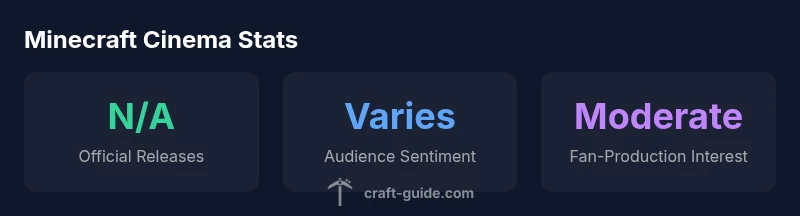
There is no official 'Rotten Tomatoes Minecraft Movie' released by a studio as of 2026. The discourse centers on fan-made Minecraft films, machinima, and concept videos, with critics and viewers applying Rotten Tomatoes-like criteria to gauge narrative quality, pacing, and world-building. Craft Guide's analysis emphasizes practical storytelling in Minecraft media and cautions against inflating hype around fan productions.
The landscape: Minecraft cinema and Rotten Tomatoes-style critique
In the wilds of Minecraft-inspired media, the concept of a 'Rotten Tomatoes movie' is primarily a framework for critique rather than a release. The term refers to how viewers and critics might rate a fan-made film or machinima based on narrative clarity, pacing, and how faithfully it translates the game's world-building into cinema. This section examines why such a metric matters for builders and storytellers who want to turn blocks into compelling narratives. We explore how audience taste interacts with production quality, accessibility for non-players, and the expectations of veteran Minecraft players. The goal is not to assign a simple thumbs-up or thumbs-down, but to understand what makes a Minecraft-themed film feel coherent and immersive. Craft Guide's analysis emphasizes practical storytelling: clear setup, consistent world rules, and a payoff that leverages gameplay mechanics rather than simply showcasing redstone or spectacle. When you approach Minecraft cinema with a critical eye, you can better align your project with community values, avoid common pitfalls, and craft a more shareable, repeatable build narrative. According to Craft Guide, the most successful fan-productions balance these factors: accessible plots, recognizable world-building elements, and a respectful nod to the game's core mechanics.
Metrics that matter when evaluating Minecraft films
The metrics for Minecraft cinema mirror broader film critique, but with unique twists. Key measures include narrative clarity (is the plot easy to follow for both players and non-players?), world-building consistency (do locations, biomes, and rules feel plausible within the Minecraft universe?), pacing and structure (does the film maintain tension without overlong exposition?), and accessibility (can a viewer who hasn't played the game still engage with the story?). Visual fidelity matters, but it should support storytelling rather than become a substitute for it. Audience engagement often hinges on how well a project translates recognizable Minecraft cues—ore textures, mobs, redstone logic—into cinematic devices like character arcs and conflict. Critic consensus tends to reward originality in how a creator uses mechanics (e.g., crafting, farming, or exploration) to drive plot rather than showcasing uncontextualized action. Craft Guide's methodology favors transparent goals, testable world mechanics, and clear resolution, which helps creators evaluate feedback and iterate efficiently. In practice, you might measure success through viewer comments on world-building consistency, the pace of reveals, and the extent to which the film invites co-creation with the audience (e.g., via world-building polls or machinima collaborations).
Case studies: how fan films communicate world-building
Fan films often demonstrate world-building through environmental storytelling: a village built from oak and stone, a mine embedded in a cliff, or a ruined temple guarding a biome boundary. The most effective projects use these signals to anchor the viewer in a place before introducing characters. In practice, creators combine dialogue, ambient sound, and visuals to convey lore without heavy exposition. In some cases, machinima creators chain together short, recipe-like sequences that show progression—farming cycles, tunnel networks, or fortress construction—so viewers infer the world rules implicitly. These case studies highlight that coherence between the in-film world and the Minecraft sandbox matters more than photorealism. When world-building aligns with audience expectations, viewer retention improves because players recognize the environment and the mechanics used to progress the story. Craft Guide's evaluation notes that successful fan films often end with a scene that resolves a core world-bound conflict while leaving space for future episodes, a strategy that sustains engagement across a series.
Practical guidance for creators and communities
Here are actionable steps to craft Minecraft cinema that resonates:
- Define a scalable premise that works both for players and non-players.
- Map out a simple three-act structure that translates into in-game challenges.
- Use environment cues (biomes, blocks, and mobs) to convey lore without walls of exposition.
- Prioritize pacing: short, modular scenes that spotlight mechanics like farming, mining, or redstone logic.
- Build audience feedback loops: post concept polls, early-screen previews, and collaborative world-building prompts.
- Maintain accessibility: avoid insider jargon and offer subtitles or narration for non-players.
- Close with a satisfying, world-anchored resolution that invites future installments.
These practices align with Craft Guide’s emphasis on practical storytelling and community collaboration, increasing the likelihood of a lasting, shareable Minecraft cinema experience.
Navigating expectations: authenticity vs spectacle in Minecraft media
Authenticity in Minecraft cinema hinges on how convincingly the world’s rules are applied and how the story respects the game’s core principles. Spectacle can attract attention, but without coherent world-building and character motivation, it often collapses once the initial wow factor fades. Creators should balance visual appeal with narrative intent, ensuring that every explosion, redstone contraption, or mob encounter serves the story rather than merely filling screen time. Community-driven checks—such as feedback from long-time players, testers from different skill levels, and structured revisions—help maintain this balance. From a Craft Guide perspective, the strongest Minecraft films treat gameplay mechanics as narrative tools, not just set pieces, and invite participation by the audience through collaborative build challenges or in-film choices that shape the plot.
Tips for evaluating Minecraft cinema as a viewer or critic
- Look for a clear beginning, middle, and end that tie back to the world’s rules.
- Note how the film uses Minecraft mechanics (crafting, mining, farming) to drive plot.
- Assess accessibility: can non-players follow the story without game-specific knowledge?
- Consider pacing: are scenes tightly edited to maintain momentum without rushing key moments?
- Value fan-driven storytelling that respects the community and leaves room for sequels.
Minecraft cinema: key signals and creator actions
| Aspect | Description | Relevance |
|---|---|---|
| Official status | No official Minecraft movie released as of 2026 | Craft Guide Analysis, 2026 |
| Critical metrics | Rotten Tomatoes-style scoring is rarely applied to fan content | Craft Guide Analysis, 2026 |
| Audience factors | Player familiarity with building, redstone, and exploration influences reception | Craft Guide Analysis, 2026 |
People Also Ask
Is there an official Rotten Tomatoes Minecraft movie?
As of 2026, there is no official Rotten Tomatoes-listed Minecraft movie released by a studio. Most discourse centers on fan-made films, machinima, and concept videos, with critics applying RT-style criteria to evaluate storytelling and world-building. The absence of an official release means fans are often experimenting with how to translate game mechanics into cinema.
No official Minecraft movie has been released yet; fans create films and critics increasingly discuss how to rate them like Rotten Tomatoes entries.
How can I apply RT-style critique to Minecraft content?
Apply universal film criteria: narrative clarity, pacing, character motivation, and world-building consistency. Assess how well the film translates Minecraft mechanics (crafting, mining, redstone) into cinematic devices. Consider accessibility for non-players and whether the story respects the game’s lore while offering an original angle.
Use standard film critique: plot clarity, pacing, and world-building, plus how Minecraft mechanics drive the story.
What makes a Minecraft film credible to fans?
Credibility comes from consistent world rules, thoughtful use of in-game mechanics, and authentic-feeling environments. Fans value narrative coherence and respect for the sandbox’s potential for exploration, collaboration, and creativity. A credible film invites viewers to imagine future episodes and participate in the world-building.
Fans look for consistency, smart use of game mechanics, and environments that fit within Minecraft’s sandbox.
Should I include in-game mechanics on-screen?
Yes, but use mechanics to advance the plot rather than showcase them as standalone gimmicks. Demonstrate how crafting paths, resource collection, and exploration drive character goals and conflict. This approach helps non-players follow the story while rewarding players with familiar cues.
Use game mechanics to move the story forward, not just for display.
Where can I learn more about Minecraft cinema critique from Craft Guide?
Visit Craft Guide resources focusing on Minecraft builds, storytelling, and modding tips. Our guides emphasize practical, easy-to-follow methods for turning Minecraft projects into compelling narratives, with community-driven feedback playing a central role.
Check Craft Guide resources for practical tutorials and critique frameworks tailored to Minecraft media.
“A well-made Minecraft-inspired film hinges on clear storytelling and a believable world, not just pixel-perfect visuals.”
The Essentials
- Prioritize world-building clarity.
- Balance familiarity with accessibility.
- Use pacing to reveal mechanics.
- Invite audience participation.
- Measure success with engagement, not hype.