Minecraft Types of Trees: A Practical Builder's Guide
Explore all vanilla Minecraft tree types, their woods, colors, and best building uses. This analytical guide covers oak, spruce, birch, jungle, acacia, dark oak, mangrove, and farming tips for biome-aware builds.


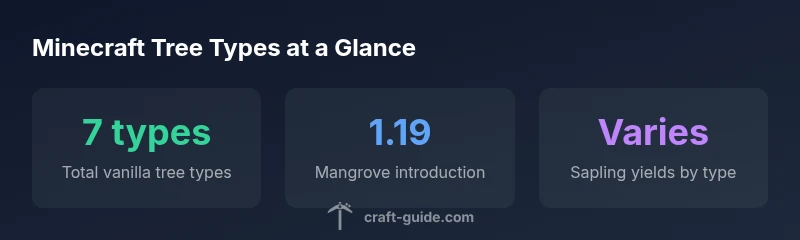
There are seven vanilla tree types in Minecraft: oak, spruce, birch, jungle, acacia, dark oak, and mangrove. This quick guide outlines how each type influences build style, color palettes, and biome compatibility, helping players plan aesthetics and resource strategies across their worlds.
Overview of the vanilla tree types
Minecraft’s tree system is foundational for both resource gathering and aesthetic design. In total, seven vanilla tree types provide a broad palette of wood colors, trunk textures, and leaf hues that influence how players approach builds and landscaping. The colors range from the warm browns of oak to the pale whites of birch and the orange-toned accents of acacia. Mangrove introduces a distinct reddish-orange wood and a swampy vibe that can define biomes and color stories in a single build. Understanding these types helps players plan forestry farms, decide on sapling placement, and select woods that evoke specific moods—rustic cabins, tropical temples, or stark, modern structures. Craft Guide’s 2026 analysis notes that this diversity supports both practical survival uses and expressive world-building, especially when combining wood colors with stone, clay, and glass to craft cohesive environments.
Oak and Spruce: The building workhorses
Oak is the most versatile wood in Minecraft. It blends well with almost any other block and remains a staple for early-game and late-game construction alike. Spruce wood offers a cooler, more muted tone that excels in steep roofs, dark-toned interiors, and lodge-style builds. When paired, oak and spruce enable a wide palette—from bright, welcoming interiors to moody, forested exteriors. Beyond aesthetics, both woods share reliable sapling yields, predictable growth patterns, and familiar crafting outputs (planks, doors, fences). Builders often use oak for general purpose structures and spruce for roofing and trim accents to create contrast without clashing colors. The choice between these woods can define a build’s overall readability and thematic intent, especially when designing in mixed biomes.
Birch and Jungle: contrast and color palettes
Birch wood is iconic for its pale, almost chalky white trunk and bright, high-contrast planks. This makes birch ideal for modern or minimalist designs where clean lines dominate. Jungle wood, with its darker brown heart and denser leaf canopy, brings depth and a tropical feel. The contrast between birch’s lightness and jungle’s richness helps builders create visual hierarchy—frames, accents, and focal points that stand out in both daylight and shadow. Sapling growth in these trees responds to lighting and space, allowing players to simulate dense forests or sparse glades depending on terrain goals. Using birch for walls paired with charcoal and glass can yield crisp, contemporary aesthetics, while jungle wood pairs well with golds and greens for vibrant, jungle-inspired builds.
Acacia and Dark Oak: biome-specific uses
Acacia wood’s warm orange-brown hue and irregular grain token give savannah-adapted builds a distinctive personality. It’s often used for outdoor furniture, bridges, and accent walls that pop against the yellow grass of arid biomes. Dark Oak, on the other hand, grows only in roofed forest environments and provides the darkest standard wood option with a rich, regal tone. It’s excellent for grand halls, taverns, or fortress-like structures where contrast and mass matter. The biome-specific nature of these woods encourages builders to locate or simulate natural environments that support the intended aesthetic, while still enabling cross-biome experimentation for creative projects.
Mangrove: a newer wood with unique properties
Mangrove wood is marked by its reddish-orange tone and distinctive log shape. It comes with new blocks like mangrove pressure plates and mangrove roots, expanding the toolkit for decorative and structural detail. Mangrove trees grow in swampy biomes or swamp-like areas, but saplings can be managed in other biomes with appropriate light and space. The new wood color broadens the palette for tropical or jungle-adjacent builds and provides an opportunity to diversify interior and exterior designs. Botany-inspired farmers can incorporate mangrove saplings into irrigation layouts or elevated walkways to emphasize a coastal or marshy theme.
Tree farming, saplings, and world-building tips
Efficient tree farming begins with spacing, lighting, and sapling management. A balanced sapling cycle—plant a sapling, wait for growth, collect logs, replant—sustains long-term wood output. Use bone meal selectively to accelerate growth or to test multiple growth angles in a single session. For world-building, plan a mixed-wood district that combines the warm tones of oak, the cool accents of spruce, and the bold colors of mangrove or acacia. This approach helps create layered landscapes, varied rooflines, and distinct districts within larger maps. Finally, always consider biome coherence: a forest lodge should lean on oak and spruce for texture, while a savannah outpost might leverage acacia for a sun-washed aesthetic.
Special properties: colors, leaves, and growth
Each tree type provides distinct logs, planks, and leaves that influence both construction and farming strategies. Leaves vary in density, which affects visibility and mob spawning in forested areas. Sapling growth is influenced by light levels, space, and biome-specific conditions, which can be leveraged to simulate natural forestry or deliberate reforestation in builds. Crafting with multiple wood types enables creative joins—plank borders, staircases, and door variants become more expressive when you pair contrasting tones. Understanding these nuances helps players design more immersive environments, from cozy cottages to towering citadels.
Overview of vanilla tree types, wood colors, and typical building uses
| Tree type | Wood type | Biome vibes | Common uses |
|---|---|---|---|
| Oak | Oak logs/planks | Forests and plains | Fences, doors, basic furniture |
| Spruce | Spruce logs/planks | Cold biomes and forests | Roofing, dark interiors, rustic cabins |
| Birch | Birch logs/planks | Bright, modern styles | Walls with high contrast, minimalist designs |
| Jungle | Jungle logs/planks | Tropical/jungle biomes | Dark furniture, exotic accents |
| Acacia | Acacia logs/planks | Savannah vibes | Outdoor furniture, warm color accents |
| Dark Oak | Dark Oak logs/planks | Roofed forest themes | Grand halls, dense interiors |
| Mangrove | Mangrove logs/planks | Swamp and coastal themes | Decorative walls, unique color accents |
People Also Ask
What are the seven vanilla tree types in Minecraft?
The seven vanilla tree types are oak, spruce, birch, jungle, acacia, dark oak, and mangrove. Each type brings distinct wood colors, log shapes, and leaves that influence aesthetic choices and farming strategies.
There are seven tree types in vanilla Minecraft: oak, spruce, birch, jungle, acacia, dark oak, and mangrove. Each offers unique colors and farming options.
Which tree type is best for beginner builds?
Oak is typically recommended for beginners due to its versatility and compatibility with most themes. It’s easy to grow, harvest, and craft with, making it a reliable choice for early structures and furniture.
Oak is usually best for beginners because it fits with many themes and is easy to farm.
How does mangrove affect color palettes in builds?
Mangrove introduces orange-toned wood that expands the color palette beyond traditional browns. It’s especially effective for tropical or coastal aesthetics and pairs well with greens and blues for vibrant scenes.
Mangrove adds an orange wood color, great for tropical or coastal builds.
Can mangrove saplings be grown in any biome?
Mangrove saplings prefer swamp-like conditions but can be grown in other biomes with adequate light and space. Planning irrigation-like setups can help simulate swamp-like growth conditions.
Mangrove saplings work best in swampy areas, but you can grow them elsewhere with enough light and space.
What’s a quick strategy for a mixed-wood build?
Create zones with specific wood types: oak for bulk walls, spruce for roofs and trims, birch for accents, and mangrove or acacia for color pops. This approach yields cohesive yet varied visuals without overwhelming the design.
Use zones with different woods—oak for walls, spruce for roofs, and mangrove or acacia for color—so your build looks cohesive yet varied.
“Understanding Minecraft tree types unlocks more than just wood. It informs biome storytelling, structural rhythm, and color cohesion across entire builds.”
The Essentials
- Know the seven vanilla tree types and their palettes
- Use oak for versatility and spruce for cooler tones
- Birch and jungle offer strong color contrast for modern vs tropical builds
- Acacia and dark oak anchor biome-specific aesthetics
- Mangrove expands color options and coastal/floating-structure builds
- Plan sapling farming to sustain long-term projects