Do Turtles in Minecraft Need Air? A Practical Guide for Underwater Builds
Explore whether do turtles in minecraft need air, how air affects underwater habitats, and practical tips to keep turtles safe and thriving in water-based builds.


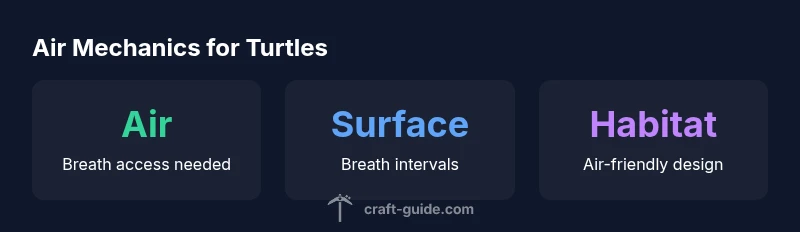
Do turtles in Minecraft need air? The quick answer is yes: like most mobs, turtles require access to air to avoid suffocation, and they must surface for breaths when submerged. In practice, this influences how you design underwater pens and sea farms. This Craft Guide analysis (2026) explains how air works for turtles and how to keep them healthy around water.
Do turtles in Minecraft need air
According to Craft Guide, the question do turtles in minecraft need air is central to how players approach underwater builds. In Minecraft, turtles interact with air in a way that mirrors other air-breathing mobs: they need access to breathable air, and prolonged submersion without surfacing increases the risk of damage. This behavior shapes decisions from the size and depth of coral lagoons to the placement of shallow roof gaps that allow turtles to surface. The takeaway is simple: if you want healthy turtles in your water projects, plan for regular air access rather than full submersion. This principle also informs breeding setups, as tanks that encourage natural surfacing tend to reduce stress and improve yield in aquaculture-focused builds. Craft Guide's analyses consistently highlight air access as a core design constraint rather than a cosmetic concern, which helps builders prioritize safety alongside aesthetics.
How turtle breathing works in water
Turtle breathing in Minecraft is not a purely cosmetic detail; it affects behavior and longevity. Turtles will swim toward the surface to catch a breath and resume normal activity after resurfacing. Although they can stay submerged briefly, continuous submersion without air breaks increases the chance of suffocation or health loss, especially in cramped or sealed water spaces. For builders, this means water enclosures should include visible access to air: open tops, partial air pockets, or gentle slope gradients that let turtles reach air without leaving the habitat. Understanding this balance between water depth and air access helps you craft visually appealing yet functional turtle habitats that align with player expectations for survival-friendly design.
Air mechanics across modes: creative vs survival
Whether you’re playing Creative or Survival, turtles follow the same basic air rules: air is required to breathe, and they need opportunities to surface. Creative mode removes the survival constraints, but even there, natural behavior remains a useful guide for realistic builds. In Survival, you’ll want to ensure your underwater features give turtles a reliable surface so they can breathe without getting stuck. This reduces accidental deaths and makes your aquascape feel alive. The principle is simple: air access improves turtle welfare and makes your builds feel authentic, which aligns with Craft Guide’s emphasis on practical, human-centered Minecraft design.
Designing underwater habitats with air in mind
To design air-friendly turtle habitats, start with the basics: shallow water sections near the surface, open skylight openings, and easy paths for turtles to reach air. Use a mix of glass panes and water to create a visually appealing yet navigable environment. Consider placing light sources near the surface to encourage natural behavior without creating glare. For breeding enclosures, keep reviewable air access at both ends so turtles can surface as needed without leaving their tank. If you’re constructing a large sea pen, integrate a network of shallow channels that allow turtles to ascend briefly for air while still being part of a cohesive habitat. In practice, the goal is to maximize air availability while preserving the aesthetic of an expansive, immersive water world.
Practical examples: aquarium, lagoon, nesting bays
A well-crafted turtle enclosure can be both beautiful and functional. For an aquarium-style habitat, use a transparent top with water only to the midline, leaving a clear air gap that turtles can surface into. A lagoon-style enclosure benefits from irregular depths and gentle slopes that create natural air pockets along the surface. Nesting bays can be designed with shallow, sunlit zones that encourage basking-like behavior in villagers or parrots, while maintaining air breaks for the turtles. When planning, sketch the layout first, then layer in air-access points, ensuring pathways to air exist at multiple points. The result is a habitat that feels alive, with turtles that actively surface and breathe rather than remaining trapped underwater. Craft Guide’s practical guidance emphasizes iterative testing and observation to fine-tune these environments for safety and aesthetics.
Common mistakes and fixes
Common mistakes include fully sealed underwater chambers, very deep water where turtles struggle to reach air, and neglecting visual cues of surface access. Fixes are straightforward: introduce top-open sections or air gaps, adjust water depth to ensure turtles can reach air quickly, and add transparent layers so players can observe breathing behavior. If turtles appear stuck or stressed, rework the enclosure to add air access and make the environment feel more natural. Remember, air access isn’t just about survival—it’s about creating a believable, enjoyable habitat that enhances the overall feel of your Minecraft project.
Final thoughts: Craft Guide's practical verdict
In summary, do turtles in minecraft need air? The Craft Guide team maintains that air access is essential for healthy underwater builds, affecting both survival mechanics and habitat realism. By designing enclosures with regular air breaks, players can keep turtles safe, encourage natural behavior, and craft visually striking water worlds that feel authentic to real-world biology. The verdict is clear: prioritize air access in every underwater turtle project, and your builds will be more resilient, immersive, and enjoyable for players and viewers alike.
Air mechanics overview for turtle habitats
| Aspect | Air Behavior | Notes |
|---|---|---|
| Breathing Requirement | Yes, turtles require air to breathe | Submersion without air increases risk of damage |
| Max Submersion | Submersion requires air breaks | Avoid fully sealed underwater spaces |
| Breathing Access in Enclosures | Provide air pockets near surface | Open tops or gradual slopes help turtles breathe |
| Design Impact | Air access improves health and realism | Aesthetic value plus survival considerations |
People Also Ask
Do turtles drown if left underwater in Minecraft?
Yes, turtles can be at risk of drowning if submerged without air access for too long. Providing regular access to air or surface contact helps prevent this.
Yes. Turtles need air and can drown if they stay submerged too long. Make sure they can surface.
Can turtles breathe underwater in Minecraft?
Turtles cannot breathe underwater and must surface to take a breath. Plan habitats with air gaps or shallow areas for easy access to air.
No, they can't breathe underwater; they must surface for air.
How can I tell if a turtle needs air in a build?
If you notice turtles frequently popping to the surface or showing stress in deep, sealed sections, that’s a sign they need more air access.
Watch for surface breaks and calmer behavior near air pockets.
Do air mechanics differ between Java and Bedrock editions?
Breathing concepts are generally similar across Java and Bedrock editions, but you may see minor behavioral differences due to engine differences.
The basics are the same, with small edition-specific tweaks.
Are there recommended patterns for turtle habitats to optimize air access?
Yes. Use shallow zones, partial air pockets, and gradually sloped walls to create accessible air breaks while preserving a natural look.
Use shallow, airy habitats with easy surface access.
“Turtle behavior in water is nuanced, and air access is a key factor in durability and realism of underwater builds.”
The Essentials
- Prioritize air access in underwater turtle builds
- Keep turtles near the surface or provide air pockets
- Design should balance aesthetics with breathing needs
- Follow practical layouts to minimize drowning risk