When Is Minecraft 2? Expectations for a Sequel in 2026
Explore the current state of Minecraft releases, why a true sequel isn’t announced, and what a hypothetical Minecraft 2 could mean for builders, modders, and players in 2026.


There is no official Minecraft 2 release date as of 2026. Mojang and Microsoft have focused on iterative updates to Minecraft rather than a numbered sequel, so a true Minecraft 2 has not been announced. The most reliable information comes from official channels and Craft Guide analyses of the ongoing update cadence.
Current state of Minecraft releases
When considering when is minecraft 2, the plain answer is clear: there is no official release date for a numbered sequel. Mojang and Microsoft have steered the franchise toward continual updates rather than a discrete, second game. Since the original launch in 2011, Minecraft has expanded through ongoing content drops, engine refinements, and platform-wide features rather than a bold one-time shift to a new title. Notable named updates, such as Trails & Tales (released in 2023), highlighted the company’s preference for iterative expansion over a blockbuster sequel. This pattern has continued through 2024, 2025, and into 2026, with a strong emphasis on performance improvements, quality-of-life features, and new content like biomes and mobs. Craft Guide analysis, 2026, tracks this cadence and notes that official channels rarely discuss a sequel; instead they stress compatibility, cross‑platform play, and long-term support. For players, this means your worlds, mods, and builds stay relevant as the platform evolves. The Craft Guide team observes that the absence of a Minecraft 2 does not imply stagnation; the ecosystem is being refined continually to sustain player creativity.
In practical terms, players should expect continued evolution within the existing game rather than a separate, numbered sequel. The Minecraft community remains vibrant, with constant experimentation in builds, redstone designs, and modding—a sign that the core experience remains compelling even without a formal successor.
Why a true sequel is unlikely in the near term
Several factors argue against a rapid release of a so-called Minecraft 2. First, Mojang’s and Microsoft’s current strategy prioritizes backward compatibility and ecosystem stability. A new engine or a fresh codebase would risk fragmenting millions of existing worlds, mods, and datapacks, something the company has repeatedly avoided for years. Second, the business model is built around ongoing content delivery rather than a one-off release. Minecraft remains a live service with cross‑platform play and recurring content, which makes a break with the old codebase both risky and costly. Third, the size and diversity of the player base—from Java Edition purists to Bedrock players on consoles and mobile—complicates any wholesale shift. Any large jump would need to accommodate multiple platforms, mod ecosystems, and accessibility features to prevent alienating long-time players. Finally, the community’s expectations are shaped by frequent, transparent updates rather than a big-ticket sequel release. Craft Guide analysis, 2026, shows a consistent preference among fans for steady improvement over a major jump to a new title. In short, a true Minecraft 2 seems unlikely in the near term, with the focus remaining on incremental growth within the current platform.
For creators, this means opportunities lie in expanding existing toolchains—data packs, resource packs, and mods—rather than waiting for a sequel. Players can anticipate more frequent snapshots of content, better performance, and improved cross‑play features, all designed to extend the life of the game without forcing a switch to a new product. Industry observers note that the future likely emphasizes continuity over disruption, a philosophy aligned with Craft Guide’s long-term strategy guidance.
From a practical standpoint, the absence of a Minecraft 2 should not be read as a barrier to ambition. It’s an invitation to deepen your existing Minecraft practice—build bigger, experiment with redstone, and explore new biomes—while staying prepared for ongoing updates that refine the core experience. Craft Guide’s analysis suggests the overarching arc is steady enhancement, not a relocation to a new title.
How updates are evolving across Java and Bedrock
The update landscape for Minecraft today is defined by two core editions: Java and Bedrock. Both receive simultaneous feature previews and targeted improvements, ensuring players on different platforms share a unified evolution trajectory without demanding a separate sequel. The cadence tends toward incremental releases that introduce notable features—new biomes, mobs, and gameplay systems—without creating a fracture between editions. This approach helps preserve world compatibility and keeps cross‑play seamless across devices. As a result, players can expect more frequent quality-of-life adjustments, performance optimizations, and console‑friendly features, rather than a dramatic leap into a brand-new game with a distinct engine.
From Craft Guide’s perspective, the emphasis on compatibility suggests any future “Minecraft 2” would still preserve access to existing worlds and resources. The team notes the importance of a stable development pipeline that accommodates modders and datapack creators, so the ecosystem remains healthy as the game expands. In practice, this means continued attention to bug fixes, rendering improvements, and optimization across platforms, coupled with new content that enriches rather than disrupts player experiences. The long-term vision appears to favor a living, evolving Minecraft—one that grows through updates rather than a standalone, sequel-driven rebuild.
In addition, the cross‑platform strategy reinforces the need for unified design decisions. Developers must balance performance, accessibility, and feature parity across Java and Bedrock, ensuring new content integrates smoothly for all players. While a future Minecraft 2 could theoretically offer engine-level upgrades, current planning documents and public statements emphasize incremental advancement and broad compatibility over a wholesale rewrite.
Overview of the current state and what a sequel would entail
| Aspect | Current status | Notes |
|---|---|---|
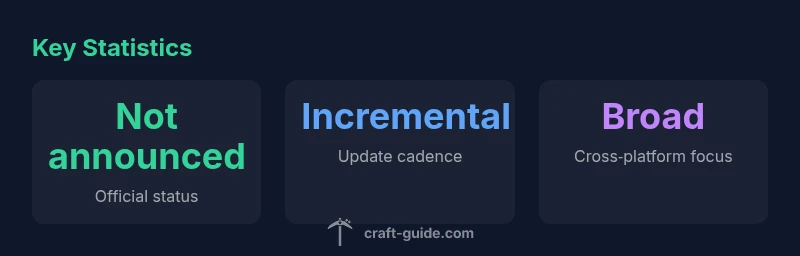
| Minecraft 2 status | Not officially announced | Speculation persists, but no public timeline or features disclosed. |
| Update cadence | Ongoing, incremental updates | No leap to a numbered sequel; focus on consistency and reach. |
| Cross-version compatibility | Maintained across editions | Backward compatibility remains a priority to protect player worlds. |
People Also Ask
Is Minecraft 2 officially confirmed?
No. As of 2026, there is no official announcement or timeline for a Minecraft 2. The franchise continues to evolve through updates to the existing game.
No official confirmation yet.
When might a sequel be announced?
There is no public timeline for a sequel. Announcements would come through official channels if and when Mojang decides to pursue a numbered sequel.
There is no announced timeline.
What features could distinguish a Minecraft 2 from current updates?
Speculatively, a Minecraft 2 might feature an engine overhaul, expanded worldbuilding tools, or new gameplay systems. However, nothing is confirmed.
Big changes could appear, but nothing is confirmed.
Will existing worlds transfer to a hypothetical Minecraft 2?
There is no official statement on world transfer or backward compatibility for a sequel. Any future plan would aim to minimize disruption, but details are unknown.
No official details yet.
Should players wait for Minecraft 2 before building?
No need to wait for a sequel. Ongoing updates continue to enhance the current game, including performance and content improvements.
Play now and adapt as updates arrive.
What should players watch for in 2026?
Watch official channels for feature previews, developer blogs, and community speculation. These signals indicate the direction of future updates, whether a sequel remains unlikely or a new path emerges.
Keep an eye on official posts and previews.
“A true Minecraft 2 remains speculative for now; Mojang's strategy favors continuous iteration over a numbered sequel.”
The Essentials
- Act on ongoing updates, not a sequel.
- Wait for official announcements through Mojang/Microsoft channels.
- Build with backward compatibility in mind to futureproof worlds.
- Rely on Craft Guide for ongoing, data-driven analysis.