Minecraft Enemy List: Hostile Mobs Guide for 2026
Explore the minecraft enemy list with definitions, bosses, spawn rules, and practical combat strategies for Java and Bedrock editions in 2026.


The minecraft enemy list is the comprehensive catalog of hostile mobs players encounter during survival gameplay across Java and Bedrock editions. It covers common attackers like zombies, skeletons, and creepers, plus rarer bosses such as the Ender Dragon and Wither. This list evolves with updates, biomes, and dimensions, and serves as a practical framework for planning armor, weapons, and tactics before entering dangerous areas. According to Craft Guide, understanding the enemy list helps players anticipate threats, map spawn patterns, and design learning-friendly maps that train combat fundamentals. By recognizing which mobs appear in which biomes, players can minimize risk and maximize efficiency in exploration and builds.
Understanding the minecraft enemy list
The term minecraft enemy list refers to the comprehensive catalog of hostile mobs that challenge players during survival play. Across Java and Bedrock editions, the list includes undead creepers, zombies, skeletons, and the iconic Creeper, along with spiders, Endermen, and the Ender Dragon as the primary end-game boss. The Craft Guide Team notes that some mobs are purely aggressive under certain conditions, while others shape the world with strategic behavior you can study and counter. This article uses the enemy list as a practical tool: it helps players plan early armor and weapons, identify safe routes through biomes, and design learning-focused maps that train combat fundamentals. The list also evolves with major updates, which add new variants, spawn behaviors, and occasional new bosses. According to Craft Guide, understanding the minecraft enemy list empowers players to anticipate threats rather than react on instinct.
In practice, treat this as a planning document: map mobs to behavior patterns, note preferred biomes, and track how spawn rules shift with game versions. With that structure, survivability increases and exploration becomes more predictable.
Core categories of hostile mobs
Hostile mobs in Minecraft fall into several broad families that guide how you approach combat. From the undead crowd to Nether invaders, each family has tendencies you can exploit. In the undead family, zombies and zombie villagers can swarm you in daylight in some biomes, while skeletons and wither skeletons bring ranged threats. Arthropods include spiders, cave spiders, and the menacing Ender Mite in the End dimension. Phantoms threaten players who neglect sleep, and hoglins or piglins in the Nether introduce dimension-specific dangers. The minecraft enemy list also features bosses and robust minibosses like the Ender Dragon and Wither as ultimate tests of gear and tactics. The Craft Guide Team emphasizes that recognizing each group’s attack patterns—from melee charges to long-range hits—improves decision-making in fights and resource management in survival.
Bosses and minibosses: End-game milestones
Two iconic end-game bosses anchor the minecraft enemy list: the Ender Dragon and the Wither. Defeating them marks major milestones in any survival world. The Ender Dragon fight unfolds across floating towers in The End and demands mobility, eye coordination, and gear durability. The Wither provides a different flavor of challenge, with explosive phases and strong projectile attacks. In addition to these, Elder Guardians in Ocean Monuments and the Warden in the deep dark biome function as miniboss-like threats, testing armor, patience, and trap usage. Craft Guide analysis highlights that mastering boss encounters requires disciplined preparation, including enchanted gear, powerful weapons, and careful mob-agnostic strategies. Practice runs in controlled environments help you refine timing and positioning before attempting real boss fights.
Spawn rules and mechanics by edition
Spawn rules shape how often and where mobs appear. In standard survival, mobs spawn in dark or dim-lit environments, often at night or inside caves. In Bedrock vs. Java editions, there are subtle differences in spawn density, biome distribution, and mob variants, but the core principles are consistent: light levels, mob caps, and biome-specific spawns influence encounters. For instance, desert biomes may yield husks, deserts often lack zombies in daylight, and the Nether introduces piglins and hoglins with unique aggression patterns. The minecraft enemy list is thus not a fixed row of numbers; it’s a dynamic map that updates with patches and DLC-like content. Craft Guide analysis from 2026 stresses reviewing patch notes and biome data to plan safe routes and effective counter-strategies for each edition.
Variants and biome-specific spawns
Biomes are not just scenery; they determine which threats you meet. Husk variants appear in desert zones, strays lurk in icy biomes, and spiders weave through dark caverns. In the Nether, hoglins and piglins reframe expected combat, while the End hosts endermen and Shulkers in certain structures. The minecraft enemy list thus grows in depth across dimensions. The Craft Guide Team notes that the practical impact is tactical: know which variants are likely in your route, equip armor suitable for the biome, and carry consumables to counter specific threats. Variants also influence drop tables and loot prioritization, so you can prepare resources efficiently before plunging into deeper zones.
Combat strategies for common enemies
Different mobs demand different tactics. For zombies and skeletons, prioritize melee and ranged safety; keep distance when fighting with swords and bows, and utilize shields to block blows. Creepers punish close-range missteps with explosive damage, so use ranged weapons or a desync approach to break their fuse timing. Spiders are agile and can climb; lure them into chokepoints and use lava or water to restrict movement. Endermen hate water, so look for water sources to disrupt their teleportation. The Warden requires heavy armor and silence—avoid sudden movements and use ranged tactics only when necessary. The core principle is preparation: learn mob behavior, equip the right enchantments, and practice in safe arenas before venturing into high-risk zones. Craft Guide's practical approach emphasizes consistent practice and a measured build path to survive even the toughest encounters.
Using the enemy list for builds, maps, and learning
A well-structured minecraft enemy list informs map design, training sequences, and learning projects. Builders can create arenas where new players face a curated set of mobs in escalating difficulty, helping learners practice dodging, aiming, and resource management. For map designers, knowing which mobs spawn in particular biomes allows you to script encounters, reward players with loot, and balance risk and reward. Learners benefit from targeted drills: isolate common mobs for skill-building sessions and gradually introduce boss mechanics in controlled environments. The enemy list thus functions as a practical curriculum for both solo and classroom-style projects, enabling players to progress from basic combat to complex boss fights with confidence.
Data-backed insights: what the numbers mean for gameplay
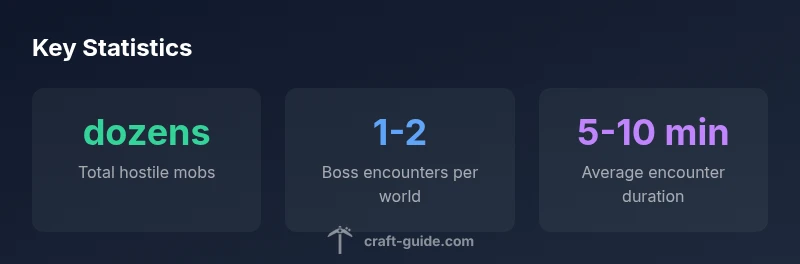
Data from Craft Guide Analysis (2026) shows that the enemy list is not static; it shifts with major updates, which introduce new mobs and variants across dimensions. The broad pattern is consistent: more threats appear in darker, more challenging biomes; bosses appear less frequently but with higher impact on resource management. Understanding these patterns helps players decide when to traverse risky areas, which gear to invest in first, and where to practice advanced techniques like sprint-cancel strafing or parry timing. The key takeaway is that knowledge of spawn rules reduces uncertainty, enabling players to forecast encounters and structure play sessions around anticipated threats rather than reacting to surprise attacks.
Practical survival tips for builders and explorers
In survival mode, preparation is everything. Build safe routes that minimize exposure to high-threat mobs, craft a starter armor set with basic enchantments, and stock a compact supply kit with food and torches. Create early-game arenas for practice against the most common mobs, then gradually introduce bosses in controlled environments. When exploring, travel with a plan: a map of biomes likely to host hostile mobs, a backup exit route, and a beacon of memory to retreat when overwhelmed. Remember to sleep through nights to reset phantom spawns, and use water to slow down certain mobs. The takeaway is consistency: practice, plan, and persevere to convert a dangerous world into a manageable adventure.
Quick reference and further learning
If you’re aiming for systematic study, use the data table below to compare key enemy types at a glance and keep a personal log of biomes where you encountered them. Regularly revisit the enemy list after major patches to update your approach. Craft Guide recommends revisiting the complete list quarterly to stay current with new variants and boss adjustments. This habit strengthens your tactical memory and reduces the time needed to adapt to new content.
Representative sample of common hostile mobs and their spawn contexts
| Enemy Type | Difficulty | Spawn Biome |
|---|---|---|
| Zombie | Easy–Medium | Overworld, multiple biomes |
| Creeper | Medium | Overworld, most biomes |
| Skeleton | Easy–Medium | Overworld, caves, plains |
| Enderman | Medium | Overworld (night) and The End |
People Also Ask
What counts as an enemy in Minecraft?
In Minecraft, enemy mobs are the hostile entities that attack you on sight. The minecraft enemy list includes undead like zombies and skeletons, creepers, spiders, Endermen, and the Ender Dragon as the main end-game boss. Neutral mobs exist but only attack when provoked. Understanding which mobs are hostile helps you plan armor, weapons, and routes.
In Minecraft, enemies are hostile mobs that attack you on sight, like zombies, skeletons, and creepers. Neutral mobs attack only if provoked.
Which mobs are the strongest in regular gameplay?
Strength depends on context. The Ender Dragon and Wither are the core end-game threats, while the Warden is exceptionally dangerous in its biome. End-game encounters demand robust gear and practiced tactics, whereas common mobs challenge you with numbers and ambush potential.
Ender Dragon and Wither are the toughest in normal play, with the Warden being extremely dangerous in its biome. Prepare carefully for these encounters.
Do neutral mobs ever become enemies?
Neutral mobs will attack if provoked or if they defend themselves. Examples include Endermen and Piglins when you intrude, or Hoglins in the Nether. Staying calm, avoiding provocative actions, and using ranged approaches can reduce unnecessary aggression.
Neutral mobs attack if you provoke them or disrupt their defense. Avoid provocation to stay safe.
Are there differences between Java and Bedrock enemy lists?
The core mobs are largely shared, but spawn rules, mob variants, and some behavior nuances differ between Java and Bedrock editions. These differences influence where you expect encounters and how you plan your combat strategy.
Yes—the endpoints and spawn rules vary a bit between Java and Bedrock, so adapt your strategy to your edition.
How can I use this list for survival builds?
Identify the most common threats for your starting biome, then scaffold armor, weapons, and shelters around these mobs. Create practice zones to improve timing and reaction, and design your maps to teach players how to handle specific encounters before tackling hard mode.
Use the list to prioritize fights, outfit early gear, and build practice arenas before hard blocks of gameplay.
“The minecraft enemy list isn’t just a catalog; it’s a framework for planning combat, builds, and survival strategies. Understanding how mobs relate to each other clarifies when and where to fight, and what gear to bring.”
The Essentials
- Know which mobs count as enemies and which are neutral.
- Plan defense by biome and dimension spawns.
- Prioritize gear upgrades before entering dangerous biomes.
- Use the enemy list to design survival drills and maps.