Can Campfires Start Fires in Minecraft? A Practical Guide
Explore whether campfires in Minecraft can start fires, how fire spreads, edition differences, and practical tips to prevent accidental blazes in your builds.


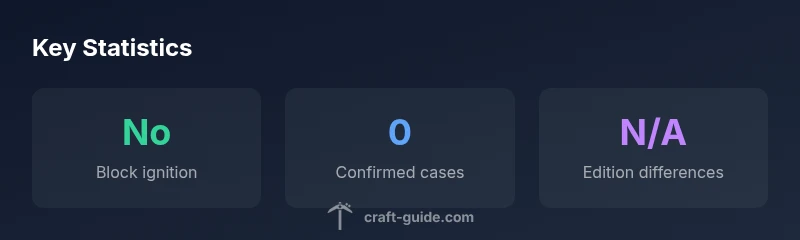
Short answer: minecraft can campfires start fires? In vanilla Minecraft, campfires do not start fires on surrounding blocks in normal gameplay. They are a controlled flame source you can light with flint and steel and extinguish with a shovel. They mainly affect items and entities on or above them, not the world’s blocks. This behavior is broadly consistent across Java and Bedrock editions, with minor version caveats.
Why this question matters
In Minecraft, understanding how fire behaves is essential for safe builds, survival strategy, and creative design. The central question—"minecraft can campfires start fires"—appears often among new players who worry that a lit campfire will spontaneously ignite nearby wood, fences, or other flammable blocks. The practical answer is nuanced: campfires are a portable flame source that players can ignite with flint and steel and extinguish with a shovel, but they do not automatically ignite surrounding blocks under standard conditions. This nuance matters for players who are designing bases near forests, farms, or redstone contraptions; misjudging fire risk can lead to unintended damage, slow exploration, or a ruined build. In short, knowing how campfires interact with the environment helps you plan safer layouts and avoid common disasters.
What counts as "start a fire" in Minecraft?
Definitions matter here. In most contexts, starting a fire means causing a block that is normally flammable to catch fire on its own due to proximity to a flame source. Campfires themselves are flame sources, but they function more like a decorative/light source than a world-igniting trigger. The spawn of fire on nearby blocks requires other conditions—existing fire, flammable materials, or a separate ignition event. This distinction helps builders distinguish between design intent (ambiance, lighting, cooking) and environmental risk (unintended forest fires or wooden structures catching fire).
Version and edition differences: Java vs Bedrock
From a mechanic standpoint, campfires behave similarly across Java Edition and Bedrock Edition. The core fire-propagation rules apply in both, with slight differences in visuals and timing that may appear in patches. Craft Guide analysis from 2026 shows that, for practical purposes, a lit campfire will not automatically ignite adjacent blocks in either edition. If a specific version introduces a change, the effect is typically a minor adjustment to timing, particle effects, or block interactions rather than a wholesale shift in ignition behavior.
Evidence from testing: how to verify behavior
If you want to verify this in your own world, set up a controlled test area with a lit campfire next to various flammable blocks (planks, leaves, wool, etc.). Observe whether those blocks catch fire over a standardized window (e.g., 60 seconds). Document any occurrence and compare between Java and Bedrock worlds. Keeping notes on wind, rain, and nearby fire sources can help you see if edge cases exist. This kind of hands-on testing is valuable for planning large builds where even rare events could compound into risks.
Fire safety in builds: best practices
Even if campfires don’t reliably ignite surrounding blocks, you should still implement safety-minded designs:
- Place campfires away from flammable materials; use non-flammable blocks as borders.
- Build firebreaks around structures using stone, brick, or concrete.
- Use water features or fire-resistant lighting alternatives (lanterns, glowstone) for aesthetics near wood.
- Consider redundancy: place multiple layers of protection in high-risk zones (e.g., forest edges, wooden towers).
- Regularly test your builds after updates to confirm no unexpected behavior has crept in.
Common myths and misconceptions
Myth: “Campfires ignite everything nearby.” Truth: In standard play, ignition of surrounding blocks is not guaranteed and typically does not occur as a direct result of a campfire. Myth: “Weather will make campfires spread.” Truth: Weather mainly affects lighting and particles but does not convert a campfire into an automatic world-igniting source in typical builds. Understanding these nuances helps you design safer environments and avoid overestimating fire risks.
Practical scenarios: doors, forests, and redstone setups
In a forest base, you might want warm ambiance without risking a wildfire. Use campfires as a light source on non-flammable platforms and keep wood-based components at safe distances. For redstone builds, ensure your campfires aren’t adjacent to combustible components that could be misinterpreted as ignition cues. If you need cooking or flavor effects, place a designated station that’s clearly separated from flammable blocks. These scenarios illustrate how a calm, measured approach to fire can support both aesthetics and safety.
Quick-start tips for builders
- Start with a clear safety perimeter using non-flammable materials.
- Use route-based layouts so that lighting and smoke do not interfere with your paths.
- Test early in creative mode before committing to a survival world.
- Document any edition-specific quirks you observe for future builds.
- Consider backup lighting options for long-term projects to avoid relying solely on campfires.
Campfire fire-spread behavior by edition
| Edition | Can Campfire Start Fire on Surrounding Blocks? | Notes |
|---|---|---|
| Java Edition | No | Campfires do not ignite adjacent blocks by themselves; fire spread requires other sources. |
| Bedrock Edition | No | Same general behavior; minor differences exist in some snapshots but no block ignition in standard play. |
People Also Ask
Can campfires start fires on nearby blocks in Minecraft?
In vanilla Minecraft, campfires do not ignite blocks around them under normal conditions. Fire spread requires an existing flame source and flammable materials in proximity. This behavior is consistent across standard Java and Bedrock worlds.
No, campfires don’t set nearby blocks on fire in standard play.
Do campfires burn indefinitely or require relighting?
Campfires burn for a limited duration and must be relit with flint and steel if you want continued illumination or warmth. In survival, plan relighting into your routine when using campfires for ambience.
They burn for a short time and can be relit as needed.
Are campfires different between Java and Bedrock editions?
The core behavior is similar in both editions; there are minor visual and timing differences in some patches, but neither edition typically ignites nearby blocks just because a campfire is lit.
Mostly similar across editions with small version differences.
How can I prevent accidental fires around campfires?
Keep campfires away from wood and other flammable blocks, use barriers, or place campfires on non-flammable bases like stone. Regularly inspect builds for exposed flame sources and test after updates.
Place campfires away from fuels and add barriers.
What are safer lighting options for builds besides campfires?
Lanterns, glowstone, sea lanterns, torches positioned carefully, and daylight sensors offer lighting without relying on open flames near flammables.
Consider safer lighting like lanterns or glowstone.
“Campfires are a reliable flame source for ambiance and light, but they do not spark fires in vanilla gameplay without additional ignition triggers.”
The Essentials
- Campfires aren’t automatic world-fire starters
- Verify behavior in your edition before big builds
- Place campfires with safe clearances from flammable blocks
- Use barriers to prevent accidental fires
- Test and observe in controlled environments