how many minecraft ticks are in a second
Discover how many minecraft ticks are in a second (20 TPS) and what that means for timing, redstone, and performance. Learn how tick length, lag, and platform differences affect gameplay.


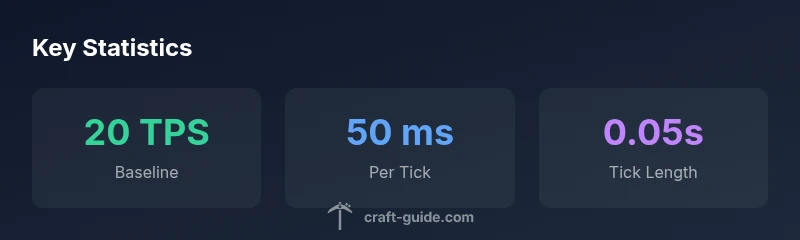
In Minecraft, there are 20 ticks per second (TPS), so each tick lasts 50 milliseconds. This 20 TPS baseline applies to both Java and Bedrock editions under normal conditions. If the server lags, the actual TPS can dip below 20, slowing redstone, mob AI, and other game systems.
Understanding the 20 TPS baseline
In vanilla Minecraft, the game runs on a fixed cadence called ticks per second (TPS). The standard target is 20 ticks every real-world second, which means each tick lasts 50 milliseconds. This baseline applies to both the Java and Bedrock editions under normal conditions. When the server or client lags due to heavy farms, many entities, or limited hardware, the actual TPS can drop below 20, causing the game's simulated world to feel slower. For builders and Redstone engineers, knowing this ticking rhythm is the foundation for timing-based designs and reliable automation.
How a tick translates to real time
A single tick corresponds to 1/20th of a real second, or 50 milliseconds. Therefore, 10 ticks equal 0.5 seconds in real time, and 100 ticks take 5 seconds to pass in-game. This precise mapping is what makes timing-sensitive contraptions and pulse-based systems workable in vanilla Minecraft. When you plan a redstone clock or a farm, thinking in ticks rather than seconds helps you predict behavior across all players and servers.
What affects tick rate in practice?
Several factors influence the observed tick rate in a world. Server performance, hardware limitations, and the complexity of your redstone circuitry all contribute. Large numbers of entities (mobs, items, minecarts) and heavy chunk loading can push TPS down. Modifications or plugins that alter game logic can also affect tick timing. Understanding these elements helps you design systems that remain reliable even when TPS fluctuates.
Measuring tick rate: tools and methods
To assess tick performance, use in-game timing and profiling tools. Java Edition servers often rely on built-in Timings data to report current TPS and tick duration; third-party tools like Spark or external profiling software can provide deeper insights. Run diagnostics during peak activity to see how often TPS dips below 20 and identify culprits such as farms, redstone machines, or chunk loading. Documenting TPS under different loads gives you a practical view of your world’s timing health.
Implications for redstone and timing-based builds
Redstone timing hinges on tick counts. For example, a 1-tick delay translates to 50 milliseconds. Two-tick delays double that. When TPS drops, even small tick-based designs can drift out of sync, causing clocks to run slow or signals to misfire. Builders should design timing networks with tolerance for occasional lag, or implement fallback logic that tolerates irregular ticks. Testing your contraptions in live conditions is essential to ensure predictability.
Java vs Bedrock: subtle differences in scheduling
Both Java and Bedrock editions target a 20 TPS baseline, but the underlying scheduling can differ due to engine design and platform specifics. While the end result is a similar cadence, small timing variances may appear in edge cases, particularly with complex redstone systems or precise biome interactions. Treat the 20 TPS target as the shared standard, while watching for edition-specific quirks in your world.
Common misconceptions and pitfalls
A frequent misconception is equating FPS with TPS; frames per second describe rendering, not game logic. TPS governs how the world updates, including redstone, mobs, and block updates. Another pitfall is assuming a constant tick rate under all conditions; lag often reduces TPS, altering timing outcomes. Finally, mods and plugins may influence how ticks are processed, so always test with your exact setup.
Design strategies to keep gameplay snappy
- Favor modular redstone designs that survive occasional tick drops.
- Use pulse chains with ample margins (e.g., 2–3 tick buffers) to accommodate minor TPS dips.
- Minimize simultaneous heavy calculations by staggering tasks across different ticks.
- Regularly monitor TPS during peak activity and scale your builds accordingly.
Quick reference: rules of thumb for ticking
- Target 20 TPS as the baseline; expect occasional dips on busy servers.
- Treat 1 tick as 50 ms; plan timing-based systems around this unit.
- When lag occurs, anticipate slower automatic processes and adjust with buffers.
- For critical timing, test under full load to ensure reliability.
Key mappings between real time and in-game ticks
| Aspect | Description | Vanilla value |
|---|---|---|
| Tick length | Time of one tick in the game loop | 50 ms |
| Ticks per second | Number of ticks that can run per real second | 20 |
| Real seconds per tick | Seconds per tick in real time | 0.05 |
| Lag impact | Effect of reduced TPS on gameplay | Slower redstone, mobs, world updates |
People Also Ask
How many minecraft ticks are in a second?
There are 20 ticks per real-world second in vanilla Minecraft, with each tick lasting 50 milliseconds. This baseline governs most timing and automation in the game.
Minecraft runs on 20 ticks per second, so each tick is 50 milliseconds.
Can you change the tick rate in vanilla Minecraft?
In vanilla Minecraft, the tick rate is fixed at 20 TPS. You can’t change it through normal game settings, though server performance can affect the observed experience.
The tick rate is fixed at 20 TPS in vanilla; only performance issues can change what you experience.
What causes TPS to drop?
TPS can drop due to heavy redstone activity, large mob counts, many block updates, or limited hardware. Complex farms and dense builds are common culprits.
Lag from heavy builds or lots of mobs can slow things down.
How do I measure tick rate?
Use built-in timing tools like Timings (Java) or third‑party profilers to monitor TPS and tick duration over time. This helps identify bottlenecks.
Use Timings or performance tools to see your current TPS and where it drops.
Is Bedrock different from Java in terms of tick rate?
Both editions target 20 TPS, but scheduling and performance characteristics can differ slightly due to platform differences.
Bedrock also aims for 20 ticks per second, with some edition-specific timing quirks.
What is a tick in Minecraft?
A tick is one update cycle in the game loop. 20 ticks occur each real second, forming the basis for timing and automation.
A tick is one update pass; 20 happen every real second.
“Minecraft's tick system is the heartbeat of the game; understanding 20 ticks per second helps you design reliable redstone and timing-based builds.”
The Essentials
- Understand 20 TPS is the baseline for vanilla Minecraft
- Each tick equals 50 ms, so timing is tick-based
- Lag lowers TPS and affects redstone and mob behavior
- Monitor TPS to design more resilient timing-based builds
- Java and Bedrock share the same 20 TPS target, with subtle scheduling differences