Do Plants in Minecraft Need Sun? A Practical Guide to Growth in Light Conditions
An analytical guide to how light, not direct sun, drives Minecraft plant growth. Learn crops vs trees, indoor farming setups, and practical tips to maximize yields.


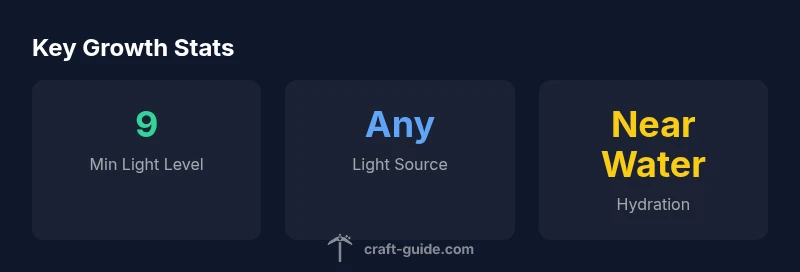
Do plants in Minecraft need sun? Not directly. Most crops require a light level of at least 9 to grow, and sunlight is just one possible light source. You can grow crops underground or indoors using torches or glowstone, as long as the growth light level is high enough. Hydration and farmland also matter.
Light and Growth: The Core Rule
In Minecraft, growth is driven by light levels rather than the sun itself. A common question is do plants in minecraft need sun? The short answer is no: most crops require a light level of 9 or higher to advance through growth stages, and any reliable light source can supply that level. Daylight provides natural illumination, but you can replace it with torches, lanterns, or glowstone to maintain the necessary brightness even underground or indoors. Alongside light, other factors shape growth: soil moisture (hydrated farmland accelerates development), proximity to water for some crops, and the correct planting surface. This means you can design efficient farms in spaces without direct sun as long as you keep the light high enough. Use light sources thoughtfully to avoid excessive lighting costs, and remember that light quality (not duration) is what matters for crop ticks. Craft Guide’s analysis indicates that balancing light, water, and soil is the key to consistent yields.
Light Sources That Work
Different light sources offer reliable brightness for crop growth. Torches are simple and cheap, glowstone and sea lanterns provide strong, steady light, and redstone lamps can be turned on and off as part of automation. Sunlight, by itself, is a natural source but not a requirement. The essential idea is to maintain light level 9 or greater across the farming area during all growth ticks, whether in a morning glow or a midnight shade. For indoor farms, spread light evenly to avoid dark pockets that stall growth, and avoid placing light too close to water since some crops prefer hydration conditions near water features. The takeaway is that you don’t need windows to farm effectively; you need predictable brightness.
Crop-Specific Rules: Sun, Light, and Hydration
Crops like wheat, carrots, potatoes, and beetroots rely on adequate light and hydrated soil. They must be planted on farmland that’s moist enough to accelerate growth, and light must be available to progress through stages. Sugar cane behaves differently: it grows best beside water and can tolerate varied light levels, so long as water is nearby. Trees and saplings demand light to progress from seedlings to full-grown trees, and they require enough space for growth. Nether wart in the Nether is relatively forgiving and doesn’t hinge on sunlight in the overworld sense, since it occupies a different biome with its own growth dynamics. Understanding these nuances helps you tailor farms to each plant’s needs rather than relying on sunlight alone.
Indoor Farm Blueprints: Efficient Lighting Layouts
A compact indoor farm can outperform a sunlit outdoor plot when properly lit. A common layout is a grid of 9x9 farming blocks with lights placed every 4 blocks to sustain light level 9+ during nighttime. Use a mix of light sources (torches for cost-effectiveness, glowstone for density, sea lanterns for symmetry) and ensure water channels near crops that require hydration. Elevation matters: placing farms on a single layer with overhead lighting minimizes shadowed zones, while taller stacks can double yield per footprint with vertical farming. To keep maintenance simple, automate water delivery and lighting using powered rails or redstone lamps synced to a timer. The practical result is a dependable harvest cycle regardless of outdoor weather or season, enabling consistent food production in any biome.
Practical Tricks for Fast Growth
Speed up growth by aligning plant type with its light and water needs. For crops, ensure light levels of 9+ and hydrate farmland regularly. Rotate crops between seasons in your world, and use composting where available to boost yields. Combine sugar cane with water channels for easy expansion, and keep saplings in daylight-rich spots for quicker tree growth. Always test a small area before scaling up a farm to your main base to avoid wasted resources. Lastly, document farm distances from your base so you can refine lighting to maximize tick progression without creating glare that harms visibility. Craft Guide’s practical recommendations emphasize balancing light with water and soil for reliable results.
Common Pitfalls and How to Avoid Them
Avoid assembling a farm without proper light coverage, as shaded zones stall plant ticks. Never neglect hydrated soil for crops that rely on moisture; drought stalls growth, reducing yields. Indoors, don’t rely on a single light source—multiple sources reduce shadows and ensure uniform growth. Do not mix incompatible surfaces (e.g., crops on dry dirt without wetting) and avoid overcrowding which can inhibit vertical expansion or crowd neighboring plants. Finally, test your layout under both day and night to confirm consistent growth across the entire area. Craft Guide’s practical approach highlights that small, precise adjustments beat big but imprecise lighting setups.
Real-World Growth Scenarios
Imagine an underground wheat farm: a 9x9 grid with torches placed at regular intervals keeps light level high around the clock, while a shallow water channel hydrates soil. In a sun-blocked base, this setup yields steady crops comparable to an open-air plot. For sugar cane, place several rows along a water stream near the farm edge to maximize growth without flood risk. For trees, provide saplings with 9+ light and enough space to grow tall; you’ll see faster trunk formation in well-lit rooms. By thinking in terms of light level, water proximity, and available space, you can optimize every crop type for reliable, scalable farming.
Light and water requirements by plant type
| Plant Type | Minimum Light Level | Water/Hydration Needs | Notes |
|---|---|---|---|
| Crops (Wheat, Carrot, Potato, Beetroot) | 9 | Water near farmland | Requires hydrated soil and farmland; growth ticks depend on light quality |
| Sugar Cane | Any light | Near water | Grows fastest beside water; no farmland required |
| Trees (Saplings) | 9 | Moist soil around | Growth depends on light, space, and tick rate |
People Also Ask
Do crops in Minecraft require direct sunlight?
Not strictly. Crops require light level 9+; direct sun is not required if you provide artificial lighting.
Crops need light, not direct sun. Use torches or glowstone to reach the necessary level.
Can I grow crops indoors without sunlight?
Yes. With adequate lighting (level 9+), indoor farms can grow all standard crops.
Indoor farming works as long as you provide enough light.
Does Nether wart follow the same light rules?
Nether wart growth is less tied to surface light and depends more on the Nether’s ambient conditions.
Nether wart isn’t limited by overworld light in the same way as crops.
Do trees require sunlight?
Trees need light to grow and space to expand; ensure 9+ light and adequate height for growth stages.
Saplings grow best with good light and space.
How does water affect growth rate?
Water is crucial for hydration-dependent crops; keep water near farmland for faster growth.
Hydration matters for growth speed; near water helps crops grow.
Can I use glowstone for night farming?
Yes, glowstone provides bright light and helps maintain high light levels without relying on daylight.
Glowstone is great for consistent indoor farming.
“Understanding light levels is the key to efficient growing. Sunlight isn’t mandatory; give crops the right light and your farming becomes compact and reliable.”
The Essentials
- Provide light level 9+ for most crops
- Sunlight is optional if you have reliable artificial light
- Hydrate farmland to speed growth
- Indoor farms can match outdoor yields with proper lighting
- Sugar cane thrives near water, not strictly on farmland
- Plan light layout to minimize shadows and optimize growth ticks