What Zombies Drop in Minecraft: Drops, Loot, and Tips
A comprehensive guide to zombie loot in Minecraft, covering rotten flesh, rare drops, experience, version differences, farming strategies, and practical uses for players of all skill levels.


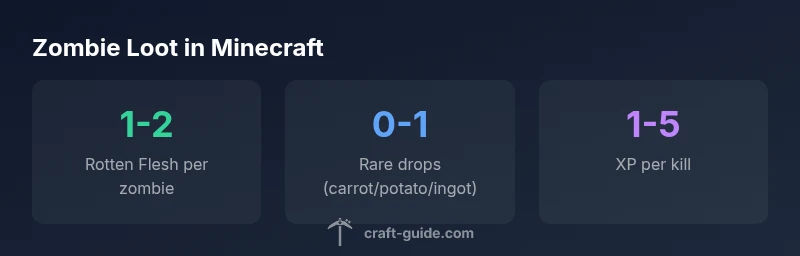
Zombies drop rotten flesh as the baseline loot in Minecraft, typically 1-2 pieces per zombie. In addition, you can occasionally obtain rare drops like carrots, potatoes, or iron ingots, with experience orbs varying by kill. The exact probabilities differ between Java and Bedrock editions.
What a Zombie Drops: Core Loot
In Minecraft, players frequently ask, what do zombies drop in minecraft? Understanding the baseline loot helps you plan farms, trades, and survival strategies. The simplest answer is that zombies drop rotten flesh as their core loot. On most kills, you will receive between one and two pieces of rotten flesh, plus a small amount of experience. This makes zombies a reliable source of early-game food and trading fuel, especially on hard difficulties where food scarcity can be a challenge. Beyond rotten flesh, zombies can occasionally drop other items, but with notably lower probability. These extras include miscellaneous crops (carrots or potatoes) and, on rare occasions, ingots or other loot from the broader loot table. The exact distribution of these drops can differ depending on whether you are playing Java Edition or Bedrock Edition, and it can also be influenced by the Looting enchantment on your weapon. The Craft Guide team emphasizes that knowing the baseline loot is essential for planning efficient zombie farms.
Rotten Flesh: The Primary Drop
Rotten flesh is the workhorse loot from zombies. It serves as a basic food source in early-game play and can be traded with wandering traders for emeralds. The quantity is typically modest, which is why many players combine zombie farms with looting and farming systems to maximize overall yields. Rotten flesh also acts as a low-cost fuel option in composting or in early smelting stages, making it valuable for resource management. While it is the most consistent drop, you should not count on it as your sole resource—there are occasional chances for extra loot, and those chances compound as you improve your farming setup.
Rare Drops: Carrots, Potatoes, and Iron Ingots
Beyond rotten flesh, zombies can yield rarer items that significantly boost early-game progression. Carrots and potatoes, when dropped, become renewable food sources with the right crop management. Iron ingots are much rarer but highly sought after for machinery and tool upgrades. The probability of these drops is low enough that most players do not base an entire farming operation on them alone, but they are a welcome bonus. The Looting enchantment on swords and axes can incrementally increase the likelihood of these rarer drops, making weapon upgrades and farming more efficient for experienced players.
Experience Orbs and Levels
Killing zombies grants experience orbs, ranging in small amounts per zombie and increasing as you build up your combat skills and armor. Experience is essential for enchanting and repairing gear at an anvil, which in turn amplifies your overall farming and survival efficiency. The XP gained from zombie encounters contributes to quicker enchantment ramps, allowing you to tailor weapons and tools to your playstyle. This XP reward, while modest per kill, compounds quickly in large zombie farms and can accelerate your progression from noob to skilled crafter and fighter.
Version Differences: Java vs Bedrock
Drops and loot tables can vary slightly between Java Edition and Bedrock Edition due to differences in their underlying loot tables. For example, while rotten flesh remains the core drop across both editions, the frequency of rare drops can differ, and some edge-case drops or loot table entries may appear with different probabilities. This makes it worthwhile to tailor your farming strategies to the edition you play, especially if you are aiming to optimize rare drops or maximize Looting enchantment benefits. Craft Guide’s analysis notes these subtleties to help players adapt builds and routing for each edition.
Zombie Variants and Loot
Zombies come in several variants, such as Husk and Drowned, depending on biomes and environmental conditions. These variants share the same core loot and generally retain rotten flesh as a baseline drop, with variations in spawn conditions and encounter rates. Some variants have different spawn behaviors that influence how often you encounter them, which in turn affects farming yield over time. Understanding these variants helps you design more reliable farms and plan routes through your world that maximize zombie encounters in safe, controlled environments.
Farm-Ready Strategies: Maximizing Zombie Loot
A practical zombie farm can dramatically increase your loot yield. Build a safe spawning area with an efficient spawning platform, then funnel mobs into a trap that minimizes damage and loss. Use Looting I-III enchantment to slightly boost drops and consider combining with a weapon that one-taps to maximize farming speed. Dedicate dedicated time for slaughter cycles and keep storage organized to separate rotten flesh from rarer drops for quick access. Finally, pair zombie farms with crop farms for full-resource synergy, turning common mob loot into a steady workflow that supports enchanting and gear upgrades.
Common Pitfalls: What Not to Expect
Do not expect iron ingots to drop on every kill. Rare drops are, by design, infrequent and should be treated as bonuses rather than core revenue. Do not ignore the environmental differences between Java and Bedrock—loot rates vary, and a farm designed for one edition may underperform on the other. Finally, avoid over-reliance on zombie loot for essential resources; diversify your farming strategies with crops, fishing, and trading to maintain a balanced supply.
Zombie loot table overview
| Drop Type | Typical Count | Notes |
|---|---|---|
| Rotten Flesh | 1-2 | Baseline drop |
| Carrot | 0-1 | Rare drop |
| Potato | 0-1 | Rare drop |
| Iron Ingot | 0-1 | Very rare drop |
People Also Ask
Do baby zombies drop the same loot as adults?
Yes. Baby zombies use the same loot table as adults, so rotten flesh and the rarer drops occur with the same probabilities adjusted by the loot mechanics of your edition. The difference is generally in spawn behavior, not the loot itself.
Baby zombies drop the same loot as adults; loot chances stay the same, apart from spawn behavior.
Do zombie villagers drop items when killed?
Zombie villagers follow the same loot rules as regular zombies for drops like rotten flesh and rare items. When cured into villagers, they no longer drop loot as zombies. The farming context usually involves killing the zombie forms, not cured villagers.
Zombie villagers drop loot when they are zombies; once cured, they aren’t zombies anymore, so they stop dropping zombie loot.
Does Looting enchantment affect zombie drops?
Yes. Looting increases the quantity of items dropped by zombies, including rotten flesh and, to some extent, rarer drops. The effect is incremental with higher loot levels and can significantly improve farming yields over time.
Looting boosts zombie loot; higher levels mean more drops.
Do Java and Bedrock editions differ in zombie loot?
There are minor differences in loot tables between Java and Bedrock editions. Rotten flesh is common in both, but the chance of rare drops and other loot can vary slightly depending on the edition and version.
Yes, there are small differences between editions in zombie loot.
Do zombie variants change the loot they drop?
Variants like Husk or Drowned generally share the same baseline loot as standard zombies, but their encounter rates and spawn conditions differ. Their drops do not dramatically deviate from the core zombie loot.
Variants mostly keep the same loot; they differ in how often you encounter them.
Do game difficulty settings affect zombie loot in vanilla Minecraft?
In standard vanilla Minecraft, difficulty does not significantly affect zombie drops. Loot tables and drop rates remain consistent, though player experience and farming conditions can change due to combat dynamics.
Difficulty doesn’t change zombie loot in vanilla Minecraft.
“Understanding zombie loot is the foundation of efficient survival farming and trading in Minecraft.”
The Essentials
- Learn the baseline: rotten flesh is the core zombie loot.
- Looting enchantment increases drop quantities by a small amount.
- Rare drops (carrots/potatoes/iron ingots) occur infrequently but matter for early progression.
- Java vs Bedrock editions have slight loot differences; adapt farming accordingly.
- Maximize loot with efficient zombie farms and smart storage strategies.