How to Minecraft PvP: A Practical Guide to Winning Duels
Master the essentials of Minecraft PvP with a hands-on, step-by-step guide covering movement, timing, gear, drills, and common mistakes to win more duels.


You're about to master Minecraft PvP. This guide covers stance, hotbar control, sprinting and strafing, hit timing, and inventory setups to win duels. Before you start, ensure you have a keyboard, mouse, up-to-date Minecraft launcher, and a practice map to test your moves. This is a practical, step-by-step approach designed for players from beginner to advanced.
Understanding Minecraft PvP Fundamentals
If you’re learning how to minecraft pvp, you first need to understand the core ideas behind player-versus-player combat in Minecraft. PvP isn’t just about clicking fast; it’s about timing, positioning, resource management, and adapting to your opponent’s style. This section breaks down the different duel formats you’ll encounter on servers, from one-on-one duels to team clashes, and explains how awareness of map features—edges, elevations, and barriers—shapes your decisions. According to Craft Guide, building a strong foundation starts with knowing what each engagement demands: quick reads of your opponent’s intent, efficient item management, and a calm, repeatable routine you can practice. As you move through this guide, you’ll implant the habits that turn early mistakes into reliable winnings and make you a confident participant in any PvP matchup.
Key concepts to master include hit timing windows, spacing, and choosing the right moment to commit to an attack. You will also learn how to interpret server rules and latency differences, which can make a big difference in a live duel. The takeaway is simple: consistent fundamentals beat flashy, inconsistent play. Start by observing a few example duels on trusted practice maps to internalize pacing and decision-making before you swing your first sword.
Movement and Stance: The Rhythm of Combat
Momentum is everything in PvP. The best players leverage precise movement to create openings while minimizing exposure to counterattacks. This block explains the core movement techniques you’ll rely on in most encounters: sprinting with controlled release, short hops for spacing, and circle-strafing to force your opponent to adjust. You’ll also learn stance management—when to be aggressive and when to retreat to heal or recompose.
A practical approach is to practice a steady baseline: move, stop, strike, and reset. The order matters because it reduces wasted frames and keeps you prepared for counterattacks. We also cover how to use the terrain to your advantage, such as cornering an opponent near a wall or exploiting higher ground for better hit registration. Craft Guide Analysis, 2026, notes that successful PvP players train specific movement patterns until they become second nature, then layer in timing and inventory tactics. This is the foundation you’ll build on in subsequent sections.
Weapon and Shield Setup: Gear That Gives You an Edge
Gear choice impacts both offense and defense in Minecraft PvP. This section outlines optimal loadouts, shield use, and hotbar arrangements to maximize your survivability and damage output. You’ll learn which weapons scale with your playstyle—sword for aggressive poke, axe for tougher knockback, and ranged options for safer finishers. The shield is a crucial tool for blocking incoming strikes and creating counterplay windows, so you’ll practice shield timing, breaking stamina, and switching to offense at the right moment. You’ll also see how to organize your hotbar so your most-used items are always just a quick reach away during duels.
We cover practical loadouts for different scenarios: close-quarters brawls, mid-range skirmishes with a bow, and defensive duels where you stall until your opponent makes a mistake. The goal is to minimize downtime while maximizing threat density. Craft Guide notes that consistent tuning of your gear and hotbar layout translates to faster reaction times and better decision-making under pressure.
Combat Techniques: Strikes, Blocks, and Counters
In this section you’ll translate movement and gear into concrete actions. We detail effective one-two combos, when to land a critical hit by jumping, and how to counter a fleeing opponent with well-timed pressure. Timing is the backbone of combat: you want to land clean hits while maintaining a defensive posture to block or parry forthcoming strikes. You’ll also learn how to sequence your attacks to exceed your opponent’s expectations, creating misreads and opening for follow-up damage.
We discuss the role of stamina, latency, and hit registration in determining when to strike. The practical drills include controlled exchanges on a practice map, alternating offense and defense to build a repeatable rhythm. You’ll finish with a mental model for reading your opponent’s posture—when they commit, when they back off, and how to react proportionally. Craft Guide’s framework emphasizes practice with intention: replicate reliable patterns until they feel natural in any duel.
Practice Plans: Drills, Maps, and Progress Tracking
To turn theory into skill, you must practice deliberately. This block lays out a structured practice plan built around short, focused drills that you can run on your chosen map or server. Begin with warm-up exchanges to calibrate aim and reaction time, then progress to movement drills that emphasize spacing and edge control. Next, incorporate shield usage and hit timing into light-sparring sessions, and finally, run targeted combos against a dummy or cooperative partner so you can reinforce muscle memory.
Progress should be tracked with simple metrics: win-rate in controlled duels, time to land a hit, and consistency of shield blocks. Craft Guide Analysis, 2026, suggests setting weekly benchmarks and gradually increasing the difficulty of drills—add latency challenges, switch between loadouts, and vary opponent behavior to avoid plateauing. End with a reflective review of your duels to identify recurring mistakes and adapt your drills accordingly.
Common Mistakes and How to Fix Them
New players frequently repeat avoidable errors. Common mistakes include overcommitting in awkward positions, ignoring shield timing, and chasing opponents into unsafe terrain. This block highlights the biggest pitfalls and provides concrete fixes you can apply in your next duel. For example, if you tend to stand still after a strike, your opponent will predict your next move; instead, practice small, purposeful movements that continually threaten while preserving your balance. If you notice you lose clarity when the action heats up, switch to a calmer mental routine—breathing, slow on-screen checks, and short bouts of sprinting to reset.
The fixes are practical: rehearse a personal checklist before each duel, keep your shield ready during your approach, and never ignore the terrain's role in your line of retreat. Safety: avoid stepping into lava or water while engaged, as environmental hazards can dramatically alter outcomes. Craft Guide’s recent work emphasizes mindful practice and consistent habits over flashy, isolated tricks.
Adapting to Variants: Java vs Bedrock and Server Rules
Minecraft PvP varies by edition and server rules. This block explains the key differences between Java and Bedrock for PvP, including hit registration, knockback behavior, and cross-platform considerations. You’ll learn how to test your loadout in both environments so you’re prepared for variations in latency or input handling. Server rules—like allowed items, dueling ban lists, and arena modifiers—directly affect your strategy. A practical approach is to study a server’s duel rules and adjust your drills to reflect those constraints.
We also cover cross-platform play: wiring a training routine that translates across editions helps you stay adaptable when you encounter players on different systems. Understanding these nuances prevents frustration and accelerates improvement. Craft Guide’s research into edition-specific mechanics highlights the importance of edition-aware practice for real-world duels.
Quick Start Duel Checklist and Next Steps
If you’re ready to start dueling, use this concise checklist to get going fast. Confirm you have a reliable setup (keyboard, mouse, and a stable launcher version). Load your chosen practice map and run through a 10-minute warm-up that includes movement drills and shield timing. Then engage in controlled duels focusing on one tactic at a time: first the stance, then the hit timing, then the combo sequence. Track your results and adjust your drills weekly, aiming for incremental wins and fewer misplays. The Craft Guide team recommends keeping a duel log to review improvements over time, which helps translate daily practice into consistent performance.
Final Thoughts on Sustained Improvement
Mastery in Minecraft PvP requires consistency, reflection, and a willingness to adapt. Each practice session should push you slightly beyond your current comfort zone: longer combos, tighter defense, or faster loadout switches. The most reliable path to improvement is to combine movement, timing, and gear into a fluid routine, then repeat it until it becomes instinctive. The Craft Guide team believes that progress compounds when you train with intention, review outcomes, and adjust your drills to counter evolving playstyles.
Tools & Materials
- Keyboard(Full-size or compact with responsive keys)
- Mouse(High DPI, 1000 Hz polling recommended)
- Computer or Laptop(Capable of stable FPS for smooth combat)
- Internet connection(Stable, low latency to avoid input lag)
- Minecraft Java Edition(Up-to-date version; preferred for PvP)
- Practice PvP map or server(Arena with controlled duels and spacing)
- In-game shield(Know how to raise and lower in combat)
Steps
Estimated time: 60-90 minutes
- 1
Prepare your loadout
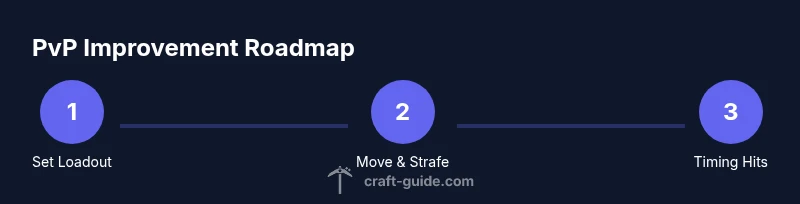
Arrange your hotbar so your primary weapon, shield, and essential items are at reach during duels. Practice quick item swaps with number keys and confirm your setup on a practice map.
Tip: Bind hotbar items to 1-9 and test swapping under pressure. - 2
Set base stance and sprint control
Establish a comfortable stance and practice consistent sprinting with controlled taps to avoid overshooting your target. Focus on maintaining balance while initiating moves.
Tip: Keep your cursor aligned with the opponent’s center to maximize hits. - 3
Practice basic hits and timing
Run drills that synchronize your clicks with your movement. Aim for clean hits and learn when to pause between strikes to reset your swing.
Tip: Don’t spam; timing matters more than speed. - 4
Incorporate shield blocks
Integrate shield blocks into every engagement to reduce damage and create counterattack opportunities. Learn when to shield and when to attack.
Tip: Keep shield up during approach and drop it only to strike. - 5
Add ranged pressure
Introduce bows or other ranged tools to force mistakes from your opponent, then transition to melee when they overcommit.
Tip: Use ranged pressure to force a defensive stance before closing in. - 6
Refine combos and recovery
Develop a few reliable one-two combos and a quick recovery to reset after each exchange. Practice these until they feel automatic.
Tip: End each exchange with a reset to maximize safety. - 7
Review and adapt
After duels, review what worked and what didn’t. Adjust your drills to address gaps and opponent strategies.
Tip: Keep a simple duel log for patterns over time. - 8
Scale difficulty gradually
Increase opponent skill, latency, or map complexity to push growth without overwhelming yourself.
Tip: Incremental challenges yield lasting improvement.
People Also Ask
What is PvP in Minecraft and why does it matter?
PvP refers to players fighting each other in Minecraft. It matters because skillful combat can determine duels, server standings, and overall enjoyment. The guide teaches timing, spacing, and gear decisions to improve outcomes.
PvP is players fighting each other in Minecraft. It matters because skillful combat changes duel outcomes and helps you enjoy the game more.
Should I play on Java edition or Bedrock for PvP?
Java Edition is typically favored for PvP due to more precise hit registration and classic combat mechanics, but Bedrock can offer smoother performance on some devices. Start on Java if you want consistency with most tutorials and duels.
Java usually offers more consistent PvP mechanics, but Bedrock can be smoother on some devices.
How important is hotbar placement in PvP?
Hotbar placement is crucial for fast weapon switching and reaction time. A well-organized loadout reduces misclicks and keeps you in control during exchanges.
Hotbar layout is key for quick weapon switching and reliable reactions.
What practice maps help most for PvP improvement?
A good practice map has duel arenas, a controlled spawn, and areas to practice movement, blocking, and aiming. Use maps that allow repeated drills without server interference.
Look for duel arenas with repeatable drills and minimal latency.
Do shields really help in PvP, and how should I use them?
Shields reduce incoming damage and create counterattack opportunities when timed correctly. Use them during approach and expose the opponent’s recovery window after a block.
Shields help absorb hits and open counterattacks when timed well.
What are common beginner mistakes in PvP and how can I fix them?
Common mistakes include overcommitting, poor spacing, and neglecting edge control. Fix them with deliberate drills, a solid warm-up, and reviewing duel results to adjust your strategy.
New players often overcommit and misplace timing; fix this with targeted drills and reviews.
How can I adapt to different server rules and opponent styles?
Learn the server’s rules and practice with those constraints. Observe different opponent styles and adjust your timing, loadout, and spacing to counter varied approaches.
Know the server rules and study different opponents to adapt your plan.
Is latency a big factor in PvP, and how can I minimize its impact?
Latency affects hit timing and movement. Minimize impact by optimizing your network, lowering graphical load, and practicing with consistent connection patterns.
Latency matters; optimize your network and practice with stable connections.
Watch Video
The Essentials
- Practice a consistent loadout and map setup.
- Master movement for hit-and-run control.
- Use shield timing to create counterplay windows.
- Focus on reliable, repeatable combos over flashy moves.
- Review duels to track progress and adjust drills.