What to Do with Armadillos in Minecraft (Modded Guide)
An educational, step-by-step guide for Minecraft players exploring armadillos in modded worlds. Learn how to enable, interact with, habitat design, and build around armadillos for creative, peaceful, or survival play. Includes setup, builds, safety, and troubleshooting tips from Craft Guide.


This guide helps you figure out what to do with armadillos in Minecraft, focusing on modded gameplay. You'll learn how to enable armadillos, interact with them, design habitats, and incorporate them into builds. Use this as a practical, beginner-friendly path for creative, peaceful, or survival play. It also covers sourcing mods and basic taming concepts.
What Armadillos Offer in Modded Minecraft
In vanilla Minecraft, armadillos do not exist, but many mod packs introduce them as a new mob with distinctive behavior: burrowing, armored shells, and occasional item drops. The Craft Guide team notes that armadillos can become early-game companions or playful farm helpers, giving players new ways to interact with the world. When you add an armadillo to your world, you can experiment with taming, breeding, and habitat design, turning a decorative mob into a functional asset. Common characteristics across mods include slow, steady movement; burrowing to create tunnels; and occasionally rewarding interactions with players through food or items. This section will help you think about practical implementations of armadillos and how to blend them into builds. Understanding their habits helps you plan safe enclosures, feeding zones, and companionship dynamics that fit your playstyle—creative, peaceful, or survival-oriented.
How to Enable Armadillos in a Modded World
To bring armadillos into Minecraft, you’ll typically work with a mod loader and a compatible armadillo mod. Start by choosing a mod loader compatible with your Minecraft version (often Forge or Fabric) and install it following the loader’s official instructions. Next, download a reputable armadillo mod that matches your Minecraft version and install it in the mods folder. Launch Minecraft to verify that the mod loads successfully; create a new world or reload an existing one with the mod enabled. If armadillos don’t appear, check their spawn rules in the mod config files or use spawn items provided by the pack. Craft Guide emphasizes keeping backups before enabling new content, and to review the mod’s documentation for dependencies and conflicts.
- Ensure your mod loader and mod are compatible with your Minecraft version.
- Back up your world before enabling new mods.
- Check the mod’s configuration files for spawn rules and biomes where armadillos appear.
Interacting with Armadillos: Taming, Breeding, and Uses
In many modded packs, armadillos can become more than decorative mobs. Typical interactions include taming with a specific item, which may unlock following behavior, or breeding to create offspring that inherit traits. Some mods enable the armadillo to harvest items from the ground or to guard nearby crops during certain times of day. Use these interactions to support small-scale farming, escort you on exploration, or simply enhance your world’s ambiance. Since each mod defines mechanics differently, always consult the mod’s documentation for exact taming items, breeding prerequisites, and whether riding or carrying is supported. Craft Guide notes that experimenting with taming and breeding can yield rewarding, dynamic gameplay that honors the armadillo’s burrowing instincts and protective shell.
Pro tip: start with a single armadillo in a controlled habitat to learn its behavior before expanding your group.
Designing Habitats and Safe Housing
A well-designed habitat respects the armadillo’s burrowing habits while protecting players from unintended encounters. Create a layered enclosure with shallow burrow entrances that lead to safe tunnels, sheltered sleeping spots, and a water feature if the mod introduces thirst mechanics. Use lighting to deter unwanted mobs at night and ensure easy visibility for observation. Consider modular layouts so you can reconfigure the space as you learn the armadillo’s preferred burrow depth and preferred feeding areas. Craft Guide recommends testing different enclosure shapes—round, square, or irregular—until you find a setup that feels natural and safe for both pet and player.
- Use clear signage or color-coded blocks to outline zones (feeding, burrows, viewing areas).
- Include escape routes and barrier designs that prevent accidental entrapment.
- Keep maintenance simple with removable blocks and modular sections.
Practical Build Ideas Using Armadillos
Armored armadillos can be woven into your builds in several creative ways. A desert trading post might feature armadillos as desert-dwelling guards or as gentle aesthetic companions around a market. In farm districts, armadillos can serve as helper animals that carry light items or assist with pest control in crop fields (per mod mechanics). For explorers, create a burrow-themed hub linked to a surface outpost, where armadillos guide you to resource-rich caves. You can pair armadillos with landscaping elements—low hedges, dune-like slopes, and rock formations—to evoke a warm, arid biome. Integrate armadillo tames into village roles or quest lines for a role-playing feel. Craft Guide encourages embracing modular design, where armadillo habitats connect to other features like stables, fences, and resource farms.
Examples:
- Desert outpost with armadillo companions and guarded food caches.
- Burrow network beneath a farm, with armadillos patrolling and signaling when crops are ready.
- Scenic build that highlights the armadillo’s burrowing behavior as part of the landscape.
Tools & Materials
- Mod loader (Forge or Fabric)(Choose the loader that matches your armadillo mod and Minecraft version.)
- Armadillo mod (mod pack)(Ensure the mod version is compatible with your Minecraft version.)
- Compatible Minecraft version(Verify the mod documentation for version compatibility.)
- World backup tool(Back up your save before installing new mods.)
- Internet access to mod sources(Optional for updates or troubleshooting.)
Steps
Estimated time: 2-3 hours
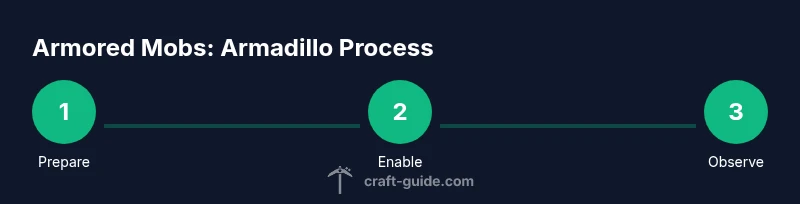
- 1
Prepare your modded environment
Install the chosen mod loader (Forge or Fabric) and the armadillo mod compatible with your Minecraft version. Create a plan for testing in a small world and back up your current save. This step establishes a safe baseline for experimentation.
Tip: Always review dependencies and perform a test run in a copy of your world. - 2
Enable armadillos in your world
Launch Minecraft with the mod loaded and either create a new world or load an existing one that includes the armadillo mod. Verify that armadillos spawn or access spawn items provided by the pack. Adjust world settings if necessary.
Tip: If armadillos don’t appear, double-check mod installation and spawn configurations. - 3
Observe behavior in a controlled area
Explore the habitat area to observe burrowing, movement, and interaction with players. Note what triggers taming or breeding mechanics, and whether armadillos interact with crops or items.
Tip: Use a quiet testing zone to avoid disturbances from other mods. - 4
Tame or breed (per mod)
Follow the mod’s taming instructions to secure a bond, then test breeding if supported. Record which items or conditions unlock these features for future reference.
Tip: Keep taming items organized in a dedicated chest to avoid confusion. - 5
Build a dedicated habitat
Design a burrow-inspired enclosure with entrances, sheltered spots, and safe zones. Include lighting, ventilation, and easy access for observation and feeding.
Tip: Modular habitat design makes future adjustments easier. - 6
Integrate with farms or builds
Incorporate armadillos into your farms and village scenes. Use them as helpers or decorative pieces that enhance realism without sacrificing performance.
Tip: Test each integration in a small area before expanding. - 7
Test performance and adjust
Monitor FPS, memory usage, and mod interactions. If performance drops, tweak spawn rates or reduce simultaneous activity. Rebalance as needed for a smooth experience.
Tip: Back up frequently and document changes for rollback.
People Also Ask
Do armadillos exist in vanilla Minecraft?
Armadillos do not exist in the base game. They appear in some mods or mod packs that add new mobs.
Armadillos aren’t in the official game; you’ll need a mod to see them.
How do I enable armadillos in modded Minecraft?
Install a compatible mod loader (Forge or Fabric) and an armadillo mod, then launch the game and load a world with the mod. Check spawn rules in the mod configuration if they don’t appear.
Install the mod, start Minecraft, and verify spawns in your world.
Are armadillos tameable or rideable?
Many mods offer taming with specific items and may provide breeding or basic rideable behavior. Always refer to the mod’s documentation for exact mechanics.
Some mods let you tame or ride them; read the mod page for details.
What safety considerations exist when using mods with armadillos?
Mods can cause crashes or performance issues. Always back up saves, test in a controlled environment, and ensure compatibility among installed mods.
Mods can crash or lag your game; back up first and test safely.
Can armadillos be used in farms or builds?
Yes, in many packs they act as helpers or decorative elements that can be integrated into farm layouts and village builds.
They can be part of farms and builds as helpers or decorative features.
Where can I find reliable armadillo mods?
Look on reputable mod hosting sites, check the mod’s official page, and review user feedback for compatibility and stability.
Check reputable sites and read reviews before downloading.
Watch Video
The Essentials
- Armadillos in modded Minecraft add interactive habitat design opportunities.
- Enable, tame, and breed armadillos following mod documentation; adapt to your play style.
- Design safe habitats and integrate armadillos into farms and builds with modular layouts.
- Always back up your world and test changes in a controlled environment.