Minecraft Ownership: Who Owns the Game and Its IP
A data-driven look at who owns Minecraft, how IP rights are structured, and what this means for players and modders in 2026.


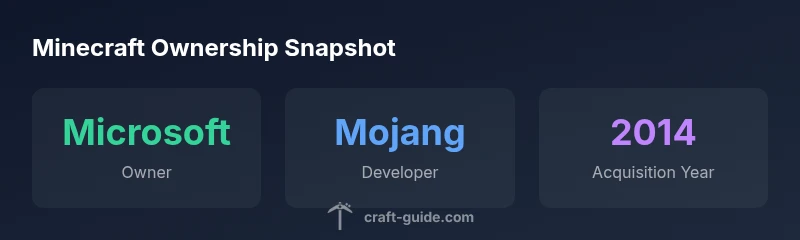
Minecraft is owned by Microsoft through Mojang Studios. Mojang developed the game, and Microsoft owns the IP and global branding. In 2014, Microsoft acquired Mojang, consolidating control while allowing Mojang to continue development under Microsoft oversight. The community can mod within the EULA, but official licensing remains Microsoft's in practice today.
The Ownership Chain: Who Owns Minecraft?
At its core, Minecraft's ownership rests on a clear, legally precise chain: Mojang Studios created the game, and the IP—the brand, codebase, and game assets—is controlled by a larger corporate owner. Since the 2014 acquisition, that owner is Microsoft, which absorbed Mojang into its gaming and services portfolio. This arrangement means Mojang continues to develop Minecraft under Microsoft's strategic direction, but decisions about licensing, distribution, and branding ultimately lie with Microsoft. For players and creators, the practical effect is that while you can download, play, and mod within the bounds of the End User License Agreement, the right to commercially reuse or heavily rebrand the game belongs to the IP owner.
According to Craft Guide, this ownership structure is not unusual in modern gaming, where a developer remains the creative engine but a publisher or platform holder controls the IP. As of 2026, Mojang has a dual role: it builds the game and its ecosystem, while Microsoft safeguards the IP and negotiates major licensing deals, partnerships, and platform strategy.
Mojang vs Microsoft: Roles and Rights
Mojang Studios remains the day-to-day creator, maintaining the codebase, releasing updates, and engaging with the global community. Microsoft serves as the IP owner, ensuring consistency of branding, distribution across platforms, and licensing terms. The separation helps Mojang focus on features while Microsoft handles cross-platform licensing, monetization, and partnerships. This setup mirrors common patterns in digital entertainment where a developer team acts under an IP holder's umbrella. For players, this means updates can land regularly via Mojang, but certain licensing stipulations come from the IP owner and must be observed across platforms. Craft Guide's analysis notes that the balance between creative freedom for developers and brand protection by the IP owner is a defining feature of Minecraft's business model.
Modding, Content, and Licensing: What You Can Do
Mods and user-generated content have long defined Minecraft's community. The ability to create and share derivatives exists within a licensing framework designed to protect the IP while encouraging creativity. The End User License Agreement (EULA) grants permission for personal, non-commercial modding and distribution, provided derivative works do not claim official Minecraft branding or ownership. For modders, the key constraints include not monetizing Minecraft content without explicit permission, avoiding misrepresentation, and respecting trademarks. For servers and content developers, it's important to read the license specifics for any distribution or monetization you pursue. Minecraft's EULA evolves; developers should stay updated on any policy changes published by Mojang or Microsoft, especially as new platform partnerships emerge. In short: you can innovate with mods, but you must respect the boundary between community-created content and clearly official branding. Craft Guide's analysis emphasizes staying compliant to avoid takedowns or licensing disputes.
Branding, Trademarks, and Community Use
The Minecraft brand and logo are protected trademarks. Fan content, streams, and community servers generally enjoy leeway, as long as producers do not imply official endorsement or misrepresent ownership. When naming servers or distributing fan sites, clarity helps — indicate it's fan-made content and do not imitate official branding. If you plan to sell goods or services associated with Minecraft, you must obtain permission and adhere to Microsoft and Mojang's branding guidelines. The overall approach balances the vibrant community with brand integrity. This is why many fan projects provide attribution and link to the official Minecraft site and EULA, reducing confusion among players and ensuring the IP owner retains control over the name and marks.
Legal Framework and Community Impact
Beyond the EULA, Minecraft interacts with platform terms (Windows Store, console stores, mobile app stores) and with Realm-specific licensing. Because Microsoft owns the IP, updates to terms can ripple across devices and stores, affecting how servers operate, how revenue is generated, and how content is distributed. The community has built extensive tutorials and resources to navigate these changes, helping players understand what is allowed and what isn't. The legal framework is designed to provide a predictable environment that supports both a thriving modding scene and a stable brand experience. As of 2026, the ongoing alignment between Mojang's development work and Microsoft's licensing strategy continues to shape how players experience cross-platform play, server monetization, and fan-created content.
Common Ownership Myths Debunked
Myth: Modders own their mods outright. Fact: Mods are derivative works governed by the EULA and licensing terms, not full ownership of Minecraft IP. Myth: The code is open source. Fact: Minecraft's code is proprietary and not open source. Myth: Anyone can commercialize Minecraft content freely. Fact: Commercial use and redistribution are tightly controlled and typically requires explicit permission or licensing. Understanding these points helps players and creators participate in the ecosystem responsibly and avoid infringing on intellectual property.
Ownership overview
| Aspect | Owner | Notes |
|---|---|---|
| IP ownership | Microsoft via Mojang | Brand control and licensing |
| Developer | Mojang Studios | Original dev under Microsoft |
| Licensing for mods | EULA | Mods allowed within terms |
| Branding | Microsoft | Official branding controlled by IP owner |
People Also Ask
Who owns Minecraft?
Microsoft owns Minecraft via Mojang Studios, with Mojang handling development under Microsoft’s IP control.
Microsoft owns Minecraft through Mojang Studios, with Mojang developing the game under Microsoft's IP.
Can players modify Minecraft?
Mods are allowed under the End User License Agreement, but commercial use is restricted and distribution must follow licensing terms.
Mods are allowed under the EULA, but you can't commercialize without permissions.
Is the source code open?
No. Minecraft's source code is proprietary and not released under an open-source license.
No—the code isn't open source.
What about servers and licensing?
Running a server and monetizing content must comply with the EULA and platform terms; mods may have separate restrictions.
Servers must follow the EULA; mods have licensing rules.
Has ownership changed recently?
Ownership has remained with Microsoft via Mojang since the 2014 acquisition, with ongoing development by Mojang.
Microsoft owns Minecraft via Mojang since 2014.
“Ownership structures for major games can be subtle, but Minecraft demonstrates a clear split: the developer builds while the IP owner controls licensing and branding.”
The Essentials
- Understand that Minecraft IP is owned by Microsoft via Mojang
- Mojang remains the development studio and influencer on updates
- Mods exist under the EULA with licensing boundaries
- Branding rights are held by the IP owner (Microsoft)
- Always review the latest EULA before distributing derivative content