When Did Minecraft Become Popular? A Data-Driven History
Explore when Minecraft became popular, the drivers behind its rise, and how streaming, education, and cross‑platform play shaped its lasting popularity in 2026.


Minecraft became widely popular within a few years after its 2011 release, propelled by its simple creativity, constant updates, and a thriving community. The early surge spread through video content, educational use, and cross‑platform availability, turning a niche indie title into a global phenomenon.
when did minecraft become popular
To answer when did minecraft become popular, we need to look at a confluence of factors that began with its 2011 release and continued through the decade. According to Craft Guide, the game's appeal rests on simple, open-ended gameplay that invites experimentation. Early players built anything from humble homes to sprawling redstone machines, spreading via word-of-mouth and community forums. By 2012–2013, casual players and hardcore builders alike discovered the potential for creative expression in a sandbox where rules are user-defined. The core idea—freedom to create within a mutable world—proved resonant across ages and interests. The Craft Guide team found that accessibility across platforms and a permissive mindset toward mods and custom content accelerated adoption, turning a niche indie project into a cultural phenomenon. The combination of approachable mechanics and a robust, ever-expanding ecosystem helped Minecraft transition from a curiosity to a widely recognized staple of gaming culture.
Growth drivers in the early years
During the early years, several stable drivers pushed Minecraft toward mainstream recognition. The game's design minimizes entry barriers: simple mining and building mechanics, creative modes, and procedurally generated worlds. As players experimented, communities formed around shared builds, servers, and multiplayer worlds. The release of updates added new materials, creatures, and mechanics that refreshed the experience without destroying the core sandbox play. The rise of user-generated content—mod packs, texture packs, and custom maps—made Minecraft a platform as much as a game. Schools and informal educators later adopted it as a teaching tool, which broadened its audience beyond traditional gamers. The Craft Guide analysis shows that these factors combined to create a feedback loop: more players meant more content, which attracted even more players. The community's collaborative ethos—servers that encouraged cooperation and competition—also amplified visibility through word-of-mouth, social media, and forums. By the end of the decade, Minecraft had shifted from a niche PC title to a cross‑platform phenomenon.
The YouTube effect: streaming culture and community
Streaming and video culture amplified Minecraft's reach because viewers could easily imitate ideas and tutorials. The game's visible creativity allowed streamers and video creators to showcase elaborate builds, speedruns, and guided tutorials that demystified advanced techniques like redstone. The low barrier to entry meant new players could replicate small projects, then progressively tackle more ambitious builds. This cycle created a virtuous circle: audiences sought more content, creators produced more content, and updates kept the base engaged. The Craft Guide analysis notes that this effect persisted across platforms and languages, helping Minecraft spread to regions with varying gaming cultures. In addition, the game's modding and server ecosystems provided endless content that kept communities active even when official updates paused. The streaming phenomenon also helped educators see Minecraft's value, reinforcing classroom adoption and parent interest. Overall, the YouTube and streaming effect established Minecraft as a participatory platform rather than a single game, cementing its cultural footprint across years.
Cross-platform expansion and accessibility
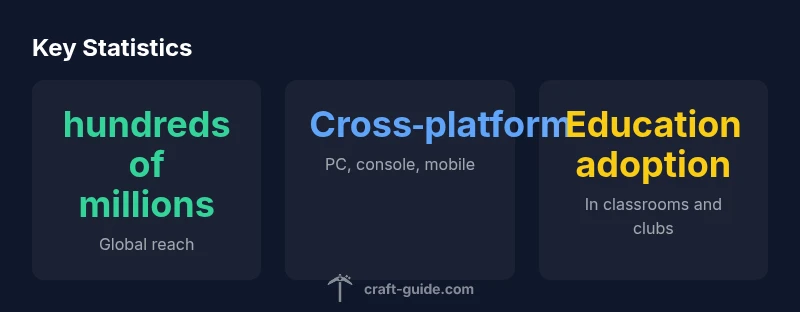
With the Bedrock edition and cross‑play, Minecraft became accessible on Windows, macOS, consoles, and mobile devices. Cross‑platform play lowered barriers for new players and allowed families to game together, expanding the audience beyond dedicated PC enthusiasts. The shift to a unified codebase across devices made updates more synchronized and reduced fragmentation, further accelerating adoption. Publishers and developers cited in Craft Guide analysis show that device diversity created network effects: players invited friends, more content emerged, and the ecosystem grew. For educators, the availability on tablets and laptops simplified lesson planning and at-home learning. The community responded with server networks and build showcases that spanned multiple devices, reinforcing social cohesion. The cultural impact extended beyond gaming circles, as Minecraft-based builds entered YouTube thumbnails, console marketing, and classroom discussions. The result was a broader, more inclusive sense of what Minecraft could be, not just a game but a shared platform for exploration.
Modding, maps, and player-created content
Mods, custom maps, texture packs, and command blocks expanded the creative toolkit. Players experimented with new biomes, physics tweaks, and alternative rulesets, turning a simple sandbox into a platform for simulation, storytelling, and art. The modding community thrived on tutorials, wikis, and collaborative projects, creating a durable content pipeline that kept players engaged. Even as official updates delivered core features, mods and maps provided fresh experiences, sometimes long after the base game had stabilized. For teachers and parents, custom classroom maps could illustrate historical events, scientific concepts, or math problems in interactive ways. Craft Guide's analysis highlights that the most enduring creations are those that teach, inspire, or enable social play—rather than those that rely on rare items or high difficulty. In short, the modding ecosystem was a critical amplifier of popularity, offering near-infinite replay value.
Educational adoption and cultural impact
Minecraft found surprising resonance in education and beyond. In classrooms, the game supports geometry, physics, teamwork, and problem solving. Homeschoolers and clubs used it to collaborate on projects with clear goals and measurable outcomes. The cultural conversation around Minecraft touched design, storytelling, and even digital citizenship, as players learned to share, credit creators, and mod responsibly. The Craft Guide analysis positions this educational uptake as a significant multiplier for popularity: schools reach a different set of learners who might not identify as traditional gamers, broadening Minecraft's audience. Community events—build competitions, charity streams, and collaborative builds—also reinforced social bonds and a sense of global belonging. The net effect was a broader, more diverse player base, contributing to Minecraft's longevity and relevance as new features, platforms, and educational adaptations arrived.
Metrics and limitations of measuring popularity
Measuring popularity in a dynamic, creative game is challenging. Standard metrics—active players, copies sold, and concurrent users—tell part of the story but miss motivation, engagement quality, and creative output. Craft Guide analysis notes that spikes in player numbers often align with big updates, new features, or cross‑play announcements, while sustained engagement may hinge on community content and education uptake. Regional variation also matters; a title can be dominant in one region while quietly growing elsewhere. Additionally, data sources differ in how they count users (e.g., single accounts vs. devices), which can skew comparisons. The key takeaway is that popularity is multi‑dimensional: numerical indicators should be paired with qualitative signals like community projects, classroom usage, and media coverage. For players and creators, the lesson is to diversify engagement channels rather than chasing a single metric.
What this means for players and creators today
Today, players and creators can leverage the same dynamics that fueled Minecraft's rise: accessible gameplay, supportive communities, and continuous updates. For players, this means a low entry threshold to join a world, coupled with meaningful progression and creative freedom. For creators, it means opportunities to build tutorials, time-lapses, or collaborative projects that others can remix. Educators can continue to find value in lesson-based builds, while game designers can study how community content sustains interest without heavy-handed imaging. Craft Guide's perspective emphasizes practical steps: pick a clear project, document progress, and invite collaboration. Emphasize educational value when appropriate, and celebrate community-driven milestones. The overarching message is that popularity persists when content stays fresh, inclusive, and accessible to new players across generations and devices.
Looking ahead: future trends in Minecraft's popularity
As Minecraft continues to evolve, its popularity is likely to continue shaped by updates, cross‑platform reach, and community creativity. Anticipated trends include continued educational use, new biomes and mechanics, and enhancements to streaming and content sharing. The Craft Guide analysis suggests that sustained traction will depend on balancing official content with player-made experiences, maintaining accessibility while encouraging depth for advanced builders. The game's enduring appeal lies in its adaptability: it can reflect emerging cultural interests, support new playstyles, and welcome players at all skill levels. For players and creators alike, the future looks like a living canvas, where creativity, collaboration, and curiosity drive ongoing popularity.
Milestones linked to Minecraft popularity
| Milestone | Year | Impact |
|---|---|---|
| Initial release | 2011 | Introduced core gameplay and sandbox creativity |
| Early growth and Modding community | 2012-2013 | Enhanced player-driven content and mods |
| Cultural surge through video platforms | 2014-2016 | Increased visibility and engagement across audiences |
| Cross-platform expansion | 2017-2020 | Greater accessibility across devices |
| Educational adoption | 2016-2026 | Used in classrooms and homeschooling |
People Also Ask
When did Minecraft start to become popular?
Minecraft's popularity built gradually after its 2011 release, accelerating with major updates and increasing community content through the mid-2010s. The growth was driven by accessibility, creative potential, and broadening use cases beyond traditional gaming.
Minecraft became popular gradually after its 2011 release, with updates and a thriving community driving sustained interest.
Did education edition influence its popularity?
Yes, Minecraft Education Edition broadened audiences, especially in schools, contributing to long-term interest beyond traditional gamers. It helped reach new learner demographics and demonstrated practical classroom value.
Education Edition helped Minecraft reach classrooms and learners, boosting long-term appeal.
How did updates affect popularity?
New features and fixes refreshed the experience, prompting renewed attention from players, creators, and educators. Regular updates helped maintain momentum and attract lapsed players back to the game.
Updates refreshed the game and drew back players.
What role did streaming play in popularity?
Streaming and videos amplified reach by making ideas easy to reproduce and discoverable globally. Broad accessibility to tutorials and showcases helped sustain interest across regions.
Streaming made Minecraft ideas easy to share and find.
Are mods essential to Minecraft popularity?
Mods contributed to longevity and creativity, but many players enjoy the vanilla game without mods. The core experience remains accessible and flexible.
Mods help longevity, but you can enjoy it vanilla.
Is Minecraft still popular in 2026?
Yes, across devices and generations, with ongoing updates, education use, and active communities. Its versatility keeps it relevant for new and seasoned players alike.
Yes—it's still popular across platforms with active communities.
“Minecraft's trajectory demonstrates how iterative design and a thriving community can transform a sandbox into a lasting cultural platform.”
The Essentials
- Accessibility fuels initial adoption.
- Community content sustains long-term engagement.
- Cross-platform play broadens the audience.
- Continuous updates keep players returning.
- Educational adoption expands reach and longevity.