What to Breed Horses in Minecraft: A Practical Guide
Learn what to breed horses in Minecraft, how to prepare your herd, and proven strategies to raise fast, healthy, and friendly steeds. A beginner-to-advanced, step-by-step guide with tips for safe breeding and multiplayer setups.


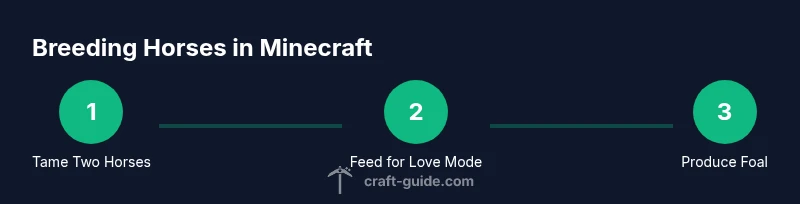
Breeding horses in Minecraft lets you grow a stable of rideable steeds for exploration and builds. You’ll need two tame horses and either golden apples or golden carrots to start. Feed both, watch for hearts, and a foal will appear. This guide covers supplies, setup, and best practices for healthy offspring.
Why breeding horses matters in Minecraft
If you're asking what to breed horses in minecraft, you're aiming to create dependable, fast, and friendly steeds for exploration, mining, and long builds. Breeding is more than just making a cute foal; it allows you to tailor a stable of horses with different speeds, health, and temperaments to suit various tasks. According to Craft Guide, a well-planned breeding program pays off with safer travel, quicker escape routes from danger, and more enjoyable multiplayer sessions. In this section you’ll learn why taming first matters, what you should gather before you start, and how to think about your stable layout so growth is steady and efficient. By the end you’ll know how to prioritize traits that matter for your playstyle and how to measure progress across generations.
Getting started: what you need to breed horses
To begin what you need to breed horses in minecraft, gather two tame horses, and prepare one of the two food options that trigger breeding: golden apples or golden carrots. You should also build a safe, fenced breeding area with accessible water and even a little grass block to keep horses content. Before you start, ensure both horses are naturally calm around others, have saddles removed if needed, and are not attached to hostile mobs. Craft Guide's practical tips emphasize planning and patience; you should also set a goal for your first foal, such as a standout speed or stamina. In this step-by-step, we cover the practical items, the order to tame, and how to position your animals so you get a smooth breeding session without interruptions. Finally, keep a few spare items on hand in case you need to adjust your setup.
The breeding mechanics: love mode and foal growth
Breeding in Minecraft hinges on two tame horses entering love mode after being fed with compatible items. When both horses are ready, they’ll produce a foal in between them. The foal will grow into an adult over time, and you can repeat the process to diversify your herd. Temperament and speed traits are influenced by parent genetics in a probabilistic way, so multiple breeding cycles may yield a wider range of offspring. Craft Guide notes that understanding basic breeding mechanics helps you optimize outcomes, particularly when planning for speed and health in a long-term stable.
Choosing your breeding items: golden apples vs golden carrots
The two primary items used to trigger love mode are golden apples and golden carrots. Golden apples are rarer and more powerful for quickly getting two horses into breeding mode, while golden carrots are typically easier to craft in larger quantities. Both items restore a lot of hunger and can be used strategically to time multiple breedings in a single session. When choosing between them, consider your resource availability and long-term goals for your stable—golden apples may produce quicker results for a single batch, whereas golden carrots support steady, repeated breeding.
Building a safe and efficient breeding area
A dedicated, quiet paddock helps keep horses calm and reduces the risk of accidental escapes or mob interference. Build a spacious enclosure with solid fencing, gates for easy access, and nearby water and hay blocks to improve aesthetics and contentment. Place grass blocks inside to encourage natural feeding behavior, and ensure lighting is adequate to deter hostile mobs at night. Craft Guide recommends arranging the space to keep foals within reach of their parents while allowing existing horses room to maneuver. A well-planned area speeds up bonding events and makes future breeding sessions more predictable.
Practical strategies for new players and advanced breeders
New players should start with a small, two-horse herd and gradually expand beyond a basic setup. Track which parent traits tend to pass on, and use selective breeding to emphasize speed or health. Advanced breeders can implement rotation breeding with multiple pairs, test different combinations of parent horses, and maintain a ledger of promising offspring. Consider naming foals for easy tracking, and always keep your paddock secure from wandering mobs. Craft Guide’s experiences show that consistent practice and careful recording lead to better results over time.
Common mistakes to avoid
Avoid assuming all horses are the same; temperament and speed vary and can surprise new breeders. Never breed horses in an open area with aggressive mobs nearby, as panic can ruin the process. Don’t forget to feed both horses to trigger love mode at the same time, and avoid leaving the breeding space cluttered—excess items can confuse NPCs and animals. Finally, don’t over-breed without giving offspring enough care to grow strong; patience is part of a successful breeding program. Craft Guide highlights that slow, steady progress yields better, repeatable outcomes.
Breeding in multiplayer: server tips and etiquette
On servers, ensure breeding zones are private or properly protected to prevent griefing or theft. Communicate breeding goals with teammates and coordinate resource sharing for golden apples or carrots. Use stable ownership signs or chest locks to avoid confusion about which horses belong to whom. If you’re on a public server, consider implementing a small rotation schedule for breeding sessions so everyone benefits from shared resources. Craft Guide notes that respectful collaboration and clear rules improve both experience and efficiency.
Naming, statistics, and taking your herd further
As you expand your stable, consistently name foals to avoid mix-ups and track lineage. Record traits such as speed, health, and temper, and use selective breeding to push your herd toward your preferred profile. Remember that offspring inherit random variation rather than guaranteed traits, so you may need several generations to achieve your ideal set of horses. With patience and careful planning, your Minecraft stable can become a reliable squad for adventures, builds, and exploring new biomes.
Authority sources
For solid, real-world context about animal care and breeding strategies outside of Minecraft, consult reputable resources:
- https://extension.colostate.edu
- https://extension.illinois.edu
- https://www.vet.cornell.edu
Tools & Materials
- Two tame horses(Ensure both are tamed; avoid aggression; have a safe paddock.)
- Golden apples or golden carrots(Have enough to feed both horses at once; one item per horse.)
- Breeding enclosure (fenced paddock)(Secure from mobs; provide space and access.)
- Gates and pathways(Easy entry/exit for horses and foals; minimizes escapes.)
- Name tags (optional)(Use to name foals for tracking lineage.)
Steps
Estimated time: 15-25 minutes
- 1
Tame two horses
Approach each horse slowly and feed it apples or carrots to establish taming. Look for hearts and a successful tame animation before proceeding. Keep the animals calm and avoid crowding them with hostile mobs nearby.
Tip: Patience is key; tamed horses will follow you and stay close if treated gently. - 2
Gather breeding items
Collect golden apples or golden carrots in your inventory so you can feed both horses simultaneously. Having a small stock ensures you can start breeding without interruptions. Place the items in your hotbar for quick access during the session.
Tip: Verify you have enough items for at least two breeding attempts to maximize success. - 3
Prepare the breeding area
Open and clean your paddock, ensuring fences are intact and gates are accessible. Clear mobs from the area and consider lighting to keep things safe at night. A calm, well-lit space reduces stress during love mode.
Tip: Add hay bales or grass blocks to subtly encourage natural behavior in horses. - 4
Feed horses to enter love mode
Hold one golden apple or golden carrot and feed each tame horse in sequence. Hearts will appear above their heads, signaling they are ready to breed. Keep your distance until breeding completes to avoid accidental interference.
Tip: Timing matters—start feeding both horses within a few seconds of each other for a synchronized love mode. - 5
Produce and handle the foal
A foal will appear between the two horses once love mode succeeds. Move to give space for the foal to grow and bond. Keep the foal in a safe area and ensure its parents can roam without leaving the paddock.
Tip: Observe the foal’s growth cues; baby horses grow into adults over time and need space to mature. - 6
Grow and repeat
After the foal becomes an adult, you can repeat the process with new pairs to expand your stable. Track which pairings yield the best traits for your playstyle and build a rotating breeding program.
Tip: Record results to refine your breeding strategy over time.
People Also Ask
Do you need to tame horses before breeding?
Yes. Both horses must be tamed in order to enter love mode and produce a foal. Untamed horses will not cooperate in breeding.
Yes, both horses need to be tamed to breed successfully.
What items work for breeding?
Golden apples or golden carrots are used to trigger love mode in horses. Collect enough of either item to feed both horses at once.
Golden apples or golden carrots are used to start the breeding process.
Can you breed donkeys or mules with horses?
In Minecraft, horses breed with horses only. Donkeys and mules do not interbreed with horses.
Horses only breed with horses in Minecraft.
Can foals be named or customized?
Yes, you can name foals later using a name tag. This helps track lineage and personalize your herd.
Foals can be named with a name tag.
How long does it take for a foal to become an adult?
Foals grow into adults over time; growth occurs at a natural pace in-game, and you can breed again while they mature.
Foals grow into adults over time, then you can continue breeding.
What are best practices for multiplayer servers?
On servers, keep breeding contained to protected areas, coordinate with teammates, and avoid breeding in shared spaces to prevent conflicts.
When playing with others, communicate and use protected spaces for breeding.
Watch Video
The Essentials
- tame two horses first and prepare breeding items
- golden apples or carrots trigger love mode
- design a calm, secure breeding area
- offspring traits are probabilistic—breed for refinement over generations
- document results to improve future breeding attempts