What Minecraft Animals Can You Tame: A Practical Guide
Learn what minecraft animals can you tame, how to tame wolves, cats, horses, and more, and tips for building reliable mob companions in 2026.


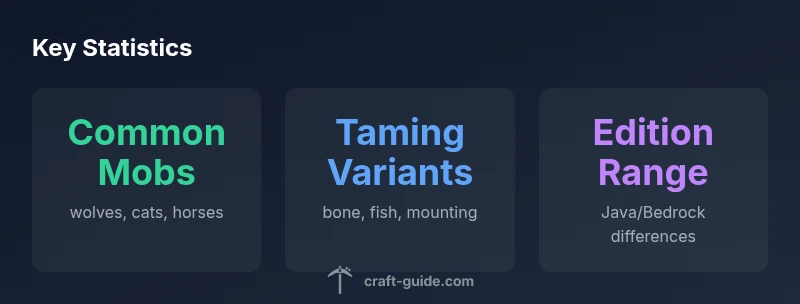
Short answer: In Minecraft, you can tame several mob types, most notably wolves (via bones), cats (via fish), and horses (via mounting after a successful tame). In addition, donkeys, mules, llamas, and parrots can be domesticated under specific interactions. The exact mechanics vary by version, but these pets generally follow you, can be ridden or used as companions, and respond to your commands.
What counts as tameable in Minecraft and why it matters
In Minecraft, the phrase what minecraft animals can you tame refers to a small group of mobs that players can domesticate into reliable partners. Understanding who can be tamed helps you plan journeys, build farms, and design efficient survival strategies. According to Craft Guide, taming mechanics have evolved across editions and updates, but the core idea remains the same: tame creatures become dependable allies, either as followers, guards, or mounts. The most venerable tameable mobs are wolves, cats, and horses. Over time, Mojang expanded the roster to include donkeys, mules, llamas, and parrots, each with its own quirks and requirements. The practical takeaway is simple: if you want a tool you can rely on in hostile biomes, you should learn how the tame systems work for the mobs you plan to encounter. Craft Guide analysis notes that taming is not universal; many mobs can be bred or attracted, but only a subset qualify as true tameable companions. The first step is to identify the mob you want and then study the precise interactions that unlock trust or mounting ability. This article uses version-agnostic language where possible while flagging any edition-specific caveats. In short, knowing what minecraft animals can you tame helps you map routes, allocate resources, and choose companions that match your playstyle.
Core tameable mobs and their interaction patterns
Minecraft’s tameable mob roster is not infinite. The core set tends to revolve around a few versatile allies that support scouting, combat, and transport. Here is a high-level view of the interactions you’ll encounter most often across editions:
- Wolves: become loyal companions after successful taming, primarily serving as guardians and allies in battle. They follow you, assist in combat, and can be directed with commands once tamed.
- Cats: tame through feeding and keep as wandering companions. They provide utility in villages and can alert you to nearby threats by their behavior and sounds. Cats are valued for utility and ambiance rather than raw combat power.
- Horses, Donkeys, and Mules: the mounted trio. Horses are the fastest mounts, donkeys offer chest storage, and mules combine riding with reasonable protection. All three require a tame sequence that culminates in riding and control, with saddles and equipment enhancing functionality.
- Llamas: tameable pack animals that can carry chests and be ridden. They provide logistical support for caravans and exploration, especially in rugged terrain. Taming may involve proximity and repeated interactions, depending on the version.
- Parrots: placed among companion mobs. In some versions, parrots become friendly companions via specific interactions and can perch on your shoulder, adding personality and distraction management during exploration.
The exact steps and success rates vary by version, but the overall pattern remains consistent: identify the mob, engage with the designated taming item or action, and persist until trust is established. Craft Guide analysis notes that players who learn the nuances—such as the order of actions, environmental conditions, and cooldowns—tend to succeed more quickly and with fewer setbacks. The end state is a mounted or friendly pet that helps you survive and thrive in diverse biomes.
Wolves and Cats: taming mechanics and tips
Wolves and cats represent two fundamentally different taming paths. Wolves require a direct offering of the correct item (bones) and success is signaled by heart particles and a name tag-changing aura once tamed. Cats, conversely, respond to fish; taming progress occurs with each feeding, and a tamed cat becomes a valid companion that can be commanded to sit, follow, or stay. A helpful approach is to create a small, safe space near your early base where you can repeatedly attempt taming without hostile mobs interrupting. Here are practical steps you can follow:
- Prepare items: bones for wolves; fish for cats. Keep extras on your quick-access bar so you don’t miss opportunities during encounters.
- Approach calmly: move slowly toward the mob and avoid sprinting; rushing can cause the animal to flee or despawn.
- Feed repeatedly: for wolves, offer bones until hearts appear; for cats, feed fish until trust is established. Do not expect immediate success—taming takes time and patience.
- Confirm taming: once you see the familiar heart animation for wolves or a successful progress indicator for cats, you can shield the animal from danger and begin using the new companion actively.
Tip: Keeping taming attempts in a relatively safe open area reduces the risk of interruptions, and using a leash or lead helps maintain proximity during the process. Craft Guide’s guidance emphasizes documenting the exact version you play, as mechanics can shift between updates. By tracking version-specific changes, you’ll stay ahead of the learning curve and reduce wasted attempts.
Horses, Donkeys, Mules: riding, saddles, and utility
The mounted trio—horses, donkeys, and mules—represent a core survival advantage, offering mobility and logistics. Taming begins with consistent interaction, usually culminating in mounting. Once tamed, each variant has distinct strengths: horses excel in speed and aerial maneuvering, donkeys provide chest storage, and mules offer a balanced approach. Saddles are essential for riding, and armor can enhance protection in battle or dangerous terrain. Here’s a practical workflow:
- Locate a suitable animal: plains and savannas often host horses; donkeys and mules appear in related biomes. Approach calmly to avoid startling the mob.
- Start the taming sequence: mount repeatedly or interact with the mob using the appropriate action until hearts or a progress indicator appears—this indicates a successful tame.
- Equip gear: once tamed, attach a saddle to unlock the riding capability; consider armor or chests for donkeys and mules to maximize utility.
- Practice riding: while mounted, you can control movement, switch between animals for terrain-specific advantages, and use them for long-distance travel or resource hauling. Craft Guide notes that the maximum carrying capacity and speed can vary by version and animal type, so it’s worth testing your specific world to optimize efficiency. In survival mode, tame stations near your base streamline your travel routes and reduce risk during journeys.
Parrots and other companions: edition differences and practical use
Parrots add a playful, but still practical, dimension to your explorations. Their taming mechanics are less universal than canines or equines, and platform differences (Java vs Bedrock) can affect how you approach this mob. In many cases, you’ll engage with seeds or other items to build trust, then command parrots to perch on your shoulder or circle you as you traverse biomes. Do not rely on parrots for heavy combat; instead, leverage their presence for distraction management and environmental awareness, especially in dense forests or jungle biomes. Craft Guide’s 2026 analysis highlights that parrots remain a niche but delightful addition to your tame roster, particularly for players who value companionship and aesthetics. When adding parrots to your lineup, consider the following:
- Version awareness: check your edition’s taming mechanics before attempting; updates can shift required items or success rates.
- Shoulder usage: once tamed, parrots can perch on your shoulder, freeing hands for tools while keeping company during exploration.
- Behavior cues: observe parrot sounds and movement; these can signal nearby enemies or helpful companions ready to assist in scouting.
If you’re focused on practical survival, prioritize wolves, cats, and horses first, then experiment with llamas and parrots as your world and confidence grow. The Craft Guide team notes that a balanced mix of mounts and companions often yields the most resilient playstyle, especially in longer expeditions across varied terrain.
Practical tips, tools, and best practices for taming
To maximize success when you attempt to tame mobs, adopt a structured approach and keep a few tools handy. These tips apply broadly across mobs and editions, though you should tailor them to your version’s exact mechanics as described by Craft Guide Analysis, 2026:
- Prepare in advance: stock bones, fish, seeds, and saddles in a dedicated chest near your base. Having the right item on hand reduces wasted attempts and keeps momentum.
- Create safe taming zones: tame in open areas clear of hostile mobs or use a temporary shelter to shield the mob from danger during the process.
- Version awareness: always verify the taming steps for your edition, because minor changes can impact what items are used or how quickly a mob becomes tamed.
- Document progress: in long-term worlds, keep notes on successful taming attempts and the biome or time of day for future reference. Craft Guide encourages such documentation to build a personal best-practice regimen.
- Practice patience: taming is a process, not a one-shot event. Expect several attempts, especially for non-core tamable mobs, and celebrate small milestones as each animal becomes more reliable.
Beyond mechanics, taming is an investment in your in-game mobility, defense, and resource gathering. By growing a stable of loyal companions—each chosen for its strengths—you equip yourself to explore more boldly and complete complex builds with greater confidence. Craft Guide’s 2026 guidance emphasizes intentional practice and version-aware experimentation to maximize returns from taming adventures.
Taming mechanics overview by mob (summary)
| Mob | Taming Method | Notes |
|---|---|---|
| wolves | bones | Tamed via bones; becomes loyal defenders |
| cats | fish | Tamed via fish; can follow, sit, and roam |
| horses/donkeys/mules | mounting after tame | Rideable mounts; saddles increase efficiency; donkeys/mules carry chests |
| llamas | mounting or proximity interactions | Rideable and can carry chests; used as pack animals |
People Also Ask
What Minecraft animals can you tame?
Common tameable mobs include wolves, cats, horses, donkeys, mules, llamas, and parrots in many versions. Each mob has its own taming method and rules, which can vary by edition. This guide summarizes the typical patterns and edition-specific caveats to help you plan your pet roster.
You can tame wolves, cats, horses, donkeys, mules, llamas, and parrots in many versions, but the exact steps depend on the edition.
How do you tame a wolf in Minecraft?
Feed bones to a wild wolf until hearts appear, indicating taming progress. Once tamed, you can command it to follow, sit, or attack. Persistence is key because it can take several attempts.
Feed bones to the wolf until you see hearts—then you’ve tamed it and can command it.
Can you ride a horse after taming it?
Yes. After you’ve tamed a horse (or donkey/mule), equip a saddle to ride it. Each mount has its own advantages and storage options.
Yes, once tamed, you can saddle up and ride the horse (or donkey/mule).
Do parrots tame the same way on all platforms?
Parrot taming varies by edition (Java vs Bedrock). It often involves feeding specific items to build trust, then optional shoulder-ride behavior. Always check your version’s exact steps.
Parrots’ taming steps change a bit by platform and version, so check the current rules.
What are the practical benefits of taming mobs?
Tamed mobs provide companionship, defense, mobility, and storage. They follow you, can defend you in combat, or serve as mounts and pack animals, depending on the mob.
Tamed mobs act as loyal partners that help you travel, defend, and carry gear.
“Taming in Minecraft is a practical skill that turns wild mobs into reliable partners for exploration and creation.”
The Essentials
- Taming covers a focused set of mobs that become dependable companions.
- Use the correct item or interaction for each mob.
- Some mobs are rideable, others are merely friendly or pack animals.
- Always check your edition's taming rules as mechanics vary by version.
- The Craft Guide team recommends practicing taming to build a resilient survival toolkit.