Minecraft Lamps: Practical Lighting Guide
Master practical lighting with minecraft lamps—from redstone lamps to lanterns and sea lanterns. Learn crafting, placement, wiring, and mob safety for clear, attractive builds.


Learn how to use and place minecraft lamps to illuminate builds, farms, and interiors. This guide covers redstone lamps, glowstone, sea lanterns, lanterns, and beacons, with crafting, wiring, and placement tips. You’ll learn practical lighting strategies for safety, aesthetics, and performance, plus common pitfalls to avoid. By the end, you’ll confidently light every room and keep mobs at bay.
What minecraft lamps are and why they matter
Minecraft lamps are more than decorative lighting — they shape visibility, mob behavior, and mood across bases, farms, and builds. According to Craft Guide, minecraft lamps help you control light levels precisely, which affects monster spawns, farm efficiency, and ambiance. A well-lit base reduces hostile mobs and improves navigation at night, making your world feel safer and more polished. In this section, we’ll map how different lamp types perform, where they shine brightest, and how to mix practical lighting with style to elevate any Minecraft project.
Types of minecraft lamps
There are several lamp options to choose from, each with its own strengths. Glowstone provides bright, reliable light sourced from the Nether, while redstone lamps offer switchable lighting that can be controlled with levers, pressure plates, or daylight sensors. Lanterns combine a classic look with sturdy light, and sea lanterns deliver a cool, bluish glow ideal for underwater or ocean-themed builds. Beacons add a strong light beam and a status effect for supportive builds. Understanding the contrast between these lamps helps you design lighting that matches your build’s function and aesthetics.
Crafting and resource considerations
Crafting lamps in Minecraft requires gathering a mix of materials, often from different dimensions. Glowstone blocks are mined in the Nether with a pickaxe, lanterns require iron nuggets and torches, and sea lanterns come from prismarine-related blocks found underwater. Plan your resource routes early: mine glowstone on nether excursions, collect prismarine shards on ocean expeditions, and stock daylight-aware components if you plan redstone automation. Crafting tables and furnaces are essential for processing materials, while chests help you keep components organized for large lighting projects. Craft Guide emphasizes planning resource flow to minimize backtracking and maximize efficiency when lighting extensive builds.
Placement strategies for practical lighting
Effective lamp placement involves balancing brightness, spawn protection, and navigational clarity. Place lamps along pathways at regular intervals to maintain consistent lighting; avoid creating dark pockets near corners where mobs can spawn. Use higher-level lanterns or glowstone clusters for open areas and place smaller lamps around staircases and doorways to ensure safe travel. When lighting interiors, dim corners and avoid over-bright rooms that wash out details. The goal is to achieve even illumination that feels intentional rather than cluttered, guiding players through the space without glare.
Redstone wiring basics for light control
Automating lamps with redstone adds flexibility and reduces manual toggling. Redstone lamps can be turned on and off with levers, daylight sensors, or pressure plates, enabling scenes like day-night transitions or trap defenses. Start with a simple circuit that powers a single lamp or a group of lamps, then expand to multi-zone lighting using repeaters and comparators. Label key switches and lay out wiring with visible or concealed trails to avoid confusion later. Testing in a controlled area helps you refine timing and prevent flicker, especially in larger builds.
Aesthetics: decorative layouts and patterns
Lighting also defines style. You can create symmetrical lantern chandeliers for grand halls, or use staggered glowstone blocks for a subtle, modern vibe. Patterns like L-shapes, grids, or spiral arrangements work well in large rooms, towers, or gardens. Mixing lamp types adds texture: glowstone near the ceiling for brightness, lanterns along walls for a warm glow, and sea lanterns for accent lighting in water features. Don’t forget color and heat: warm-toned lamps read differently than cool ones, affecting atmosphere and readability of in-game text and signage.
Performance and mob behavior considerations
Light levels directly influence mob spawning. Bright areas reduce hostile spawns, while dim corners enable roams or ambushes. Consider light distribution in farms and storage areas to minimize mob interference and optimize resource gathering. Redstone devices should be tested during different in-game times to ensure predictable behavior. Additionally, heavier light sources (like beacons) can be taxing on performance in large builds with many light blocks; plan multi-zone lighting with efficiency in mind.
Quick-start example: a simple lighting plan for a base
Begin with a basic square room, place glowstone blocks or lanterns along the ceiling edge to provide even brightness without harsh glare. Add redstone lamps at main entry points for automated toggling at dusk and dawn. Use sea lantern accents in water features or decorative tanks to create a cool highlight. For outdoor space, place lanterns on fence posts or along pathways to guide exploration after dark. This approach yields a functional, aesthetic glow that scales with your base size.
Common mistakes and optimization tips
Common missteps include overusing bright blocks that wash out details, leaving dark corners where mobs spawn, and underestimating wiring complexity in larger builds. To optimize, plan lighting zones before placement, avoid single-source lighting, and test lighting at different times in the game. Use lighting sparingly in high-traffic areas and layer sources for depth. Keep a log of how each lamp impacts visibility and mob control so you can refine your layout in future projects.
Tools & Materials
- Crafting table(Needed to craft lanterns and related lighting items.)
- Furnace(Useful for processing glass and other materials; helps with displays.)
- Iron pickaxe (or better)(Needed to mine glowstone and other lamp blocks efficiently.)
- Glass blocks/panes(Used for lamps enclosures and decorative cases.)
- Glowstone (or glowstone dust)(Primary light source for some lamp designs; can be crafted into glowstone blocks.)
- Redstone dust(For powering redstone lamps and control circuits.)
- Ladders or stairs(Helpful for elevated lamps and multi-level lighting.)
- Sea lanterns(Alternative light source for underwater or coastal builds.)
- Prismarine components(Used to craft sea lanterns and related blocks.)
Steps
Estimated time: 60-120 minutes
- 1
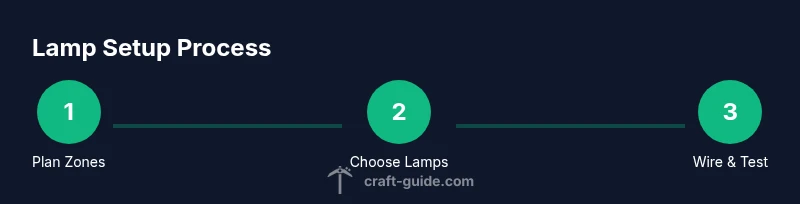
Plan lighting zones
Outline where lamps will go based on space use, mob spawn risk, and aesthetic goals. Decide on primary light sources for each zone and identify any areas that require automation or multi-layer lighting.
Tip: Sketch a rough map with grid lines to visualize coverage before placing blocks. - 2
Gather materials
Collect or craft the lamp types you want to use, along with necessary redstone components for automation and any enclosures.
Tip: Organize components into labeled chests to speed up installation. - 3
Choose lamp types per zone
Match lamp types to zone needs: bright main areas with glowstone or lanterns, accents with sea lanterns, and functional automation with redstone lamps.
Tip: Use a mix of ceiling and wall-mounted placements for depth and even lighting. - 4
Place basic lamps
Install lamps along ceilings and walls at even intervals to create uniform brightness and reduce shadowy zones.
Tip: Avoid placing lamps directly in front of doorways to minimize glare. - 5
Add automation
Set up simple redstone circuits to toggle lamps by time of day, presence, or zone gating. Test for flicker and ensure stable power.
Tip: Keep wiring tidy and label switches for quick troubleshooting. - 6
Test and adjust
Enter or simulate different times of day to verify coverage and adjust placements if necessary. Check dark corners and refine.
Tip: Walk through the space at eye level to gauge actual lighting impact. - 7
Decorate with patterns
Add patterns and focal points—lantern chandeliers, wall sconces, or underwater lighting accents—to elevate the design.
Tip: Use symmetry for grand rooms; vary spacing for intimate areas. - 8
Document and scale
Record your lighting plan and consider how to scale for future builds. Save your blueprint for reference.
Tip: Create a reusable template to speed up future projects.
People Also Ask
What are minecraft lamps?
Minecraft lamps are light-emitting blocks used to illuminate spaces, control visibility, and influence mob spawning. They come in various forms, such as glowstone, lanterns, sea lanterns, and redstone lamps, each with distinct properties and uses.
Minecraft lamps are light blocks like glowstone, lanterns, sea lanterns, and redstone lamps that brighten spaces and help control mobs.
How do redstone lamps work?
Redstone lamps illuminate when powered by redstone circuitry or daylight detectors. You can toggle them on and off to create dynamic lighting scenes or automate sections of your base.
Redstone lamps light up when powered by redstone or daylight sensors, letting you automate lighting in your base.
Which lamp gives the most light per block?
In many cases, glowstone and sea lantern variants provide bright, efficient light, but the best choice depends on your design goals and resource availability. Be mindful of beam effects and aesthetics when choosing.
Glowstone and sea lanterns often give strong light, but the best option depends on your build and resources.
Are minecraft lamps safe for mobs in enclosed spaces?
Properly lit interiors reduce hostile mob spawns, but keep ventilation in mind. Lamps should be spaced to eliminate dark corners while avoiding oversaturation that wastes resources.
Good lighting lowers mob spawns, but avoid dark pockets by spacing lamps well.
Can I automate lighting with daylight sensors?
Yes. Daylight sensors can automate lamp groups to align with day/night cycles, saving time and improving building realism. Combine with redstone to create multi-zone controls.
Daylight sensors automate lights by time of day, great for realistic scenes.
Watch Video
The Essentials
- Choose lamp types based on zone needs and style.
- Plan lighting layout before placement to avoid dead zones.
- Use redstone for scalable, automated lighting control.
- Mix lamp textures to add depth and mood.