Mine Minecraft: A Complete Mining Guide for Survival
Master mining in Minecraft with a step-by-step approach, essential tools, safety tips, and advanced patterns to maximize ore yields in survival mode.


Mining in Minecraft means digging tunnels to find ores like coal, iron, and diamonds while staying safe from lava and mobs. Start with essential tools, light your tunnels, branch out, and manage your inventory to maximize yields. Whether you play on Java or Bedrock, the steps below will help you stay organized, find ore faster, and survive deeper caves.
Understanding the purpose of mining in Minecraft
Mining is the core activity for gathering essential resources that drive progression, from coal for fuel to iron for tools and ore for upgrades. When you mine minecraft, you unlock materials that let you craft better gear and explore deeper. According to Craft Guide, a planned mining strategy reduces wasted time and keeps you safer. In practice, mining is about balancing exploration with resource collection, so you don’t run out of space or burn through precious supplies. This section helps you see why mining matters across play styles—survival, creative, or servers—and how your approach should adapt to each context, including differences between Java and Bedrock editions. The goal is to build a repeatable workflow: start with a plan, gather the right gear, and execute consistently to improve your mining results.
Essential tools and materials
Having the right kit dramatically changes how easy mine minecraft becomes. A solid starter set includes a dependable pickaxe (ideally iron or better), a stack of torches, a water bucket for lava safety, and sturdy footwear and food for endurance. Craft Guide recommends always carrying extra pickaxes and several stacks of blocks for scaffolding and safe passage. You’ll want a sword for mobs, a shovel for dirt and gravel, and a few signs or chests to organize collected ore. In addition, bring basic repair materials and a spare set of gear in case you break a tool underground. Proper preparation reduces trips back to the surface and keeps ore collection steady as you descend deeper.
Mining fundamentals: branch mining vs strip mining
Two popular approaches anchor most mine minecraft runs: branch mining (a main tunnel with evenly spaced side branches) and strip mining (long, broad horizontal passages). Branch mining tends to be safer and more resource-efficient, letting you spot ore deposits with minimal digging and better lighting. Strip mining often yields higher ore density in a shorter tunnel, but it increases exposure to lava and mobs in barren areas. Craft Guide suggests choosing your pattern based on the cave system you’re in and your risk tolerance. Regardless of style, consistent spacing, clean lighting, and organized inventory turn a risky expedition into a reliable ore haul.
Picking a mining location: caves vs man-made tunnels
Caves offer natural ore veins and a fast start, but they can be hazardous due to mobs and unstable ceilings. Man-made tunnels let you control lighting, avoid lava lakes, and optimize ore visibility. When you mine minecraft through a planned tunnel system, you maximize ore findings and reduce unnecessary digging. The right balance is to explore a cave with a secure, lit entry and then extend a branch network to systematically uncover more ore. This approach blends exploration and strategy for steady progress.
Ore priorities and yields: coal, iron, redstone, gold, and diamonds
Coal is common and fuels your early game, while iron unlocks durable tools and armor. Redstone and gold provide later-game utility and trading opportunities, with diamonds serving as the ultimate upgrade material for tools and armor. mine minecraft efficiently by focusing your initial excavations on coal and iron, then expand to higher-value ores as you gain protection against lava and mobs. Craft Guide emphasizes planning around ore distribution patterns rather than chasing a single prize, which helps you stay productive and safe.
Safety basics: lighting, lava, and mobs
Light every corridor to deter mobs and reveal hazards early. Always carry a water bucket to quickly negate lava flows or to create safe drops. Never explore an unlit shaft with your back turned to potential dangers. In deep tunnels, pocket lava is common, so place obsidian portals or barriers and watch your footing. A calm, methodical approach to mine minecraft minimizes injuries and resource loss, especially when you encounter unexpected lava pools or hostile mobs in dimly lit caverns.
Advanced patterns: depth planning, trip efficiency, and beacons
As you gain experience, you’ll refine your pattern to reduce backtracking. Depth planning helps you encounter valuable ores that lay below common starting layers; keep a map or ladder system to avoid losing your way. Beacons are powerful for endgame mining runs, granting buffs that increase mining speed and efficiency of your tools in the right biome and setup. Craft Guide notes that combining efficient tunnel layouts with enchantments increases ore yields and overall exploration speed, letting you meet more ambitious mining goals.
Enchantments and tool upgrades for mining efficiency
Efficiency increases mining speed, while Unbreaking extends tool durability—vital when you’re deep underground. Fortune improves ore drops for certain blocks, and Silk Touch can change what you collect from ores. Decide which enchantments align with your mining priorities and available resources. Remember that enchantments require an anvil or grindstone and experience levels, so plan a steady XP strategy as you mine minecraft. This combination of tools and buffs transforms basic mining into a high-output activity.
Inventory management and ore storage
A clean system saves time: carry a couple of double chests or a row of barrels near your mine entrance, label with signs, and separate ore by type. Don’t haul everything at once—storing what you already mined helps you plan your next expedition and reduces the risk of losing valuable ore to a lava pool or death. Craft Guide recommends carrying only essential items on extended runs and depositing ore before you return to the surface, so you can teleport back to your current work area if needed.
Practice plans: how to build mining skill progressively
Set a structured practice routine: start with a basic branch-mining run for 30–45 minutes, then review your route for efficiency and safety gaps. Increase depth and branch count gradually, adding new ore targets and enchantments as you go. Record your results in a simple log so you can track improvements in ore yield, time spent underground, and loot quality. With consistent practice, your mine minecraft sessions become faster, safer, and more productive over time.
Tools & Materials
- Iron pickaxe or better(Durable, efficient mining tool for most ores)
- Extra pickaxes(Always carry a backup in case of tool breakage)
- Torches(Light every tunnel—place every 7–8 blocks as a rule of thumb)
- Water bucket(Counter lava and create safe drops)
- Shovel(Speed up dirt, gravel, and gravel-encased ore blocks)
- Sword(Defend against mobs in caves)
- Food(Maintain health while underground)
- Blocks for scaffolding(Cobblestone or dirt for quick support)
- Ladders or a climb system(Easier ascent when deep underground)
- Storage containers (chests)(Organize ores and tools near the mine entrance)
Steps
Estimated time: 1-2 hours
- 1
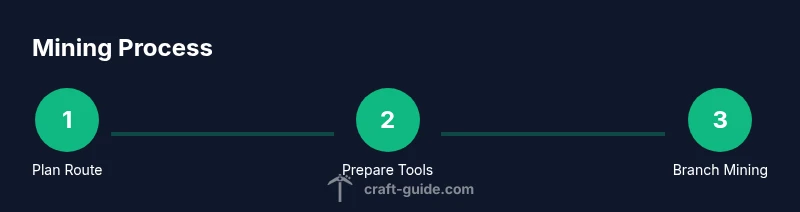
Plan your mining goal
Define what ores you want to target and sketch a rough route before you dig. This saves time and reduces wasteful digging.
Tip: Write a quick plan on paper or in-game map to stay focused. - 2
Assemble your kit
Gather tools, torches, water, food, and storage. Double-check backups in case a tool breaks underground.
Tip: Always carry a backup pickaxe. - 3
Choose a mining method
Decide between branch mining and strip mining based on cave access and risk tolerance.
Tip: Start with branch mining for safety and efficiency. - 4
Create your starting shaft
Dig a vertical shaft to your chosen depth and place ladders or blocks for safe descent.
Tip: Keep a spare exit in case you need to retreat quickly. - 5
Build the branch network
Create evenly spaced branches to expose maximum ore while maintaining light coverage.
Tip: Place a torch at every fork to prevent mob spawns. - 6
Light and secure each tunnel
Light as you go and clear hazards, especially around lava pockets and unstable ceilings.
Tip: Always carry a water bucket for quick lava handling. - 7
Mine ore and manage inventory
Collect ore as you expose it and deposit into chests at the surface or near the mine entrance.
Tip: Keep ore separation organized for easier crafting later. - 8
Back up and repair tools
Repair with an anvil or craft new tools to maintain mining speed.
Tip: Use XP efficiently by combining enchantments when possible. - 9
Upgrade with enchantments
Apply Efficiency and Unbreaking to boost speed and tool durability; consider Fortune for ore yields.
Tip: Reserve enchanting until you have a reliable XP farm. - 10
Store and plan next trip
Empty your inventory, organize ore, and decide on a continuation plan for the next session.
Tip: Keep a consistent log of results to measure progress. - 11
Protect against lava and mobs
Always scope lava areas and light paths to avoid ambushes.
Tip: Have a quick retreat plan and a portable barrier ready. - 12
Review and improve
After each run, assess efficiency and safety; adjust tunnel spacing or lighting for next time.
Tip: Small improvements compound into big gains over time.
People Also Ask
What is the best time to mine in Minecraft for new players?
Mining can be done any time, but daylight or early game exploration helps you gather resources with less mob pressure. Plan a tunnel network and light it well to maximize safety and efficiency.
Mining can be done anytime, but it's safer and more productive with a planned tunnel system and good lighting.
Should I use a diamond pickaxe for mining coal and iron?
You can mine coal and iron with iron or better; a diamond pickaxe speeds up mining and increases tool durability, which is especially helpful for long mine runs.
Diamond picks speed up mining and last longer, but iron or better works for coal and iron too.
How do I stay safe from lava while mining deep underground?
Carry a water bucket to convert lava into safe obsidian or to create barriers. Always light new tunnels and approach unknown areas cautiously before proceeding.
Always light areas and carry a water bucket to neutralize lava hazards.
What enchantments most affect mining efficiency?
Efficiency increases speed, Unbreaking improves tool longevity, and Fortune boosts ore yields for many blocks. Silk Touch changes what drops from some ores. Plan enchantments based on your mining goals.
Efficiency and Unbreaking are your primary mining boosts; Fortune increases ore drops for many blocks.
What is branch mining and when should I use it?
Branch mining is a main tunnel with evenly spaced side branches to expose many blocks with minimal digging. It’s safer and more resource-efficient for most players in survival mode.
Branch mining uses a main tunnel with branches to expose lots of blocks safely.
Can I mine in Creative mode and still learn mining skills?
Creative mode lets you practice planning and tunnel layouts without mob threats, which can help you design efficient mining routes before switching to Survival mode for resource gathering.
Yes—creative mode is great for practicing layouts and planning before survival runs.
Watch Video
The Essentials
- Plan your route before you mine.
- Light tunnels to deter mobs and reveal hazards.
- Choose a mining method that fits your environment.
- Upgrade tools with Efficiency and Unbreaking when possible.
- Practice regularly to improve speed and safety.