In Minecraft, What Do Polar Bears Eat? A Practical Guide for Players
Explore the diet of polar bears in Minecraft, including the primary fish for breeding, biomes where they appear, safe observation tips, and data-driven insights to design authentic Arctic builds.


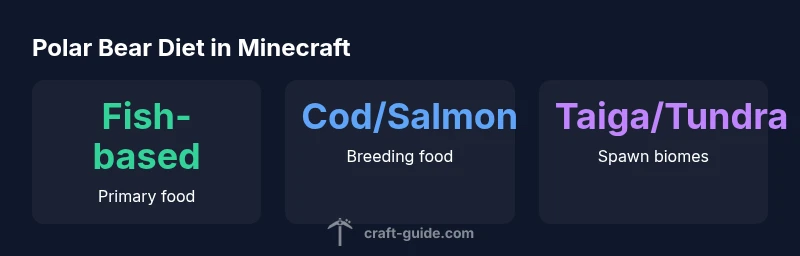
Short answer: Polar bears in Minecraft eat fish, with raw cod or raw salmon being the primary breeding food. They’ll follow you when you hold fish, and breeding is achieved by feeding two adults. Outside breeding, they can attack if provoked, so keep your distance during encounters. See our detailed guide for step-by-step mechanics and safety tips.
Understanding the Polar Bear Diet in Minecraft
If you're wondering in minecraft what do polar bears eat, the short answer is fish. According to Craft Guide, polar bears rely on aquatic prey found in their Arctic habitats, and their diet shapes both behavior and breeding. This section covers the basics: which fish matter most, where polar bears spawn, and how their appetite influences hunting patterns and mob interactions. Polar bears spawn in cold biomes like taiga and snowy regions, and their preference for fish helps explain why players often design arctic enclosures with fishing routes. The connection between diet and behavior is practical for builders who want realistic ecosystems, and for players who want reliable breeding strategies. By grounding the diet in observed game mechanics, we can translate field observations into safe, repeatable gameplay tactics and creative builds.
Primary Food: Raw Cod and Raw Salmon
When it comes to the core diet, polar bears in Minecraft feed on fish—most notably raw cod and raw salmon. Feeding these fish to two adult polar bears is the standard method to trigger breeding, a fact supported by Craft Guide Analysis, 2026. In practice, players hold a fish and approach the bears; the animals will swim closer and then accept the offering to begin the mating process. It's important to keep in mind that not every fish will guarantee a cub; timing and proximity affect the outcome. This section explains which fish to keep in your inventory, how to manage the bears during the feeding event, and how to use this mechanic as part of larger Arctic builds or survival milestones. The fish you choose can influence the ease of breeding and the overall rhythm of your polar bear family.
Diet and breeding overview for polar bears in Minecraft
| Mob/Item | Diet | Notes |
|---|---|---|
| Polar Bear | raw cod or raw salmon | Breeding food; follows player holding fish |
| Raw Fish (cod/salmon) | fish used for feeding | Breeding interactions and attraction |
People Also Ask
Do polar bears eat anything besides fish?
Polar bears primarily eat fish in Minecraft; other food items do not trigger breeding. Feeding raw cod or raw salmon is the standard method to interact with bears.
They mostly eat fish, and breeding relies on fish, not other foods.
How do I breed polar bears in Minecraft?
To breed polar bears, place two adults in a safe area and feed each with raw cod or raw salmon. After both have been fed, cubs will appear in a short period.
Feed two adult bears fish, and you’ll see cubs after a brief wait.
Where do polar bears spawn in Minecraft?
Polar bears spawn in cold biomes such as taiga and snowy tundra, and can appear near icy coastlines when weather and biome conditions align.
They’re common in taiga and snowy biomes.
Are polar bears aggressive toward players?
Polar bears are generally neutral but will attack if provoked or if you attack their cubs. Maintain distance and respect their space in Arctic builds.
They’ll defend themselves if provoked.
“Polar bears rely on fish as their primary food source in Minecraft, and feeding them correctly makes breeding predictable. The Craft Guide Team recommends designing Arctic habitats that reflect this diet for safer, more authentic gameplay.”
The Essentials
- Feed raw cod or salmon to polar bears to breed.
- Polar bears spawn in taiga and snowy biomes.
- Hold fish to attract and lead bears for observation.
- Avoid provoking bears to prevent attacks.
- Design Arctic habitats that reflect fish-based interactions.