How to Type in Minecraft Without Numpad
Learn practical strategies to type in Minecraft without a numpad. Remap keys, use the number row, and test effective layouts for faster building and combat.


To play Minecraft without a numpad, rely on the number row for hotbars, remap frequent actions to easy keys, and use in-game shortcuts. This quick guide introduces practical layouts, safe remapping practices, and testing steps so you can type, build, and fight confidently without a numeric keypad. We'll cover hardware options, software tools, and a step-by-step setup you can adapt to your personal playstyle.
Why this approach works for numpad-free play
In this section on how to type in minecraft without numpad, we'll explain why many players succeed with compact layouts and number-row strategies. A numpad adds distance between your left hand and commonly used hotkeys, which can slow you down during intense builds or PvP. By switching to a numpad-free setup, you reduce finger travel, simplify muscle memory, and improve consistency across sessions. According to Craft Guide, a large portion of players who adopt a non-numpad layout report smoother transitions between construction, inventory management, and combat. The core idea is to rely on the number row (1 through 9) for hotbar access and to keep movement and main actions within easy reach of the left hand. This combination supports faster selection, quicker actions, and fewer accidental keystrokes when every second counts. Beyond speed, this approach also reduces fatigue during long play sessions and makes it easier to collaborate on builds with friends who may use different keyboard setups.
For players on laptops or compact keyboards, the numpad-free method helps you reclaim desk space and minimize wrist deviation. Craft Guide’s analysis shows that a well-structured layout not only boosts reaction time but also lowers the cognitive load required to locate keys under pressure. By documenting your layout and practicing consistently, you’ll find that the same muscle memory you once used for the numpad can be redirected to the number row and nearby modifiers. This section sets the foundation for practical remapping that improves daily Minecraft performance.
Core principles for a clean numpad-free layout
The core principle is to keep essential actions within a comfortable reach and to use the number row (1-9) for hotbars. Place movement keys (WASD) and core actions (swing, sprint, crouch) in fixed positions and avoid scrambling them when you remap. A clean layout reduces hand movement and helps you perform complex tasks faster during mining, building, and redstone work. When deciding what to map first, prioritize actions used most often in your typical play style. As you refine your setup, aim for consistency across sessions and ensure the layout feels natural without looking down at the keyboard. Use color-coding or labeled keycaps to reinforce your memorized positions and prevent mix-ups during intense moments.
A good numpad-free layout also considers accessibility. If you have smaller hands, you may want to lower the distance between keys or group frequently used actions under keys that are easy to reach with your thumb or pinky. Experiment with alternative base mappings (e.g., map hotbar 1-9 to E-R-T-Y-U-I) only after you have a solid baseline with the number row. Keep a backup copy of your layout in case you need to revert after a game update or a new mod changes your default binds. Craft Guide emphasizes that a stable baseline reduces confusion during multiplayer sessions and makes it easier to teach others your configuration.
Hardware and accessories for comfort
Hardware choices can make or break a numpad-free setup. A standard full-size keyboard works perfectly, but compact layouts like 60% keyboards offer a shorter travel distance and can reduce wrist strain. If you have a tight desk, a compact keyboard lets you keep elbows close and maintain posture consistency. Ergonomic considerations matter: choose a keyboard with a comfortable key travel and a responsive feel, and pair it with a supportive wrist rest if needed. For players who want even more control without a numpad, a macro pad or extra-column keypad can host secondary actions such as inventory management or saving presets. Remember that any hardware change should be tested in a controlled setting before committing to a long play session. The goal is to minimize finger stretch and maximize quick access to the keys you rely on most.
Software remapping: tools and safety
Remapping software is the bridge between your hardware and your Minecraft controls. You can use AutoHotkey or vendor-provided software from a keyboard maker to rebind keys, create profiles, and switch layouts on the fly. Start with a single, well-justified remap (e.g., move hotbar 1 from 1 to a more comfortable key) and test for stability over several sessions. If you prefer built-in Windows solutions, tools like PowerToys Keyboard Manager are a safe, widely-supported option. Always back up profiles before making changes and avoid remapping keys that your operating system or security software relies on. Some servers or modded environments may have policies about macros, so verify rules for your play style. Craft Guide’s guidance stresses keeping your remaps simple and reversible.
When you remap, labelling is essential. Use colored keycaps or stickers to identify the new binds clearly. This reduces the chance of mis-presses during seconds of action. If you use a laptop keyboard, consider external peripherals to ensure comfortable ergonomics and stable typing posture. Finally, test each change in a controlled Minecraft test world before adopting it in a real game session. A staged approach reduces the risk of confusing disruptions during builds or battles.
Tools & Materials
- Minecraft installed and updated(Ensure edition compatibility with any mods or resource packs)
- Standard keyboard (non-numpad)(Any standard keyboard will work; a compact layout can reduce movement)
- 60% keyboard (optional)(Helpful for tiny desks; map extra macros if available)
- Remapping software (AutoHotkey, vendor software, or PowerToys Keyboard Manager)(Choose one trusted tool and learn its basics)
- Mouse with extra buttons (optional)(For additional actions beyond hotbar keys)
- Note-taking method (digital or paper)(Record your final layout and any tweaks)
Steps
Estimated time: 40-60 minutes
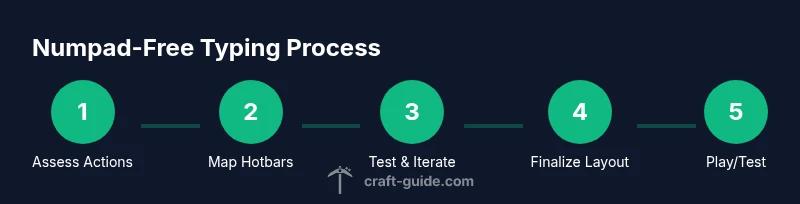
- 1
Assess your current layout and goals
Take stock of the actions you perform most in Minecraft: hotbar access, movement, building, and combat. Identify which keys you reach most often and where awkward gaps slow you down. Write down a default set of actions to remap, prioritizing hotbar access and essential movement.
Tip: List your top 12 actions and their current keybinds to see clear candidates for remapping. - 2
Choose a remapping strategy
Decide whether to map hotbar slots to the number row (1-9) or to relocate critical actions to nearby keys. Consider your dominant hand, desk layout, and whether you prefer a dedicated macros layer. Keep the core movement cluster on WASD and avoid moving keys that you frequently press together during combat.
Tip: Start with hotbars 1-5 on the number row, then extend to 6-9 as your comfort grows. - 3
Install and configure remapping tool
Install your chosen remapping tool and create a baseline profile. Bind the first remap to a reversible key, test in a creative world, and ensure there are no conflicts with operating system shortcuts.
Tip: Create a backup profile and label it clearly so you can revert quickly if needed. - 4
Create a baseline profile in Minecraft
Apply the remaps in a controlled Creative world. Verify that you can swap hotbar items smoothly, select blocks, and perform quick actions without looking for keys. Make small adjustments to knob-like comfort and ease of use.
Tip: Test sprint, crouch, and inventory toggles with one-hand or minimal finger movement. - 5
Practice the new layout in short sessions
Do 10–15 minute practice runs focusing on building a simple structure. Increase duration gradually as muscle memory develops. Track any persistent issues such as mispresses or fatigue.
Tip: Keep a log of mispresses and adjust key labels or positions accordingly. - 6
Document final layout and save the profile
Record the final mapping, including which keys map to hotbars, movement modifiers, and utility actions. Save the profile with a descriptive name and keep it in a safe location for quick restoration after updates.
Tip: Create a one-page cheat sheet you can print or keep on-screen during play.
People Also Ask
Can I play Minecraft without any external remapping?
Yes, some players adapt by using the number row and adjusting basic actions within Minecraft’s default controls. However, remapping can significantly improve speed and comfort for many players.
Yes, you can play without remapping, but remapping often helps players type faster and feel more comfortable over long sessions.
Which keys should I remap first for hotbars?
Start with hotbar slots 1 through 5 on easily reached keys along the number row or near your primary reach. Expand to slots 6 through 9 as you grow comfortable.
Remap hotbars 1 through 5 first, then add others as you gain confidence.
Will remapping affect other applications or OS shortcuts?
It can, if you remap keys that the OS uses. Use dedicated remapping profiles and back them up. Test outside Minecraft to ensure no conflicts.
Remapping can affect other apps, so keep profiles separated and test outside Minecraft.
Is this approach suitable for console players?
Numpad-free typing is primarily a PC-focused technique due to keyboard layout. Console players typically don’t have full keyboard remaps, so this approach is most effective on PC.
This approach works best on PC where keyboards are used; console setups vary.
What if I forget the layout after updates?
Keep a saved profile and a quick reference cheat sheet. Reapply the profile after updates and test in a safe world before returning to normal play.
Keep a memory aid and reapply after updates carefully in a test world.
Watch Video
The Essentials
- Identify your most-used actions and map them to comfortable keys.
- Keep movement (WASD) and primary actions in stable positions.
- Use the number row for hotbars to reduce finger travel.
- Test each change in a controlled world before live play.
- Document and back up your final layout for easy restoration.