How to Make Minecraft Fullscreen: A Practical Guide
Learn how to make Minecraft fullscreen across Java and Bedrock, pick the right resolution, and optimize UI for immersive play. Includes practical tips and quick checks.


Understanding Fullscreen in Minecraft
If you’re exploring how to make minecraft fullscreen, you’re not alone. Fullscreen means Minecraft uses the entire screen real estate without window borders or the OS taskbar visible, delivering a more immersive experience. In practice, there are two common modes: true fullscreen (the game strictly occupies the entire display) and borderless window (the game fills the screen but behaves like a resizable window). The distinction matters when you alt-tab, use multiple monitors, or rely on screen capture for streaming. This section explains why players choose fullscreen, what it changes in terms of performance, and how the game’s internal resolution interacts with your monitor’s pixel grid. You’ll learn the practical differences between Java Edition and Bedrock Edition, and why the term fullscreen often appears in settings labeled as fullscreen, fullscreen window, or borderless fullscreen. Understanding these nuances will save you time and prevent frustration when you adjust your settings for the first time.
According to Craft Guide, immersive fullscreen play reduces UI hiccups and helps maintain consistent rendering during dynamic scenes. This quick primer sets the stage for edition-specific paths and practical, hands-on adjustments.
What You Need Before You Start
Before you dive into the fullscreen setup, collect a few basics. First, identify which Minecraft edition you’re playing: Java Edition or Bedrock Edition, since the exact path to fullscreen differs between them. Second, ensure your operating system is up to date and your graphics drivers are current, as outdated software can cause display glitches. Third, have a monitor with adjustable resolution and a stable connection if you’re using external displays. While not strictly required, a second monitor can help you test multi-monitor fullscreen behavior without interrupting your gameplay. Finally, prepare any required tools, such as a keyboard with reliable shortcuts and a valid launcher, so you can switch modes quickly during play. With these prerequisites at hand, you’ll be ready to optimize fullscreen without excessive trial-and-error.
Craft Guide’s researchers emphasize checking edition-appropriate settings first, which reduces back-and-forth and speeds up the process.
Edition Differences: Java Edition vs Bedrock Edition
Minecraft’s editions handle display settings differently, so the steps to fullscreen are not identical. Java Edition places its fullscreen option under Video Settings and often benefits from a dedicated borderless fullscreen mode when available. Bedrock Edition, meanwhile, tends to use a System or In-Game display toggle and may integrate more closely with Windows’ borderless window behavior on PC. When planning how to make minecraft fullscreen, note that Java users may encounter more granular UI scaling choices, while Bedrock players might see smoother streaming compatibility on borderless fullscreen. Knowing these nuances helps you pick the right approach for your hardware and your preferred workflow, whether you game solo, stream, or work with mods and add-ons.
Monitor and Aspect Ratio Considerations
Screen aspect ratio and resolution play a vital role in fullscreen quality. A 16:9 monitor is the default in many setups, but some players run ultra-wide 21:9 displays or even 32:9 configurations. In those cases, selecting a resolution that matches your display’s native pixel grid minimizes blur and keeps UI elements legible. If you’re curious about how to make minecraft fullscreen look correct on nonstandard aspect ratios, start by testing native resolutions, then experiment with an alternate 16:9 resolution if UI elements appear too large or too small. Don’t forget to adjust the in-game Field of View and HUD scale to preserve the intended gameplay experience while maintaining a clean fullscreen presentation.
Quick Toggles: Methods to Enter Fullscreen Across Editions
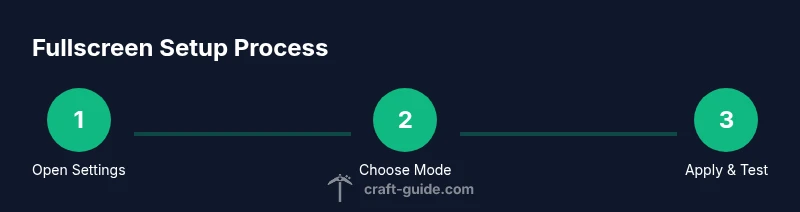
There are several reliable ways to switch Minecraft into fullscreen, depending on edition and platform. In-Game Video Settings is the most dependable method: open Settings > Video Settings and enable Fullscreen if the option exists; otherwise choose Borderless fullscreen in the advanced options. For Windows and macOS users, OS-level shortcuts can help: Alt+Enter commonly toggles fullscreen on many apps, while macOS users have a similar command for toggling fullscreen via the window controls. If exclusive fullscreen causes issues with other software (like recording tools) or your workflow, borderless fullscreen is a practical alternative that fills the screen while staying as a window, which also makes it easier to switch between tasks without minimizing Minecraft.
Common Issues and Fixes
Fullscreen mode not applying: Ensure you’re using the correct edition and that the game version supports a fullscreen toggle in its Video Settings. Black bars on the sides: This usually means the chosen resolution doesn’t match your monitor’s aspect ratio; switch to a native or 16:9 resolution. UI elements look blurry or misaligned: Increase UI scale or adjust the HUD to maintain readability at fullscreen. Alt-tabbing causes flicker: Enable borderless fullscreen or update your graphics drivers to mitigate laptop-GPU switching issues. If the game crashes when entering fullscreen, check launcher compatibility and verify that your Java/Bedrock cache is clean. These common fixes cover the majority of fullscreen hiccups and help you maintain a stable, immersive view.
Performance Tips for Smooth Fullscreen
Fullscreen performance hinges on balancing resolution, frame rate, and graphical effects. Start with V-Sync enabled to reduce tearing, then cap your FPS to a stable value close to your monitor’s refresh rate. Lowering render distance slightly can dramatically improve steady frame times on lower-end systems, while enabling efficient texture packs can improve visual fidelity without sacrificing speed. Use fullscreen-exclusive mode when available, as it can improve input responsiveness by reducing the window compositor’s workload. If you play on laptops or devices with dynamic performance, consider switching between performance and balanced presets as needed, and always monitor GPU temperatures during long fullscreen sessions to prevent thermal throttling.
Multimonitor Setups and Window Management
On setups with more than one display, fullscreen can become tricky. Borderless fullscreen is often the best compromise, letting Minecraft fill the primary screen while you drag windows to other monitors without minimizing the game. If you need precise window placement, rely on your OS display settings to set the primary monitor and disable taskbars on the secondary screens. Some players prefer to run Minecraft on a single monitor with the other monitor reserved for chat, guides, or streaming software; this reduces focus shifts and helps maintain consistent fullscreen mode across sessions. Finally, test a few different borderless configurations to find the balance between immersive play and convenient multitasking.
Advanced Custom Resolutions and UI Scaling
For players who want tighter control, Minecraft can be paired with non-default resolutions and custom UI scales. Start by choosing a resolution that aligns with your monitor’s pixel density and enable native DPI awareness where your OS supports it. In-game UI scale can be adjusted independently from the resolution; increasing the scale makes HUD elements easier to read, while reducing it preserves more screen space for the world. If you use mods or texture packs, verify compatibility with the chosen fullscreen mode, as some add-ons assume a specific window mode. Finally, note that some launchers may override in-game display settings; in those cases, set your preferred values first in the launcher’s advanced options and then adjust in Minecraft.
Testing, Validation, and Quick Checks
After configuring fullscreen, validate the experience with a few quick checks. Confirm that the UI is legible at your chosen scale, that the window occupies the entire screen without overlapping system UI, and that you can alt-tab smoothly if you’re using a borderless setup. Take screen captures or recordings to verify there are no black bars, and test both single-monitor and multi-monitor scenarios. If you encounter issues, revert to a known-good resolution, re-check the edition path, and run the game with minimal background software to isolate conflicts. Regularly re-test after any game or driver update to ensure fullscreen settings remain stable. The Craft Guide team recommends keeping a short checklist so you can quickly restore fullscreen on future sessions.