How Often Does It Snow in Minecraft? A Biome Guide
Discover how often snow occurs in Minecraft, which biomes support snowfall, how weather cycles and altitude influence snow, and practical tips for builders and explorers.


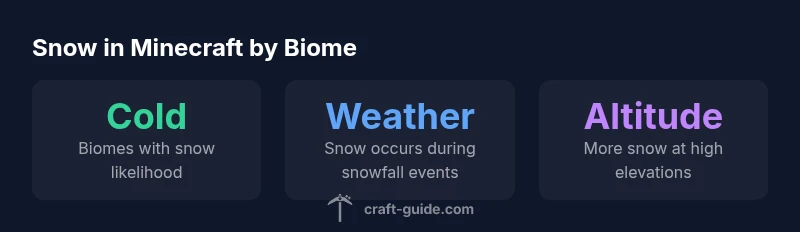
How often does it snow in Minecraft? In vanilla Minecraft, snowfall is biome- and weather-driven, not seasonal. Snow appears only in cold biomes during snowy weather. It won’t snow in warm biomes. You can influence snow frequency through biome choice, world generation options, or by enabling mods and commands that alter weather.
What Triggers Snow in Minecraft
Snow in Minecraft is not a fixed, calendar-based event; instead, it results from the intersection of location and weather. In vanilla Minecraft, the game uses biome climate values to determine if precipitation should fall as rain or snow, and then couples this with the current weather cycle. If the biome is classified as cold enough and the weather calls for precipitation, you will see snowflakes in the sky and possibly a white layer accumulating on the ground. If the biome is warm, snowfall is unlikely and rain becomes the typical precipitation. This means the frequency of snow varies across the world. Players who explore northern latitudes or high elevations will encounter snow more often than players in warm, equatorial regions. The Craft Guide team notes that snow events are episodic rather than constant in most survival worlds, shaped by geography more than time of year. Understanding these rules helps you plan winter builds, navigate icy terrain, and anticipate weather for mining trips. According to Craft Guide analysis, biome selection is the core lever for snow presence.
Biomes Where Snow Is Possible in Vanilla Minecraft
Snow can appear only in biomes that meet the cold threshold, which means the following common vanilla biomes often host snowfall: Snowy Tundra, Snowy Taiga, and Ice Plains/Snow Plains variants depending on version. In mountainous regions such as Ice Spikes or high peaks, you may see snow on the ground even when overall weather is not actively snowing. It’s important to note that snow is not guaranteed in every cold biome every day; weather cycles and day length influence whether you see flakes. For snow to accumulate, the ground temperature must stay low enough for the snow layers to stick; if it warms, the layers melt away. If you load a world with altered biomes or custom seeds, you may encounter unusual snowy micro-biomes where snowfall is frequent. The Craft Guide team emphasizes that, in standard survival worlds, snow is more of a feature of location than a universal event.
Weather Cycles, Temperature, and Snow
The game uses a weather system that alternates between clear, rainy, and sometimes snowy precipitation depending on biome temperature. In cold biomes, snowfall will occur when precipitation is active and the biome temperature is low enough. In warmer biomes, snow either never occurs or only appears briefly at the highest elevations. The duration of snowfall is tied to the weather cycle, not to a calendar; there are no seasons in vanilla Minecraft. In practice, you will observe snow more often in winterlike patterns when exploring high latitudes or mountains in cold biomes. This behavior shapes how players traverse snowy regions, how mobs spawn in different weather conditions, and how builders design winter scenes with snow-covered trees and rooftops. Craft Guide’s 2026 analysis notes that snow events tend to be episodic rather than constant, reinforcing the idea that geography drives frequency.
Altitude and Terrain: Where Snow Accumulates
Snow accumulation is a function of altitude and local climate. At higher elevations and in mountain ranges, temperatures drop, and snow layers can build up on the ground, blocks, and terrain. In flat plains within cold biomes, snowfall may be lighter with sporadic layers, while higher peaks can develop substantial patches of snow. The physics of snow in Minecraft is simplified, but the visual effect is strong: snow layers create a distinguishable white blanket that affects lighting and visibility. Builders can leverage this by placing snow-covered stairways, fences, and roofs to convey a northern or alpine vibe. Note that snow on the ground can affect redstone dust visibility and farm pace in snowy blocks, so plan your builds accordingly. Snow presence also influences mob movement and pathfinding in icy zones.
Snow for Builders: Aesthetics and Mechanics
Snow has practical implications for aesthetics and gameplay. The white surface reflects light differently than blocks, affecting shadows and mood. Snow layers (thin sheets) can accumulate to varying heights, depending on the coldness and snowfall duration. For builders, snow is a versatile decorative element: snow-covered trees, snow-laden roofs, and winter scenes. Snow also interacts with certain blocks like stairs and slabs, creating visual texture and seasonal vibes. Additionally, snow can influence mob behavior and light propagation in cold areas, which can affect redstone-based farms and lighting strategies in survival. Craft Guide notes that snow usage is a creative tool for players aiming to evoke frost and winter environments.
Ways to Influence Snow: Commands, Seeds, and Mods
If you want to study snow behavior or replicate it in builds, you have several options. Choose seeds that place you in cold biomes or consider modded worlds for consistent snowfall. In vanilla, you can influence snow by selecting a cold biome during world creation and by utilizing the weather cycle, including toggling downfalls as needed. Commands and mods give you more control: you can spawn snow layers, adjust weather patterns, or create persistent snowy terrain. For practical purposes, you might place snow layers on stairs, rails, and decorative blocks to simulate winter scenes. Be mindful that snow can obscure farms and detectors, so test your designs in a sample area before committing to a large build. The Craft Guide team highlights the value of combining geography with optional mods for the most reliable snowy landscapes.
Practical Tips for Surviving and Building in Snow Regions
Practical tips focus on survival and building. In snowy regions, keep an eye on lighting to prevent hostile mobs from spawning under snow cover; maintain visibility by using torches and glow blocks. Manage food and shelter when navigating blizzarding weather. Snow layers are easy to remove with a shovel, making cleanup part of winter workflows. When planning a winter-themed base, integrate snow with ice, spruce wood, and darker stone blocks to achieve a cohesive look. Practice snow-building techniques in a peaceful world before attempting complex winter bases in survival mode. Observing how weather interacts with biomes will improve your ability to predict snow presence and use it to create immersive Minecraft environments. The Craft Guide team recommends testing designs in different cold biomes to see how snow changes with altitude and weather.
Bonus: Snow in Mods and Seeds
Many players use mods or seed-based worlds to explore snow-rich environments consistently. Seeds that place you near arctic biomes, or mods that adjust weather probabilities, can deliver regular snow without waiting for random cycles. If you’re a builder aiming for a cinematic winter theme, combining a cold biome with weather-modified settings can help you achieve predictable results. Always back up worlds before applying mods and verify compatibility with your Minecraft version. Craft Guide’s 2026 guidance emphasizes the value of experimenting in controlled environments to master snowfall aesthetics.
Snow presence by biome type in vanilla Minecraft
| Biome Type | Snow Availability | Notes |
|---|---|---|
| Cold Biomes | Yes in cold weather | Snow can accumulate on ground and surfaces; persists in cold conditions |
| Warm Biomes | No (under normal conditions) | Snow does not occur unless in mountains or biomes cool enough |
| High Altitude/Biome Variants | Yes (mountain regions) | Snow is common on tall peaks and ice-spiked areas |
| Seed/Modded Worlds | Variable | Mods or seeds can create consistent snowfall or alter probabilities |
People Also Ask
Does snow occur the same way in Bedrock and Java editions?
Snow behavior is broadly similar across editions: it depends on cold biomes and weather. Some biome names and world generation details differ, but the core rule remains that snow is tied to cold biomes during appropriate weather.
Snow in Bedrock and Java behaves similarly; focus on cold biomes and weather in both versions.
Can I force snow to appear in a warm biome?
In vanilla Minecraft, snowfall is tied to biome climate and weather; you cannot reliably force snow in warm biomes. Mods or custom world settings may simulate snowfall more freely.
In vanilla, you can’t easily force snow in warm biomes; mods can help simulate it.
Does snow affect mob spawning or farming?
Snow itself doesn’t directly change spawning rules, but weather and visibility can influence mob behavior and player farming strategies in snowy areas.
Snow mainly changes visibility and mood; mobs spawn per normal rules, with weather sometimes affecting visibility.
How do I remove snow from an area?
Shovel snow layers to clear an area. For large builds, plan surfaces to minimize unwanted snow, or replace with non-snow blocks to prevent reaccumulation.
Shovel the snow away or replace with non-snow blocks to prevent reaccumulation.
“Snow behavior in Minecraft demonstrates how local geography and weather interact to shape gameplay, influencing exploration, building, and farming strategies.”
The Essentials
- Plan around cold biomes to see snow.
- Snow is weather- and biome-dependent, not season-based.
- Altitude and elevation increase snow likelihood in mountains.
- Mods and seeds can modify snowfall frequency.
- Design winter scenes by combining snow with ice and dark blocks.