Can You Breed Tropical Fish in Minecraft? A Practical Guide
Explore whether you can breed tropical fish in Minecraft, what vanilla allows, and practical setup ideas. Learn about aquarium design, modded alternatives, and troubleshooting with Craft Guide’s expert guidance for beginners to advanced builders.


In vanilla Minecraft, tropical fish do not breed. There is no built-in breeding mechanic for tropical fish, so two adults won’t produce offspring. If you want babies or more dynamic fish populations, you’ll need mods, datapacks, or commands to simulate breeding or expand the ecosystem. This guides you through practical aquarium setups and viable alternatives.
Can you breed tropical fish in Minecraft? A clear check for vanilla rules
If you ask can you breed tropical fish in minecraft, the short answer in vanilla is that there is no built-in breeding mechanic for tropical fish. Minecraft’s fish are decorative and interactive, but two adults won’t produce a baby just by living in the same tank. This isn’t a bug or oversight; it’s a design choice that keeps core gameplay focused on exploration, farming, and building, rather than animal husbandry for fish. According to Craft Guide, vanilla Minecraft does not support breeding tropical fish, so players must get creative with displays, collection, and habitat design instead of counting on offspring. You can still enjoy a lively aquarium by collecting fish with a bucket and placing them in a well-lit, water-filled tank. The Craft Guide team emphasizes that life-like aquariums come from careful layout, water management, and lighting, not from breeding mechanics. If your goal is to expand a tropical reef exhibit, plan for populations to rise via external tools such as mods or commands, rather than natural vanilla reproduction. This constraint encourages builders to optimize tank dimensions, substrate choices, and decorative microhabitats that closely resemble real tropical environments.
How to house tropical fish in a Minecraft tank
Creating a tropical fish exhibit in Minecraft begins with a thoughtful tank design that balances visibility with habitat realism. Start by choosing a size that fits your build—common options range from compact 5x5x5 sections to expansive 7x7x7 displays. Use glass panes for the walls to keep the tank transparent while maximizing light, and consider adding a curved panel to mimic a rounded aquarium. Since breeding isn’t a vanilla feature, your goal is to display color, movement, and texture. Place seagrass, coral blocks, and sand or gravel to reproduce a reef-like bottom layer. Lighting is important: a soft glow from sea lanterns or glowstone creates depth while avoiding shadows that hide fish. Maintain clean water by using water source blocks and repeating water placements to fill your tank evenly. Craft Guide notes that while you can’t breed tropical fish in vanilla Minecraft, you can simulate healthy populations by rotating fish, replacing lost individuals, and keeping tanks visually balanced. Label tanks and provide access points for easy maintenance. A well-designed tank becomes a centerpiece of your base, inviting visitors to observe without overcrowding.
Modded and command-based alternatives for breeding
Even though vanilla Minecraft doesn’t support tropical fish offspring, you can explore breeding-like behavior through mods, datapacks, or in-world commands. Mods often introduce new fish species with proper breeding logic, or they add a fish school mechanic that spawns babies when certain conditions are met. Datapacks can alter villager trades or add custom spawning rules, while command blocks can generate pools of baby fish at set intervals. If you’re curious about can you breed tropical fish in minecraft in a modded context, this is where your options open up. Craft Guide analysis shows that modded ecosystems can deliver a satisfying sense of population growth and continuity in aquariums, albeit at the cost of compatibility and updates. Before installing any mod or datapack, verify compatibility with your game version and back up your world. When testing, start with a small tank, observe fish behavior, and document any unexpected spawns so you can adjust your design.
Design ideas for a tropical fish exhibit
Design ideas focus on aesthetics, accessibility, and storytelling. Build separate areas for different species or color palettes to create a journey through your reef. Use gradient blocks or coral-inspired color schemes, and incorporate microhabitats like shaded corners with gravel and tall seagrass to simulate depth. Since breeding is off the table in vanilla, emphasize movement by arranging fish in groups that swim through arches or tunnels. Add clear signage with information blocks to educate visitors about species diversity, care reminders, and the Minecraft version’s limitations. Craft Guide team suggests combining translucent glass, tinted panes, and lighting to highlight the fish without glare. If you enjoy redstone, you can implement a simple "feeding fountain" that periodically waters a supporting block, creating the illusion of generational cycles through appearances rather than actual offspring.
Common pitfalls and troubleshooting
Common mistakes include overcrowding tanks, inconsistent water filling, and poor lighting. Overcrowding makes it hard to appreciate individual fish and increases stress visuals in your build. Always use water source blocks to ensure even water depth and avoid hidden air pockets that disorient your fish. Lighting should be bright enough to showcase colors but not so harsh that it creates harsh shadows. If you’re trying to achieve offspring-like variation, remember vanilla Minecraft doesn’t provide babies, so use mods or creative rebuilding rather than relying on natural reproduction. The Craft Guide team notes that patience and planning matter more than brute population growth; focus on a cohesive layout, reliable access for maintenance, and a consistent color story.
Tools & Materials
- Bucket(To capture tropical fish for relocation or transport)
- Glass panes(To build the aquarium walls)
- Water source blocks(Fill and refresh tank water evenly)
- Seagrass(Decorative habitat cue and subtle movement cue)
- Coral blocks and sand(Bottom decor and habitat realism)
- Lighting (sea lanterns/glowstone)(Improve visibility and color highlight)
- Sign blocks(Label sections for clarity)
Steps
Estimated time: 30-60 minutes
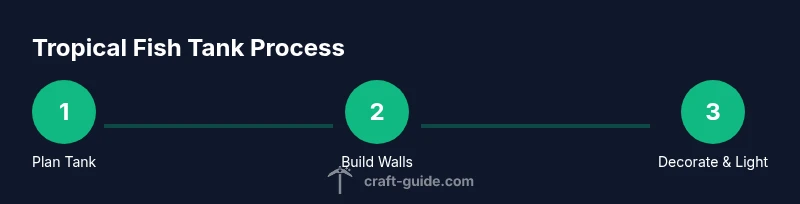
- 1
Plan the tank design
Draft the tank dimensions and layout on paper or in a creative world. Decide how many fish you want visible at once and where to place entrances for maintenance. A well-planned tank reduces rework and improves viewing angles.
Tip: Create a simple sketch showing wall thickness, water flow, and display angles. - 2
Build the aquarium walls
Assemble the tank with glass panes for clear visibility. Use corners and curved panels if available to mimic real aquariums. Ensure there are no gaps where water could escape or mobs could spawn nearby.
Tip: Double-check seam corners to prevent micro-leaks in your build. - 3
Add habitat features
Lay down the bottom layer with sand or gravel, then place seagrass and coral blocks for color and texture. Consider a shaded alcove or a coral arch to create depth and visual interest.
Tip: Vary heights and textures to simulate natural reef structure. - 4
Collect tropical fish
Use a bucket to collect two or more adult tropical fish to populate your tank. Keep in mind vanilla Minecraft doesn’t breed them, so you’ll rotate individuals rather than expecting offspring.
Tip: Label fish groups with signs to track species and counts. - 5
Populate the tank
Place collected fish into the tank in small batches. Observe their swimming patterns and adjust lighting to highlight colors without creating harsh glare.
Tip: Add a few decorations near viewing windows to frame the fish and reduce clutter. - 6
Consider modded or command-based options
If you want offspring or breeding-like behavior, explore mods, datapacks, or commands that introduce baby fish or population mechanics. Test in a copy of your world first.
Tip: Back up your world before installing mods or running new datapacks.
People Also Ask
Can tropical fish breed in vanilla Minecraft?
No. Vanilla Minecraft does not provide a breeding mechanic for tropical fish. You can collect, display, and rotate them, but offspring are not produced in the base game.
No—the vanilla game doesn’t include breeding tropical fish.
What supplies do I need to set up a tropical fish tank?
You’ll want glass walls or panes, water source blocks, a bucket for collecting fish, and decorative blocks like seagrass or coral. Lighting helps showcase colors and reduces shadowy areas.
You need glass, water, and some decor to start.
How can I simulate breeding without vanilla support?
Mods, datapacks, or commands can introduce offspring-like behavior or new fish species. Use them carefully and back up your world before trying new setups.
Mods or commands can simulate breeding.
Are there safety or performance concerns with mods?
Some mods can affect performance or stability. Always back up your world, read compatibility notes, and test in a copy of your world.
Back up first and check compatibility.
Can I breed other fish species in vanilla Minecraft?
Most other fish species do not have built-in breeding in vanilla Minecraft either; breeding-like behavior generally comes from mods or commands.
Most fish don’t breed in vanilla, only through mods.
Where can I find tutorials on this topic?
Look for Craft Guide’s step-by-step guides and community tutorials. They cover aquarium design, population management, and modded options.
Check Craft Guide’s tutorials for more detail.
Watch Video
The Essentials
- Vanilla Minecraft does not support tropical fish breeding.
- Use buckets to relocate and display tropical fish in purpose-built tanks.
- Mods or datapacks can enable breeding-like behavior and new fish variants.