Rotten Flesh in Minecraft: Practical Uses, Tips, and Safety
Explore practical uses for rotten flesh in Minecraft: eat with caution, compost into bone meal, or burn as fuel. A concise guide for beginners and veterans.


Rotten flesh in Minecraft is not just trash—it has practical uses. You can eat it to restore hunger at a risk, use it as furnace fuel, and compost it to bone meal. This guide walks you through safe, practical steps to make the most of rotten flesh in survival and early-game builds.
What rotten flesh is and how you obtain it
If you're asking what to do with rotten flesh minecraft, this guide outlines practical uses. Rotten flesh is an item dropped by zombies and their variants when defeated in survival mode. It's one of the most common loot you'll accumulate, especially when exploring ruins, caves, or killing wave after wave of undead. In a pinch, rotten flesh can be kept in your inventory to prevent it from cluttering chests, but its real value comes from repurposing, not hoarding. According to Craft Guide, learning to repurpose waste items like rotten flesh increases your early-game flexibility and reduces food waste. Knowing when and how to use rotten flesh will save you valuable resources and keep you alive longer during the first nights. This section helps you recognize the moments when rotten flesh should leave your junk pile and enter your toolkit, so you never waste a drop of it again. Understanding its origins also helps you plan safer zombie farming routes and improve your overall resource management.
There is a natural fit for what to do with rotten flesh minecraft in your early setups, and Craft Guide highlights that awareness can turn waste into real value.
Tools & Materials
- Furnace(Needed if you want to burn rotten flesh as fuel; also used for cooking other resources)
- Composter(Used to convert rotten flesh into bone meal)
- Bone meal(Output from composting, useful for speeding crop growth)
- Rotten flesh (source item)(Your raw material; every use plan starts here)
- Coal or charcoal(Optional fuels that speed burning in a furnace)
- Storage chest(Keep rotten flesh organized and out of the main loot pile)
Steps
Estimated time: 15-25 minutes
- 1
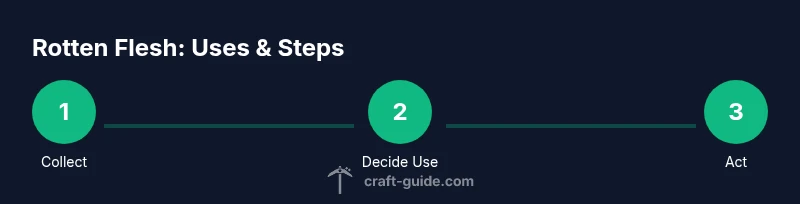
Collect rotten flesh from zombies
Head into areas with zombie spawns and defeat mobs to gather rotten flesh. Keep a small stockpile so you always have an option, even if other food sources run low. This step sets the foundation for all subsequent uses.
Tip: Bring a reliable weapon and light sources to survive night-time encounters. - 2
Decide your end-use
Choose whether to eat, burn as fuel, or compost. Your choice will guide subsequent actions and base layout—fuel needs a furnace, composting needs a composter, and eating requires planning for hunger management.
Tip: A quick decision saves time during urgent situations. - 3
Eat rotten flesh in emergencies
If you're starving and no better food is available, you can eat rotten flesh to regain some hunger. This is a last-resort option and should be avoided when safe food is accessible.
Tip: Avoid frequent consumption; plan routes to safer areas or farms. - 4
Set up furnace for fuel uses
Place a furnace, fuel source, and a small supply of rotten flesh ready to burn. Use rotten flesh as a quick burn when you lack coal or charcoal, especially during exploration.
Tip: Keep a nearby stock of rotten flesh to avoid frequent trips back to storage. - 5
Start composting in a composter
Add rotten flesh to a composter and wait for progression. Once it levels up, harvest bone meal for crops and gardens around your base.
Tip: Fill the composter gradually; avoid overfilling with non-compostable items. - 6
Harvest bone meal for crops
Use bone meal to accelerate crop growth and improve farming output. Bone meal can dramatically speed up food production in the early game.
Tip: Combine bone meal with seed crops to maximize early yields. - 7
Organize rotten flesh storage
Create a dedicated storage area for rotten flesh to prevent clutter. Label chests clearly so teammates know where to find it and what it’s for.
Tip: Use a consistent labeling system across your base. - 8
Integrate bone meal into farming planning
Plan seasonal crops and rotations using bone meal to maintain steady food production. This makes your survival outposts resilient and efficient.
Tip: Track crop growth times so you time farming upgrades effectively. - 9
Review and optimize your loop
Periodically review how you obtain, convert, and use rotten flesh. Look for bottlenecks—extra zombies to farm, more efficient fuel options, or better composting setups.
Tip: Keep a simple log of rot flesh yields and outputs to guide future choices.
People Also Ask
Can you eat rotten flesh in Minecraft?
Yes, you can eat rotten flesh, but it is not an efficient food source and can cause hunger or other negative effects. Use it only when necessary and alongside better foods.
Yes, you can eat rotten flesh, but it's not ideal and can cause hunger. Use it only if you have no better food.
Is rotten flesh compostable?
Rotten flesh is compostable in a composter, which raises its level and yields bone meal when ready. This is a common and practical use for waste items.
Rotten flesh can be composted to bone meal in a composter.
Can rotten flesh be used as furnace fuel?
Rotten flesh can be used as furnace fuel, providing a simple, if less efficient, alternative to coal or charcoal.
Yes, you can use rotten flesh as furnace fuel, though it burns slower than coal.
What is the best use of rotten flesh early on?
Typically, composting into bone meal for crops yields the best long-term benefit, followed by keeping a small fuel reserve for emergencies.
Bone meal from composting is usually the best early use, with fuel as a backup.
Does rotten flesh have any negative effects when used in bulk?
Bulk use should be avoided for food because of hunger effects; focus on bone meal and fuel instead to maximize efficiency.
Avoid relying on rotten flesh as a bulk food source; use it for bone meal or fuel instead.
Are there versions where rotten flesh has different uses?
Different game versions may change feeding and farming dynamics, but composting and fuel use remain broadly applicable strategies.
In most versions, composting and fuel use are reliable paths for rotten flesh.
Watch Video
The Essentials
- Collect rotten flesh from zombies to enable multiple uses
- Use composting to convert waste into bone meal
- Rotten flesh can serve as a short-term fuel option
- Plan storage to avoid clutter and waste
- Bone meal accelerates early farming and survival readiness