How to Make Concrete in Minecraft
Learn how to make concrete in Minecraft with dyed concrete powder, water hardening, and practical build tips. A complete tutorial for beginners to advanced builders, with color options, recipes, and build ideas.


Concrete in Minecraft is crafted by combining sand, gravel, and a dye to create concrete powder, then placing the powder near water to harden into solid concrete blocks. The color matches the dye you choose. This method works in both Java and Bedrock editions, and it scales from small accents to large floors.
What concrete is and why builders use it in Minecraft
Concrete is a versatile building material in Minecraft known for its vibrant, saturated colors and clean edges. Unlike regular blocks, colored concrete blocks can dramatically enhance modern and stylized builds. The powder form is simply the dye plus the base components sand and gravel, and it will flow with gravity until it lands on a solid surface. According to Craft Guide, mastering color balance and detailing with concrete can elevate both small projects and large-scale arenas. In this section you will learn the fundamental concepts behind concrete to help you plan your color palettes and layout before you craft anything.
How to craft concrete powder: the exact recipe and proportions
To make concrete powder you need four sand, four gravel, and one dye in a 3x3 crafting grid. The 3x3 layout uses sand on the corners, gravel on the edge middles, and the dye in the center. This pattern yields eight concrete powder blocks in one batch. The color of the powder matches the dye you used, so you can build a palette of colors by crafting multiple powders with different dyes. Craft Guide analysis shows that this recipe is efficient for both small projects and larger builds, since you can batch several colors at once while keeping your materials organized on a crafting table.
Turning concrete powder into real concrete: water and timing
Concrete powder only becomes solid concrete when it touches water. You can convert powder by placing it next to a water source block or by pouring water over the powder. The transformation is instantaneous in standard Minecraft rules, so you do not need to wait for a drying period. Once converted, the blocks will no longer behave like powder and will be sturdy, colorfast building blocks. When planning a large floor, you can lay powder in the color pattern first, then flood the area with water to complete the conversion in one pass.
Color options: dye choices and practical palettes
Dye color choices determine the final color of the concrete blocks. Common options include white, black, red, yellow, blue, green, purple, and many blends like light gray or cyan. You can mix dyes to create custom hues, but remember that the powder color matches the dye used in the recipe. For cohesive builds, pair contrasting light and dark colors for patterns, or use a monochrome palette for sleek, minimalist spaces. Craft Guide notes that thoughtful color planning reduces post-build touch-ups and helps you achieve consistent results across large areas.
Build ideas and practical tips for concrete
Concrete shines on floors, walls, accents, and signage. Use higher-contrast colors for walls to create visual separation between rooms, or create bold flooring with alternating colors to guide players through a space. When combining colors, test small swatches on a test platform before committing to a full build. For expansive projects, snap a grid plan on your map or in your world editor to keep the color distribution even and avoid muddy-looking patches.
Common mistakes and how to fix them
Powder struggles if not near water or if placed on uneven ground; it will stay powder and not convert. Always ensure powder has contact with water or has a water source nearby for efficient conversion. Also beware of powder clouding or falling due to gravity if you place it in midair or on uneven blocks. If you accidentally break converted concrete, you can recraft powder with the same dye to re-use the materials.
Quick-start roadmap: from idea to finished color blocks
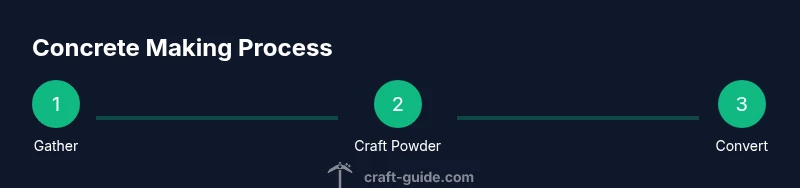
- Gather four sand, four gravel, and one dye. 2) Craft eight concrete powder with the exact 3x3 recipe pattern. 3) Place powder next to water to convert to eight blocks of concrete. 4) Repeat with additional colors as needed and plan your color palette in advance for a cohesive result.
Accessibility and efficiency tips for large projects
For large builds, craft multiple batches of powder at once by setting up several crafting tables and arranging dye stations. Use water streams or a single water source to rapidly convert powder by placing powder around the water and filling the area in sections. Keeping your materials organized in chests and labeling dye colors will speed up the process and prevent color mix-ups.
Tools & Materials
- Sand(4 per batch; base material)
- Gravel(4 per batch; base material)
- Dye(1 per powder batch; choose color)
- Crafting table(Needed for the 3x3 recipe)
- Bucket of water(Used to convert powder to concrete)
- Chest for storage(Optional—organize your powders)
Steps
Estimated time: 15-30 minutes
- 1
Gather materials
Collect four sand, four gravel, and one dye of your chosen color. Carry a crafting table to prepare the recipe and a bucket or access to a water source to convert the powder. Keeping a few extra dyes on hand helps you build fast palettes for larger projects.
Tip: Group all sand and gravel together in your hotbar for quick access during crafting. - 2
Set up your crafting grid
Open your crafting table and organize the 3x3 grid so you can place four sand in the corners, four gravel in the edge middles, and the dye in the center. This exact pattern yields eight powder blocks per batch.
Tip: Double-check the layout before you craft to avoid wasting materials. - 3
Craft concrete powder
Craft eight concrete powder blocks from the arranged sand, gravel, and dye. Move them into your inventory and prepare a plan for multiple colors if you want a palette-ready plot.
Tip: Label batches by color to keep colors consistent across your project. - 4
Place powder near water to convert
Position the powder blocks adjacent to a water source or pour water over them to initiate conversion. The transformation is instantaneous, changing powder into solid concrete blocks in moments.
Tip: If building a large area, block out the space with temporary markers and convert by rows to keep workflow smooth. - 5
Repeat and color your build
Repeat the powder crafting process for additional colors and lay out your blocks in planned patterns. Use contrasting colors for paths, floors, or feature walls to make your design pop.
Tip: Test a small patch first to verify color balance and visibility against lighting. - 6
Finalize and cleanup
Finish by placing blocks in your desired design, storing any unused powder, and adjusting color placements if needed. Clean lines and consistent color blocks improve the overall aesthetic of your build.
Tip: Save your color palette in notes or a compass layout to reproduce it in future projects.
People Also Ask
What is the difference between concrete powder and concrete in Minecraft?
Concrete powder is a colorful, gravity-affected block that becomes concrete instantaneously when it touches water. Once converted, it is a solid, colorfast block ready for building.
Concrete powder is colorful and falls due to gravity; it turns into solid concrete as soon as it touches water.
Can you use any dye to color concrete powder?
Yes, you can use any dye to color the powder. The resulting concrete block will match the dye color you used in the powder recipe.
Use the dye color you want; the powder and final block will match that color.
How many concrete blocks do you get from one batch?
One batch yields eight concrete powder blocks, which become eight concrete blocks after the conversion step.
You get eight blocks per batch after turning the powder into concrete.
Is concrete powder safe to place near water?
Yes. Water converts concrete powder into concrete—place the powder next to water sources or pour water over the powder to complete the conversion.
Water near powder turns it into solid concrete instantly.
Does the recipe differ between Java and Bedrock editions?
The crafting recipe for concrete powder is the same in both Java and Bedrock editions, using sand, gravel, and dye in a 3x3 grid.
Java and Bedrock use the same recipe for concrete powder.
What are some quick building ideas using concrete?
Use bold color blocks for flooring, walls with alternating colors for accents, or geometric patterns for modern builds. Pair light and dark colors to create visual interest.
Try bold floors or accent walls with contrasting colors for impact.
Watch Video
The Essentials
- Craft concrete powder with sand, gravel, and a dye.
- Convert powder to concrete by touching water—instant results.
- Choose color palettes before building to save time.
- Practice on a small patch to perfect color balance.