How to Make a Bucket in Minecraft: A Step-by-Step Guide
Learn how to craft a bucket in Minecraft with three iron ingots on a crafting table, plus practical tips for survival. This guide covers gathering iron ingots, using a crafting table, and versatile bucket uses like water, lava, and milk.


Craft a bucket in Minecraft by gathering three iron ingots and a crafting table, then placing the ingots in a V-shaped pattern on the 3x3 grid to craft the bucket. Iron ingots come from smelting iron ore or finding ingots in chests. Once crafted, buckets hold water, lava, or milk for farming and exploration.
Why every builder needs a bucket in Minecraft
A bucket is one of the most versatile tools in Minecraft. It powers basic farming through water handling, enables lava transport for smelting setups, and unlocks milk-based cures for potion strategies. The Craft Guide team notes that mastering this simple tool early in a playthrough pays off in multiple playstyles, from hardcore survival to creative testing. By having a bucket ready, you can create irrigation systems, move liquids across terrain, and clean up spills in your builds. As you explore caves, a bucket lets you safely scoop water to dampen lava or create quick water pools for safe navigation. In short, a bucket is a foundational utility that supports many advanced techniques later in your adventures.
According to Craft Guide, understanding the bucket’s role in resource management helps players plan more efficient farms, river crossings, and lava-fueled builds. This little tool often serves as the first brick in more complex redstone and base designs, making it worth the small upfront effort to obtain three iron ingots and a crafting table.
Uses of buckets: water, lava, and milk
Buckets are not just for carrying liquids; they are essential for both safe navigation and efficient farming. Water-filled buckets can create infinite water sources, irrigate farmland, or help with elevator designs in redstone experiments. A bucket of lava is a reliable fuel source for in-world smelting setups, lava casings, and hazard management in cave systems. Milk, dropped by cows, is useful for removing negative status effects during dangerous explorations or potion brewing. If you’re playing on a server, a bucket can also assist with livestock management (milking cows) and water-based farming systems. The bucket’s flexibility makes it a staple in every player’s inventory, from beginners to seasoned builders.
Craft Guide analysis shows that these practical uses are accessible early in standard survival runs, especially once you’ve located a reliable source of iron ore or a village chest with ingots.
The recipe and pattern: what you actually place in the grid
To craft a bucket, you need three iron ingots arranged in a V pattern on the 3x3 crafting grid. I = iron ingot; E = empty slot. The pattern looks like:
I _ I
_ I _
_ _ _
In words: put ingots in the top-left and top-right slots, then place one ingot in the center of the grid. This creates a single bucket when you use a crafting table. Remember, the V-pattern requires a 3x3 crafting grid—the player’s 2x2 grid cannot complete this recipe, which is why you need a crafting table. Once you understand this pattern, you can craft buckets quickly in future runs.
If you’re curious about alternatives, some players experiment with plugin-based crafting grids on servers, but the standard Minecraft crafting system uses the above layout on a 3x3 grid.
How to obtain iron ingots efficiently
Iron ingots are the core ingredient for crafting a bucket. The most common path is to mine iron ore and smelt it in a furnace to produce ingots. A typical mine run targets veins found around level 16 to 24, where iron ore tends to generate. Bring a furnace, fuel (coal, charcoal, or wood), and a pickaxe suitable for mining. Smelting iron ore yields iron ingots, which you then place in your inventory for crafting. Alternatively, you can find ingots in dungeon chests or temple loot in some worlds. Preparing several stacks of coal or charcoal and a sturdy iron pickaxe will speed up your ingot production and ensure you’re ready to craft multiple buckets when needed.
Crafting table and the 3x3 grid: why you need a table
The crafting table is essential for this recipe because it exposes the full 3x3 grid required for the bucket. To craft the table, place four wooden planks in a 2x2 square in your inventory. Then place it somewhere convenient near your mining or farming area. The crafting table not only unlocks the bucket pattern but also enables many other advanced recipes for armor, tools, and infrastructure you’ll encounter as you expand your base. Position your table close to your ore-rich zones so you can quickly convert ingots into buckets without extra trips back to your main base.
Step-by-step overview: prepare, craft, and test
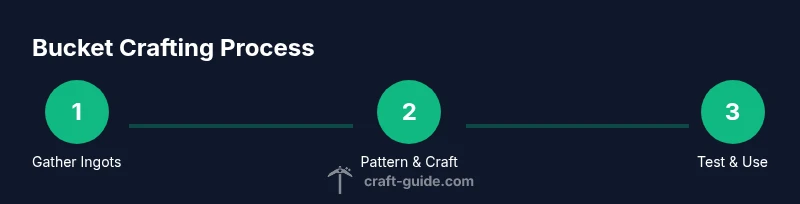
First, gather three iron ingots and a crafting table. Second, open the crafting table to access the 3x3 grid. Third, place the ingots in the V pattern described above. Fourth, pick up the bucket from the output slot and add it to your hotbar. Fifth, test your bucket by filling it with water from a nearby source. Sixth, try carrying lava to a safe place for smelting setups or use a milk bucket to counter status effects during exploration. By walking through this workflow, you’ll solidify the habit of planning resources before committing to a craft.
Pro tip: always carry a spare water bucket when you’re near deserts or oceans, so you can quickly create safe passage, dousing fires, or farming rows as you travel.
Common mistakes and how to avoid them
One common mistake is misplacing iron ingots in the grid. Double-check the top row and ensuring you place ingots in the corners and the center. Another pitfall is attempting to craft in a 2x2 grid in the inventory; you need a crafting table with a full 3x3 grid. A third error is not acquiring enough iron ingots; you must have exactly three ingots to complete the bucket. Ensure you have at least three ingots before you start the crafting process. Finally, remember that you can only hold one liquid at a time in a bucket, so think about your immediate needs (water for irrigation, milk for curing effects, etc.) before filling.
To avoid these mistakes, plan your resource collection ahead of time and verify your crafting layout before you commit to the recipe.
Practical uses: farming, farming automation, and transport
Buckets are a foundation for farming systems. Water buckets enable irrigation for crop growth, while lava buckets support compact fuel bases or smelting operations in early bases. Milk buckets are invaluable for potion prep and safety during exploration. Buckets also simplify river crossing or waterfall staircases in bases and help with mob farming designs by controlling water flow. When you get comfortable with the bucket, you’ll find it becomes a core component of many practical builds, including water elevators and irrigation channels.
The Craft Guide team keeps seeing players unlock significant early-game efficiency with this simple tool, and the bucket is often the first multi-use item that expands your base-building possibilities.
Creative and survival nuances: differences you should know
In Creative mode, obtaining three iron ingots is instant, and you can jump straight to crafting the bucket on any available surface. In Survival mode, you’ll need to mine iron ore and smelt it, which adds a layer of planning and time to your bucket-building process. Always consider your current resource stash and your immediate environment: if you’re in a lava-prone area, a bucket is essential for safety, and if you’re near farms, water buckets simplify irrigation. Also, remember that milk requires cows—so you may need to locate livestock to use milk buckets effectively. This versatility makes the bucket a must-have tool regardless of your chosen playstyle.
Quick-start checklist: the essentials at a glance
- Gather three iron ingots and a crafting table.
- Place ingots in a V pattern on a 3x3 crafting grid.
- Craft and pick up the bucket.
- Test the bucket with water to confirm it works.
- Learn the primary uses: water for irrigation, lava for smelting setups, milk for potion safety.
Having this checklist handy helps you start fast and keep your inventory organized during early exploration.
Bonus: expanding your bucket toolkit with efficiency tips
As you grow more confident, you can combine buckets with items like a water source in a farm perimeter, a lava pool for a smelting setup, or a milk bucket when facing potential negative effects from hostile mobs. Carrying multiple buckets (water, lava, and milk) lets you respond quickly to dynamic challenges. In addition, using a chest or ender chest to store spare buckets can save time during long mining expeditions. Craft Guide recommends practicing these patterns until you can reproduce them without thinking, turning bucket crafting into a quick, instinctive step in your Minecraft routine.
Tools & Materials
- iron ingot(3 ingots required to craft a bucket)
- crafting table(Access the full 3x3 crafting grid)
Steps
Estimated time: 5-15 minutes
- 1
Gather three iron ingots
Mine iron ore and smelt it in a furnace to produce three iron ingots. This step provides the raw material necessary for crafting the bucket. If you already have ingots in your inventory, skip to the crafting stage.
Tip: Bring a reliable source of fuel for your furnace (coal or charcoal) to speed up ingot production. - 2
Open the crafting table
Right-click the crafting table to access the 3x3 grid. The table is essential for the bucket recipe because it uses the full grid. If you don’t have a table yet, craft one using four wooden planks.
Tip: Position your crafting table in a safe area near your mining or farming zones for quick access. - 3
Place ingots in the V pattern
Place three iron ingots in the V shape: one in the top-left slot, one in the top-right slot, and one in the center slot. This arrangement is required to create a bucket in the standard recipe.
Tip: Double-check the grid: a misplacement on the corners or center will fail the recipe. - 4
Craft the bucket
Take the bucket from the output slot and add it to your inventory. The result appears immediately after you place the ingots in the correct pattern.
Tip: Keep at least one extra ingot aside in case you want to craft more buckets later. - 5
Test the bucket with water
Fill the bucket with water from a nearby source to confirm it works. Use the bucket to scoop water from a lake, river, or water source pool.
Tip: Water buckets are great for breaking falls or creating quick irrigation canals. - 6
Explore practical uses
Experiment with milk (for curing effects) and lava (for fueling furnaces) once you’ve secured a stable supply of liquids. Practice transporting liquids between areas to improve your base design and resource management.
Tip: Keep safety in mind when handling lava; never place it near flammables or your base. - 7
Expand with more buckets
If you plan larger builds or farming layouts, consider crafting multiple buckets to keep water, lava, and milk on hand for different tasks.
Tip: Label your storage chests to track which bucket type is where for quick access. - 8
Troubleshooting quick fixes
If the bucket doesn’t appear in the output, recheck the ingot count and pattern. Ensure you’re using a crafting table and that you’ve placed the ingots in the exact V shape.
Tip: If you’re in Creative mode, you can skip straight to the 3x3 grid, but this is a good habit to practice in Survival. - 9
Apply your bucket in real scenarios
Practice placing water to irrigate farms, use milk to counter poison effects, and move lava safely for sustainable smelting setups. Use your bucket in a controlled environment before relying on it in dangerous terrain.
Tip: Create a small testing area to practice with different liquids without risking your main base.
People Also Ask
What items do I need to craft a bucket in Minecraft?
You need three iron ingots and a crafting table. Place the ingots in a V pattern on the 3x3 crafting grid to craft the bucket.
To craft a bucket, you’ll need three iron ingots and a crafting table. Arrange the ingots in a V on the 3x3 grid to obtain the bucket.
Do you always need a furnace to craft a bucket?
No. Buckets are crafted directly from iron ingots in a crafting table’s 3x3 grid. A furnace is only needed to smelt iron ore into ingots if you don’t already have ingots.
A furnace isn't required for crafting a bucket; you only need iron ingots. Use a furnace if you need to smelt ore into ingots.
What can I store in a bucket?
A bucket can hold water, lava, or milk. These liquids enable irrigation, lava-based smelting setups, and potion-related strategies during exploration.
A bucket can hold water, lava, or milk, which helps with farming, smelting, and countering effects during exploration.
Can I craft a bucket in Survival without mining?
Yes, but you still need three iron ingots. In Survival, obtain ingots by mining ore and smelting it in a furnace, then craft the bucket on a crafting table.
In Survival you still need three iron ingots, so mine ore and smelt it, then craft the bucket on a crafting table.
Is milk useful for combat or farming?
Milk removes status effects from potion hazards and hostile mobs. It’s often used in potion brewing or to counter negative effects while exploring dangerous areas.
Milk resets status effects, which helps during exploration or when you’re brewing potions.
Watch Video
The Essentials
- Craft a bucket using three iron ingots on a 3x3 grid.
- The V-shaped pattern is essential for bucket creation.
- Buckets hold water, lava, or milk for practical uses.
- Mine iron ore or find ingots to obtain the ingots you need.
- Practice in Creative mode first, then apply in Survival for real-world utility.