What to Do with Amethyst in Minecraft
Explore practical, educational uses for amethyst in Minecraft—from locating geodes to crafting decorative blocks and functional items like the spyglass. Learn mining tips, storage, and design ideas to elevate your builds in 2026.


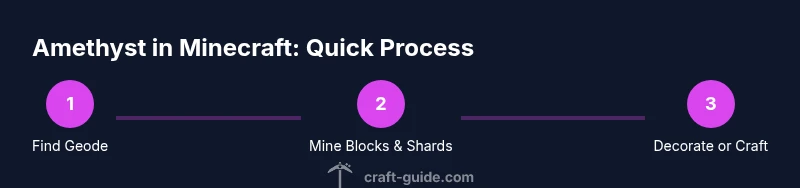
You’ll learn how to locate amethyst geodes, mine amethyst blocks and shards, and use them for decorations and basic tools like the spyglass. This guide covers practical mining tips, storage, and design ideas so you can turn amethyst into both beauty and function in your world. According to Craft Guide, amethyst shines in both aesthetics and simple contraptions.
What Amethyst Is in Minecraft
Amethyst is a purple mineral found in geodes underground, providing both decorative blocks and workable items. In Minecraft, amethyst appears as amethyst blocks, amethyst shards, and budding amethyst crystals. Understanding these forms helps you choose how to use the resource in builds and functionality. The Craft Guide team notes that amethyst adds a vibrant color to both rustic and modern designs, while also enabling small but useful mechanics. This dual nature—beauty and utility—makes amethyst a popular resource for players who want to elevate their builds without complex farming systems.
Diagonally you will see geode interiors with crystalline features that can guide your exploration. Budding amethyst is the stage before full crystal growth, and mature crystals form the core of the geode. By recognizing these stages, you can anticipate when you’ll see blossoms of purple crystals and plan your mining route accordingly.
Keep in mind that amethyst is relatively common in certain biomes and depths, but geodes are still special finds. When you discover one, you’ll want to light the area, approach carefully, and prepare for a contained mining session that minimizes mob encounters. Craft Guide’s perspective emphasizes using amethyst as both a design accent and a practical material for small projects.
In practice, you’ll use amethyst blocks to build, amethyst shards to craft certain items, and budding amethyst to observe crystal growth in your world. This versatility is what makes amethyst a favorite among builders and explorers alike.
Where Amethyst Geodes Spawn and What They Look Like
Geodes are distinctive underground formations that house amethyst crystals. They often appear as a rounded, hollow interior lined with geode-specific materials and bloom into clusters of purple crystals over time. To locate a geode, survey caves and underground networks; they’re not guaranteed to appear in every world, so you may need to explore multiple caverns.
Geodes have three zones: an outer shell, a middle layer of calcite, and an inner core of budding amethyst that can eventually produce crystals. When you break the geode, you’ll uncover amethyst blocks, shards, and sometimes the natural crystal formations. Craft Guide emphasizes patience and careful navigation here—geodes reward thorough exploration with a stable supply of amethyst materials.
Plan your route with light sources to avoid mobs, and consider creating a safe exit path from the geode once you’ve secured a good haul. The geode’s interior can become a beautiful feature in its own right, so think about how you’ll incorporate the purple glow into your builds after you collect your shards and blocks.
Mining Amethyst: Tools, Techniques, and Safety
To collect amethyst efficiently, bring a sturdy pickaxe (preferably iron or better) and ample lighting. While you can break amethyst blocks with any tool, a tougher pickaxe speeds up the process and helps you harvest buds and clusters without unnecessary wear on your gear. Light up the geode area to deter mobs and reduce the risk of surprise attacks while you work.
When approaching budding amethyst, mine around it carefully to avoid triggering accidental breakage of the geode’s core structure. If you encounter a bud, remember that it’s the precursor to crystals and may take time to mature. Patience pays off with a clean yield and stable returns on shards. Craft Guide highlights that steady, deliberate mining preserves resources and keeps your inventory organized.
If you’re new to geodes, take time to map your route and collect both blocks and shards. Store them in labeled containers so you don’t mix decorative blocks with crafting components. A well-organized mining session saves time and reduces frustration on future expeditions.
Amethyst Crystals, Shards, and Budding Amethyst: What’s What
The geode houses several related forms: budding amethyst (which grows into crystals), amethyst crystals (the fully formed purple points you see), and amethyst shards generated from mining blocks. Distinguishing these forms helps you use amethyst efficiently. Shards are widely used for crafting and decoration, while blocks contribute to structure and color in builds.
Budding amethyst is especially interesting for players who enjoy watching natural growth in their worlds. While buds don’t immediately drop items when broken, they represent the potential to expand your amethyst supply as crystals form. Craft Guide notes that recognizing these differences makes it easier to plan farmable setups and decorative layouts.
Remember that crystals retain their purple hue regardless of light, so they can be a dramatic accent in dimly lit rooms or under glowstone for contrast. Capturing this aesthetic helps you balance form and function in your builds.
Decorative and Practical Uses: Blocks, Shards, and Simple Tools
Amethyst blocks provide vibrant purple accents that liven up builds—think pillars, walls, floors, or feature pieces in modern or fantasy builds. Amethyst shards, in turn, unlock a handful of practical items, including a spyglass, which helps you scout distant terrain and mobs with ease. These materials offer a simple way to add both function and style to your world.
In addition to aesthetics, consider how amethyst interacts with other materials. The natural purple glow can pair nicely with quartz, basalt, or copper accents, creating a cohesive color palette for your base. Craft Guide’s guidance suggests using amethyst sparingly to avoid overwhelming your design, then letting the color pop in key architectural moments.
If you’re building in a cave system or near a geode, embrace a theme that echoes the geode’s own crystal formation. Subtle lighting and careful placement can showcase amethyst’s beauty without sacrificing practicality.
Tips, Tricks, and Design Ideas for Amethyst Builds
To maximize impact, place amethyst blocks in symmetrical patterns or alternating rows to highlight their color. Use amethyst as accents in walls, door frames, or window sills to create bold, cohesive visuals. For larger builds, pair amethyst blocks with neutral tones like stone or concrete to let the purple hues stand out.
Experiment with the spyglass in your builds—use it to plan large-scale designs by scanning distant terrain and adjusting your layout accordingly. If you’re feeling bold, combine amethyst with other crystals or minerals for a geode-inspired aesthetic that ties natural formations into your man-made spaces. Craft Guide recommends balancing color and contrast to avoid overloading the scene with purple.
Finally, consider player comfort and resource efficiency. Amethyst is accessible through exploration rather than heavy farming; use it to punctuate your world’s beauty while conserving resources for other projects.
How to Acquire, Store, and Preserve Amethyst Materials
Organize your mining loot with clearly labeled chests or crates to keep amethyst blocks, shards, and buds separated. Silk Touch can help you relocate blocks intact, while shard collection remains straightforward with standard mining. Store finished items close to your mining site so you can quickly access materials as you design.
Declutter by establishing a dedicated amethyst workstation: a crafting table, a few chests, and a lamp for visibility. Keep extra torches, blocks for scaffolding, and a water bucket handy to manage accidental lava exposure. Craft Guide emphasizes that planning storage ahead of time prevents resource mix-ups and speeds up future projects.
As you build, maintain an eye on inventory flow: move fewer blocks when you don’t need them and redistribute shards for crafting as you go. A tidy setup means you’ll be more productive during long building sessions.
Common Mistakes and How to Avoid Them
One common mistake is overusing amethyst blocks in a single room, which can overshadow other elements of the design. Aim for strategic placement that highlights key features rather than covering surfaces entirely. Another pitfall is ignoring mob safety; geodes may be located in dark areas where mobs gather—always light up the space to protect yourself and your loot.
Rushing to harvest buds or shards can lead to breaking the geode structure or wasting resources. Take your time to map the geode, secure a safe approach, and collect materials methodically. Craft Guide recommends a measured approach to mining and placement to maintain a balanced aesthetic and practical workflow.
Finally, don’t neglect inventory organization. A cluttered chest slows you down and makes it harder to find the blocks you need for your next build. Develop a simple labeling system and keep items grouped by type so you can work more efficiently on large projects.
Authority Sources
For foundational information about amethyst as a mineral and its real-world context, see credible sources:
- https://www.britannica.com/science/amethyst
- https://www.mindat.org/min-16.html
- https://minerals.usgs.gov/minerals/pubs/commodity/amethyst/mcs-amethyst.pdf These references provide geology context that can enrich your Minecraft projects, though in-game mechanics are updated with each version.
Tools & Materials
- Iron pickaxe or better(Needed to efficiently break amethyst blocks and buds; stronger tools speed up mining.)
- Chests or storage containers(Organize shards, blocks, and buds for easy access.)
- Crafting table(To craft amethyst-related items and blocks.)
- Torches or other light sources(Light geodes and mining areas to deter mobs.)
Steps
Estimated time: 45-60 minutes
- 1
Locate amethyst geodes
Begin with a careful survey of underground caves and ocean floors where geodes commonly form. Bring light to illuminate the area and plan your route to minimize mob encounters. Mark your path so you can return to your mining site without getting lost.
Tip: Carry extra torches and blocks to create a safe route as you explore. - 2
Mine amethyst blocks and buds
Use a sturdy pickaxe to break amethyst blocks and buds; collect shards and crystals as they drop. Work slowly around geode interiors to avoid damaging the structure and to maximize your yield. If you encounter buds, note their growth stage and plan for future crystal formation.
Tip: Mine with care to preserve the geode’s core structure for sustainable harvesting. - 3
Sort and store materials
Immediately organize shards, blocks, and any crystals you collect. Use labeled chests or shulker boxes to separate decorative blocks from crafting components. Silk Touch can preserve blocks if you want to relocate whole blocks rather than shards.
Tip: Create a dedicated amethyst station near your mining area. - 4
Decorate with amethyst blocks
Place amethyst blocks in structural accents—pillars, arches, or feature walls—to introduce purple highlights. Combine with neutral materials to prevent color overload. Consider planning symmetry or focal points to guide the viewer’s eye.
Tip: Balance color with surrounding textures for a cohesive look. - 5
Craft items from shards
Use amethyst shards for specific crafting recipes available in your version of Minecraft. A notable example is the spyglass, which provides a practical scouting tool. Keep shards accessible so you can pivot between building and exploring quickly.
Tip: Keep a small stash of shards near your crafting area. - 6
Experiment with lighting effects
Amethyst blocks don’t emit light, but their purple hue can be enhanced with ambient lighting. Try pairing with glowstone, lanterns, or sea lanterns to create dramatic contrasts that highlight purple tones.
Tip: Test different lighting angles to maximize color impact. - 7
Protect geodes from hazards
Geodes can be exposed to lava or hostile mobs. Build around geodes with safe pathways and lighting to prevent losses. Create a simple cordon or protective frame to guard the area during mining sessions.
Tip: Always secure the mining area before breaking blocks near the geode. - 8
Incorporate into larger builds
Use amethyst as a recurring motif rather than a single feature. Pair with other minerals and blocks to create themed rooms, towers, or scenic vistas. Plan designs that repeat motifs across multiple builds for a cohesive world.
Tip: Outline a color palette before starting a major project.
People Also Ask
What is amethyst used for in Minecraft?
Amethyst serves both decorative and functional roles in Minecraft. It provides blocks for visual accents and shards that enable crafting a few items, such as the spyglass. The combination of aesthetic appeal and practical uses makes amethyst popular for builders and explorers.
Amethyst is used for decoration and a few handy items, like the spyglass, which helps you scout ahead.
Where do amethyst geodes generate?
Geodes generate underground in various biomes, often in cave networks or near bodies of water. They come in three zones with a core of budding amethyst crystals. Exploring caves and lighting your path helps locate them more reliably.
Geodes are underground, in cave networks, or near water—look for purple crystal cores when you find a geode.
Can you farm amethyst in survival mode?
Amethyst farming is not a traditional farm; you obtain it by locating geodes and mining amethyst blocks and buds. You can repeat mining in new geodes across your world, but it isn’t grown like crops. Plan expeditions to harvest more over time.
You can’t farm amethyst like crops, but you can explore and mine geodes across your world to gather more shards and blocks.
What is a spyglass and how is it made?
The spyglass is crafted from amethyst shards and copper ingots. It’s a handy tool for scouting distant terrain and mobs. The exact recipe depends on version, so check your game’s crafting table to verify the current arrangement.
A spyglass helps you see far away using amethyst shards and copper ingots. Check your version’s recipe in your crafting table.
Are there any other amethyst items besides the spyglass?
Amethyst primarily contributes decorative blocks and shards for crafting limited items like the spyglass. Its main value comes from aesthetics and the subtle purple accent it adds to builds. Be sure to test version-specific possibilities in your game.
Beyond decorative blocks and the spyglass, amethyst’s main value is its color and style in builds.
What are best practices for decorating with amethyst?
Use amethyst sparingly to emphasize focal points—like doorways, arches, or pillar accents—without overwhelming the space. Combine with neutral tones to let the purple pop. Plan lighting to enhance color so the space feels cohesive and intentional.
Use amethyst as a focal accent and balance it with neutrals; let the color do the talking.
Watch Video
The Essentials
- Decorate with amethyst for color accents that pop with restraint.
- Separate shards, blocks, and buds to streamline crafting and building.
- Use the spyglass to plan large builds and scouting efforts.
- Always light geodes and protect mining routes from mobs.