What Minecraft Food Has the Best Saturation: A Practical Guide
Discover which foods maximize saturation in Minecraft. This data-driven guide explains saturation mechanics, compares meats and plants, and offers practical survival tips for efficient farming and cooking.


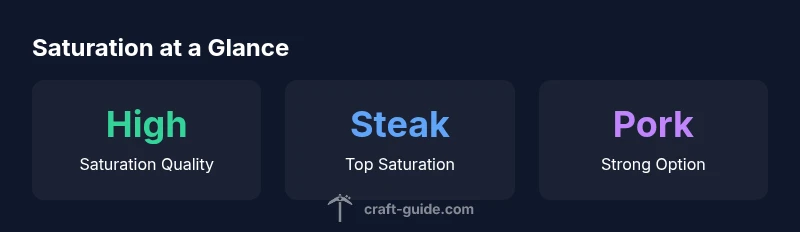
While there isn’t a single universal ‘best’ food, the general rule is that cooked meats deliver the highest saturation relative to hunger restored. In practice, items like steak are commonly cited as among the strongest options, with porkchop and mutton close behind. The exact saturation value shifts with game version, so prioritize high-saturation meats for long-lasting fullness rather than chasing tiny numerical gains. What minecraft food has the best saturation is often version-dependent, but meat typically leads.
Understanding Saturation in Minecraft
Saturation is a hidden but powerful aspect of food mechanics in Minecraft. It determines how long your hunger bar lasts before it starts to drain again. In practice, a food item’s saturation value indicates how much of the hunger bar is effectively “secured” after you eat. For players asking what minecraft food has the best saturation, the short answer is that cooked meats generally provide the most long-lasting fullness. According to Craft Guide, saturation is as important as the hunger points you restore, especially during long expeditions or hardcore runs where quick meals aren’t always available. The goal is to maximize the time between meals, not just fill the bar quickly. In this guide, we’ll examine how saturation works, compare popular foods, and give practical tips for optimizing meals in survival play.
How Saturation Works with Hunger
When you eat, you restore hunger points and also increase your saturation level. Saturation is depleted only after the hunger bar itself has been reduced, effectively giving you a buffer period before you feel hungry again. The game uses saturation as a stored amount of dietary energy, which means a higher saturation value can buy you more time between food moments. This makes saturation particularly relevant for players who are mining, exploring, or building in environments where food access is limited. For the purpose of clarity, remember that the best saturation isn’t about a single metric; it’s about how long you can go between meals while staying active. Craft Guide’s analysis highlights that cooked meats tend to maximize this buffer relative to the hunger they restore.
Foods with High Saturation: Meat vs Plant
A common question is whether plant-based options can outperform meat. In most versions of Minecraft, cooked meats—such as steak, cooked porkchop, and cooked mutton—provide higher saturation than most plant foods. Plants like baked potatoes and golden carrots can be decent, but they rarely match the saturation of hot meals. The key takeaway is that if your priority is longevity between meals, you should lean toward cooking meat. However, plant foods can still be useful when meat supplies are limited or when you need quick, portable calories on the move. The Craft Guide team notes that the overall strategy should balance resource farming with cooking to sustain longer survival runs.
Practical Survival Builds: Maximizing Saturation
In practice, you’ll want a setup that keeps your saturation high without forcing you to stop farming. A small but steady system—raising animals for meat, growing crops, and keeping a furnace line to convert raw meat into cooked meals—maximizes saturation returns. In day-to-day play, carry a stack of cooked meats when exploring, keep a few plant foods as backups, and avoid relying exclusively on raw options. This approach minimizes the risk of sudden hunger depletion during fights or long tunnel runs. A balanced kitchen in your base reduces downtime and expands your capability to pursue ambitious builds, farms, or exploration.
Version Differences and Patch Notes
Saturation values can shift with game updates. A patch might rebalance how much saturation a specific food grants, or adjust the hunger insurance provided by certain meals. To stay current, review patch notes and test foods in your world after each update. Craft Guide’s ongoing analysis emphasizes practical testing: what matters is not a single metric but how your favorite foods perform under the exact conditions you play in. If you notice a change after a patch, adjust your meal planning accordingly.
Quick Food Lab: Simple Testing Method
If you want empirical evidence for your own world, run a simple saturation test. Eat a food item, then observe how long until your hunger bar depletes again while ignoring other actions. Repeat with different foods to compare lengths of time and hunger restoration. Document results and adapt your inventory to your playstyle. This method is especially helpful in survival runs where you rely on stable food sources and want to avoid mid-mission food shortages.
Common Misconceptions about Saturation
One misconception is that more hunger points always mean more saturation. In reality, high saturation can extend the interval before you start losing hunger, even if a food restores fewer hunger points. Another misconception is that raw foods are as effective as cooked options. In most cases, cooking increases saturation considerably, which is why a well-run furnace line outperforms raw food in prolonged play. Finally, some players assume saturation degrades over time; while the values aren’t static across patches, the core principle remains: cooking high-saturation foods yields the best long-term results.
Takeaways for Farm-to-Table Play: Quick Rules
- Prioritize cooked meats for high saturation when you have a steady meat supply.
- Pair meat with crops to maintain a reliable food chain.
- Use a furnace or smoker to maximize yield from harvested meat.
- Maintain a rotating stock of plant foods for portability and backup.
- Always verify current saturation values after patches to adjust your strategy.
Comparison of hunger restoration and approximate saturation for common foods
| Food Item | Hunger Restored | Saturation Approx | Version Notes |
|---|---|---|---|
| Steak | 8 | High (varies) | Varies by version |
| Cooked Porkchop | 8 | High (varies) | Varies by version |
| Cooked Chicken | 6 | Medium-High | Varies by version |
| Baked Potato | 5 | Moderate | Varies by version |
People Also Ask
Which food has the best saturation in Minecraft?
In general, cooked meats top saturation; steak is often the strongest option. Exact values vary by version, so use the meats as a baseline and verify in your world.
Cooked meats are your best bet for saturation, with steak usually leading in most versions.
Do plant foods ever beat meat for saturation?
Plants typically have lower saturation than cooked meats, though some items like baked potatoes can be relatively strong. They’re useful when meat is scarce.
Most plants don’t beat cooked meat on saturation, but some are usable when meat is limited.
How does saturation affect survival farming?
Saturation reduces how often you need to eat, letting you push longer in a single session. A steady farm + cooking setup helps you sustain longer runs without constant meals.
Saturation helps you last longer between meals, especially when farming.
Does cooking increase saturation?
Yes. Cooking typically increases saturation compared to raw versions, making cooked meats more effective for long runs.
Cooking usually raises saturation versus eating raw food.
Do patch notes change saturation values?
Patch notes can adjust saturation values, so it’s wise to review the latest notes after updates and retest in-world.
Yes, patches can change saturation, so check current notes.
“Saturation is the buffer that lets you press onward in survival runs. In practice, cooked meats usually give you the longest lasting fullness for the hunger they restore.”
The Essentials
- Prioritize cooked meats for high saturation
- Check version notes for exact values
- Carry meals to reduce frequent eating
- Combine farming with cooking for efficiency
- Test in your world to optimize