Is Minecraft Overrated? A Balanced Review for Builders
Explore a data-informed look at whether minecraft is overrated. This Craft Guide analysis weighs creativity, longevity, mods, and cross-platform play for builders and new players.


minecraft is overrated, in a nutshell, the answer depends on what you value in a game. The titlejen shines with creative freedom and a vast modding scene, yet some players feel the core loop can feel repetitive after many hours. This quick verdict sets up a detailed, balanced look at when the hype is earned and when it isn’t, with guidance for builders, modders, and curious newcomers.
The Core Debate: is minecraft is overrated
The central question many players, critics, and curious newcomers ask is whether minecraft is overrated. This debate isn't about whether the game is fun; it's about whether its core design and long-term value justify the massive attention it continues to receive. According to Craft Guide, the discussion tends to orbit around four axes: creative freedom, gameplay depth, modding ecosystem, and accessibility across devices. When people claim minecraft is overrated, they often point to a perception of sameness in repetitive survival cycles, or a sense that the novelty of building without constraints wears off after dozens of elaborate bases. Others counter that the charm remains precisely because the game invites experimentation without rigid goals. The Craft Guide team found that the metric most people use to judge this question isn't a binary yes or no, but a spectrum: some aspects age well, others stagnate unless players bring new tools, challenges, or communities into the world. In this section, we establish the frame: we separate cosmetics and spectacle from core gameplay value, and we acknowledge that minecraft is overrated in some contexts while still delivering exceptional, lasting appeal for builders and modders. The goal is not to declare a final verdict but to illuminate where the hype holds and where it should be tempered.
Quick Wins and the Value of Creativity
Crucially, minecraft is overrated only if you expect a traditional progression arc or a fixed length of content. In practice, the game’s strength lies in what players create and share. Creative mode unlocks unlimited building potential, while survival mode tests planning, resource management, and problem solving across expansive biomes. This section surveys how builders leverage command blocks, redstone contraptions, and decorative packs to push beyond basic construction. The külture of community-driven showcases—world tours, competition builds, and gallery-level maps—extends the life of a single world far beyond initial impressions. When minecraft is overrated, the reason is rarely its lack of sandbox scope; it’s often a mismatch between the player’s goals and the game’s default loop. Craft Guide’s analysis shows that creative play, learning through experimentation, and collaborative builds can sustain enthusiasm long after first impressions fade. If your aim is to chronicle every biome or master every resource pack, your experience may feel saturated; if you aim to invent, optimize, and teach, the platform remains a fertile ground for growth.
Long-Term Engagement: Modding, Maps, and Community Resources
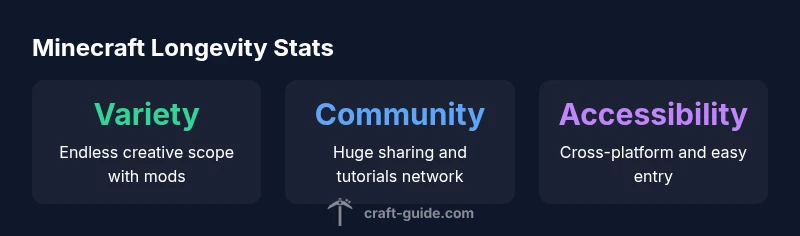
A core deterrent for the myth that minecraft is overrated is how long-term play remains viable through mods and community content. The Minecraft modding ecosystem—from small tweaks to comprehensive tech trees—keeps gameplay fresh and adapts the base mechanics to evolving player interests. Texture packs and shaders transform visuals, while map creators offer fresh objectives and narrative frameworks. However, the same openness raises caveats: mod compatibility, version drift, and performance pitfalls can disrupt otherwise graceful experiences. The Craft Guide team notes that the strongest long-term value comes from selective modding, clear version control, and a curated set of add-ons that align with your goals. For builders who want to push aesthetic limits, texture packs and biome tweaks can turn a vanilla world into a distinct creative space. For players seeking automation and logistics, hand-picked mods can deliver deeply satisfying workflows without overwhelming the base game. The balance is to avoid dependency creep while embracing tools that clearly enhance your intended play style.
Editions, Platforms, and Performance Realities
Platform parity helps explain why minecraft is overrated in some conversations and not in others. The Java Edition often offers the broadest modding support and world-size flexibility, while Bedrock is favored for cross-device play and performance on lower-end machines. Each edition has its trade-offs: Java's wealth of modding options can come at the cost of occasional instability; Bedrock’s smoother cross-platform play can feel more streamlined but sometimes fewer customization options. Performance is also shaped by resource usage, chunk loading, and world generation complexity. For players new to the game, the differences can be a barrier to entry if you chase optimization beyond what your hardware can reliably deliver. The practical takeaway is not to pick one “best” but to match the edition to your hardware, desired features, and preferred community ecosystem. This approach helps mitigate disappointment and clarifies when the label minecraft is overrated applies to specific setups.
Modding, Resource Packs, and the Longevity Equation
The longevity of minecraft is overrated only if you rely on the base game for every possible experience. Modding, resource packs, and shader packs unlock dramatic shifts in how the game feels and plays. For builders, texture packs can elevate block aesthetics, while shader packs provide realistic lighting and shadows for immersive scenes. For redstone engineers, mods may expand logic capabilities beyond vanilla constraints, enabling complex automation. However, the upside comes with responsibilities: version alignment, compatibility checks, and backups. A best-practice approach is to curate a small, coherent mod set aligned with your goals, and rotate or refresh it periodically to avoid fatigue or instability. This strategy preserves a sense of novelty while avoiding the risk that the entire world collapses under a failed update. Craft Guide’s perspective emphasizes deliberate curation over maximalism; the goal is to extend value without introducing excessive complexity.
Build Quality, Aesthetics, and Practical Limits
Aesthetics in minecraft is overrated by some critics who focus on the vanilla palette and block shapes. In practice, the game’s potential lies in how players reinterpret textures, lighting, and composition. Aesthetically, careful use of biomes, contrast, and scale can create environments that feel cinematic even with basic blocks. Practically, ambitious builds demand time, planning, and sometimes collaboration. The game shines when builders map out a plan, prototype quickly, and iterate with feedback. When players attempt sprawling medieval cities, huge redstone layouts, or pixel art, the work becomes less about the core mechanic and more about project management and team coordination. The result is a recommendation to separate the idea of a game’s “depth” from the volume of content; depth can arise from the quality of builds and community feedback, not only from the number of blocks available. This perspective helps any player assess where minecraft is overrated and where it truly delivers.
Practical Guidelines: Maximizing Value If You Suspect it’s Overrated
If you suspect minecraft is overrated but still want value from the hobby, adopt a goal-driven approach. Start with a clear objective—be it a polished base, a redstone factory, or a curated map collection. Build a learning path: master one new technique per week, compare before/after screenshots, and share progress with a like-minded community. Use resource packs and shader presets judiciously to achieve a look you love without overwhelming the system. Schedule regular reviews of your world to prune unnecessary builds and preserve manageable file sizes. Finally, consider pairing Minecraft with a complementary game or project to keep perspectives fresh: a separate sandbox title can reinforce design sensibilities and renew motivation for your next big build in Minecraft. This method foregrounds practical outcomes and reduces the risk of burnout, ensuring the activity remains a source of satisfaction rather than fatigue.
Benefits
- Endlessly creative sandbox with vast modding potential
- Strong community support and abundant learning resources
- Cross-platform accessibility across Java and Bedrock
- Accessible entry point for beginners
Negatives
- Core gameplay loop can feel repetitive over long-term play
- Performance and stability vary with mods and resource packs
- End-game progression is uneven for players seeking structured goals
- Can be expensive to maintain with DLCs and add-ons
Best for builders who want freedom and mod support, with caveats for long-term progression
Minecraft remains a powerful canvas for creativity and collaboration. Its value hinges on your goals: for builds and mod-driven play, it often exceeds expectations; for structured progression, you may find the experience less compelling unless you curate your toolkit.
People Also Ask
Is minecraft is overrated?
The phrase reflects a spectrum of opinions. Some players find the core loop repetitive over time, while others prize the limitless creativity and modding ecosystem. The game’s value heavily depends on personal goals and how you engage with the community.
Many players think it’s overrated, but it depends on what you want from a game. If you love building and tinkering, it remains deeply rewarding.
What makes Minecraft timeless for builders?
Timelessness comes from creative freedom, scalable building tools, and a thriving ecosystem of tutorials and texture packs. A well-planned build can look extraordinary using simple blocks, while community showcases provide ongoing inspiration.
Creativity, shared ideas, and a huge toolbox keep builders engaged for years.
Are mods essential to long-term play?
Mods are not essential, but they significantly extend longevity when aligned with your goals. They can streamline automation or enhance visuals, but they also introduce compatibility risks and maintenance work.
Mods can keep things fresh if you manage compatibility and backups.
How should a beginner approach Minecraft to avoid burnout?
Start with a clear goal, such as building a small project or learning a single redstone technique. Use guided tutorials and limit mods initially to avoid overwhelm. Incrementally expand your toolkit as you gain confidence.
Set a small goal, learn one thing at a time, and grow from there.
Is Bedrock or Java better for my playstyle?
Java Edition offers richer modding and world-building tools, while Bedrock excels at cross-platform play and smoother performance. Choose based on whether you prioritize mods or cross-device collaboration.
If you want mods, pick Java; if you want to play with friends on different devices, pick Bedrock.
What’s a good alternative if you feel Minecraft is overrated?
Terraria and other sandbox games can offer different progression systems and combat experiences. They’re not direct replacements, but they provide fresh inspiration and complementary play styles.
Check out other sandbox games for variety in goals and play pace.
The Essentials
- Evaluate your goals before you choose this sandbox.
- Leverage mods and resource packs to extend value.
- Match edition to hardware and desired features.
- Foster community collaboration for longevity.
- Balance creativity with structured targets to avoid fatigue.