How to Build a Minecraft Hot Air Balloon: Step-by-Step Guide
Learn how to design and build a minecraft hot air balloon with envelope, burner, and basket. This educational guide covers materials, step-by-step assembly, variations, and testing for stylish skybound builds in creative or survival worlds.


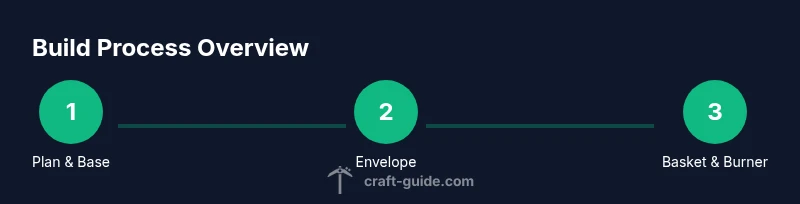
To build a minecraft hot air balloon, assemble a tall vertical frame as the balloon’s spine, add a colorful envelope using wool blocks, position a burner underneath with a campfire, and craft a small basket from fence posts and slabs. This creates a visually convincing sky craft you can use for bases or tours.
What is a minecraft hot air balloon and why build one?
A minecraft hot air balloon is a decorative skycraft that simulates buoyancy using an envelope, burner, and basket to create the illusion of lift. The concept blends real-world balloon design with Minecraft aesthetics, giving your world a dramatic focal point and practical waypoint for aerial tours. According to Craft Guide, a well-executed balloon adds vertical scale and storytelling to your world. The Craft Guide team found that players use balloons to mark landmarks, guide skyward routes, and stage aerial photography in both Creative and Survival modes. The key is balancing realism with game-friendly blocks so the structure feels light and buoyant rather than top-heavy. In this guide we’ll explore core design concepts, material choices, and actionable steps to craft a convincing sky vessel that fits your map’s terrain and mood.
Core components: envelope, burner, basket
A balloon’s envelope is the visible balloon shell, the burner provides a visual heat source, and the basket serves as the seating and anchor point. In Minecraft terms, the envelope is built from colored blocks arranged in a rounded, balloon-like silhouette. The burner is represented by a small fire source on a safe pedestal beneath the envelope, often paired with subtle glow or smoke effects to imply heat. The basket is typically a compact rectangle formed from fence posts, slabs, and optional chests or barrels for props. A successful balloon maintains proportional relationships: a tall envelope with a compact basket feels buoyant, while a heavy-looking stand or misaligned suspension can ruin the illusion. When planning, sketch a simple side view to ensure your lengths and angles read clearly from a distance.
Materials and color schemes
Choosing the right materials determines how believable your balloon looks from ground level. Wool blocks are ideal for the envelope because they come in vibrant colors and are easy to shape. A multi-color pattern—alternating bands or panels—adds visual interest and mimics real-world balloon fabrics. For the burner, a campfire placed on a small raised block works well; you can pair it with a glowstone or lantern above to simulate the glow without overpowering the scene. The basket benefits from fence posts for vertical structure and slabs for a sturdy top edge. Don’t forget basic ground anchors: a stable platform made of stone or brick blocks and a few ladders or vines to suggest tie-downs. Finally, add subtle shadows with under-blocks to reinforce depth and buoyancy in daylight lighting.
Building layout: base, anchor, and ascent path
Map out a clear ascent path from the ground to the balloon’s apex. Start with a wide, stable base platform so the balloon appears to lift smoothly rather than tilt. The envelope should rise from the central spine in a symmetrical arc; keep the burner directly beneath the envelope’s center to suggest even heat distribution. Attach suspension lines using thin blocks or fence posts leading from the envelope to the basket. If you want elevation variety, add a few stepping blocks or a small scaffold on the side to simulate ascent or descent. Aim for proportions where the balloon’s top is roughly three to four times taller than the basket’s height for a pleasing silhouette at distance.
Aesthetics and realism: textures, lighting, and patterns
Texture decisions dramatically affect the perception of buoyancy. Use lighter colors for the envelope to convey airiness and contrast with a darker ground shadow. Introduce subtle paneling by alternating block colors or adding edge blocks to simulate seams. Lighting matters: keep the burner area brighter but avoid glare that hides the balloon’s shape; glowstone or lanterns can provide warmth without overwhelming the scene. Patterns—such as stripes, checkerboards, or diagonals—give your balloon character and help it read from afar. For realism, include small atmospheric touches like a tiny balloon tether or a distant cloud wall in the background. The best balloons feel intentional rather than improvised, so take time to align angles and verify symmetry from multiple viewpoints.
Practical testing: how to test lift and stability
Testing is about perception as much as structure. Place the balloon on a flat, open area and walk around at different distances to gauge how it reads from ground level. If the envelope appears lopsided, adjust the balloon’s vertical spine or base anchor. Ensure the basket remains level as you move the surrounding blocks; a tilting basket breaks the illusion. You can simulate motion by temporarily shifting the balloon’s vertical components and re-checking the silhouette. In Survival mode, be mindful of mobs and terrain obstructions when you move the balloon into position. The goal is a stable, visible beacon that looks as though it could drift with a gentle headwind.
Variations and integration with builds
A hot air balloon can be integrated into many builds: a hillside airfield, a floating village, or a sky harbor above a city. Experiment with envelope shapes—more elongated forms read as taller balloons, while rounder envelopes feel lighter. Try color themes that match your world’s palette: warm sunset tones for a harborside balloon or cool blues for a high-altitude beacon. Consider adding minor details such as a small raft of banners along the envelope seam or a couple of decorative gondola blocks to insinuate passengers. Whatever you choose, ensure the balloon complements your terrain and color story, never overpowering the surrounding builds.
Troubleshooting common issues and fixes
If the balloon reads as too heavy, reduce the envelope height or lighten the color palette to imply lighter materials. If the basket appears disconnected, re-route the suspension lines and confirm the central spine is aligned with the base. Glare from bright blocks can obscure the silhouette—swap to slightly muted colors or add a thin outline using contrasting blocks. In case the balloon obstructs a path or landmark, adjust its position or scale relative to nearby structures. Finally, test under different lighting conditions (day and night) to ensure readability across the game’s lighting engine.
Tools and methods for showcasing: tips for sharing your build
Capture screenshots and short videos from a variety of angles: ground-level approaches, mid-air views, and distant panoramas to highlight the balloon’s silhouette. Use consistent lighting to reveal colors and seams, and add a simple caption in-game to explain the balloon’s purpose within your world. If you’re comfortable, share a seed or schematic snippet to help others reproduce your design. Craft Guide encourages you to iterate; use player feedback to refine color choices, proportions, and integration with other sky-based builds. A well-done hot air balloon can become a signature landmark in your Minecraft world.
Tools & Materials
- Wool blocks (colored for envelope)(Choose 3-5 colors for a multi-panel look; pattern enhances readability from a distance)
- Fence posts(Forms the basket frame; use 2x2 or 3x3 basket size depending on scale)
- Slabs or planks(Top edge and basket base; helps reduce blocky appearance)
- Campfire(Provides burner effect; pair with a glow source for glow without overpowering light)
- Glowstone or lanterns(Adds warm glow near the burner area)
- Base platform blocks (stone/bricks)(Stable ground for launch and anchor; keeps balloon from tipping)
- Ladders or vines(Assist ascent to canopy level during construction; optional but handy)
- Scaffolding or slime blocks(Optional buoyancy or easy access during build; use with care to avoid instability)
Steps
Estimated time: 2-4 hours
- 1
Plan the balloon
Map your build location and determine envelope size in advance. Sketch a simple side profile to ensure the balloon reads correctly from ground level and from a distance. Decide color palette and how you’ll anchor the balloon to a base platform.
Tip: Draft a quick 2D plan on paper or in-game boards to keep proportions consistent. - 2
Build the base platform
Lay a stable square or rectangular platform using stone or brick blocks. This acts as your windbreak and anchor, so it should be level and wide enough to support the basket. Add a few ground supports to suggest permanence.
Tip: Keep the base footprint noticeably larger than the basket to prevent tipping visuals. - 3
Construct the basket
Place fence posts to form a compact rectangular basket under the envelope. Add slabs on top for a flat deck and a few chest blocks or barrels for props. Secure the basket to a central anchor under the envelope with lines.
Tip: Use a 2x2 or 3x3 basket for balance; avoid a bulky basket that dominates the silhouette. - 4
Shape the envelope
Build the balloon envelope from colored wool blocks in a rounded shape. Use alternating colors or panels to simulate fabric seams. Ensure the envelope dimensions align with the basket and central spine.
Tip: Start with a rounded base and taper toward the top for a classic balloon silhouette. - 5
Add the burner
Place a campfire directly beneath the envelope center on a sturdy block pedestal. If you want a warmer glow, add a glowstone or lantern just off-center to mimic heat rising upward.
Tip: Keep flames visually small to avoid overpowering the balloon’s color pattern. - 6
Attach suspension lines
Run a few lines from the envelope’s midpoint to the basket’s corners using thin blocks or fence posts. The lines should be taut and evenly spaced, giving the impression of controlled lift.
Tip: Symmetry is critical; uneven lines will look like the balloon is leaning. - 7
Finalize lighting and details
Add subtle shading with edge blocks, introduce signage or insignia if desired, and test from multiple angles. Ensure the balloon remains readable under daylight and night lighting.
Tip: A final pass with a camera at different distances helps verify silhouette quality.
People Also Ask
What materials are best for the envelope of a Minecraft hot air balloon?
Wool blocks in multiple colors work well for an envelope because they’re easy to shape and read from a distance. Patterns like stripes or panels help define the balloon’s form. You can also mix wool with stained glass for brighter highlights, but keep balance so the envelope remains the dominant silhouette.
Wool blocks in multiple colors work great for the envelope, especially with stripes or panels to read from afar.
Does a hot air balloon actually float in Minecraft?
In Minecraft, a hot air balloon is a decorative construct that conveys buoyancy through height and silhouette. It won’t lift physics-wise, but a well-proportioned envelope and basket paired with a burner effect creates a convincing floating appearance.
In Minecraft, it’s a decorative build that looks like it’s floating, not an actual physics-based lift.
Is this build suitable for Survival mode?
Yes. Gather materials through mining and trading, then place blocks carefully. In Survival you’ll want a secure ground base and potentially a simple scaffold for assembly, but the balloon can be built with standard, obtainable resources.
Absolutely. You can build it in Survival using normal materials and careful placement.
How tall should the balloon be relative to terrain?
Aim for a silhouette that stands out yet remains integrated with the landscape. A balloon around 15-25 blocks tall provides a dramatic skyward presence without overpowering nearby structures.
15 to 25 blocks tall often works well—tall enough to be striking, not overwhelming.
Can I automate the balloon to rise or descend?
Vanilla Minecraft does not support automatic buoyancy for decorative balloons. You can simulate movement with redstone contraptions or command blocks in creative experiments, but it’s mostly a visual effect.
There isn’t automatic buoyancy in vanilla Minecraft; you’d simulate it with redstone or commands in creative mode.
What are common mistakes to avoid?
Avoid an overly heavy envelope with a bulky basket, misaligned suspension lines, and poor lighting that obscures the silhouette. Also ensure you aren’t blocking important paths or key landmarks when placing the balloon.
Common mistakes include a heavy-looking envelope, misaligned lines, or lighting that hides the shape.
Watch Video
The Essentials
- Plan the balloon’s proportions before placing blocks
- Use a contrasting envelope pattern for visibility
- Anchor the basket securely to a stable base
- Test readability from multiple angles before finalizing