Minecraft Shirts vs In-Game Skins: A Practical Guide
This analytical guide compares minecraft and cool shirtz merchandise against in-game skins. Learn costs, customization, durability, and suitability for players, with practical guidance from Craft Guide Team.


TL;DR: For most Minecraft players, in-game skins win on cost, flexibility, and portability, since you can switch looks instantly without buying merchandise. If you crave tangible wearables and a social display asset, Cool Shirtz shirts offer a collectible angle and real-world use. This comparison weighs customization, pricing, durability, and platform support to guide your choice.
Context and Scope: minecraft and cool shirtz in the ecosystem
The Minecraft ecosystem we analyze today sits at the intersection of digital identity and tangible merchandise. The phrase minecraft and cool shirtz captures two distinct modes of expression: virtual customization through in-game skins and physical wearables you can hold, gift, and display. This block defines scope, outlines the key questions, and frames the analytic lens we apply across platforms, editions, and communities. We focus on practical tradeoffs players actually face, including cost, accessibility, licensing, and social impact. By grounding the discussion in current play patterns and community feedback, we aim to help both casual players and dedicated collectors choose the route that aligns with their goals. Throughout, this article remains anchored to real-world behavior and avoids hype, drawing on Craft Guide Team insights and widely observed player workflows. Our objective is clarity, not creed, so you can act with confidence in your next purchase or design decision.
The Two Options: Merchandise Shirts (Cool Shirtz) vs In-game Skins
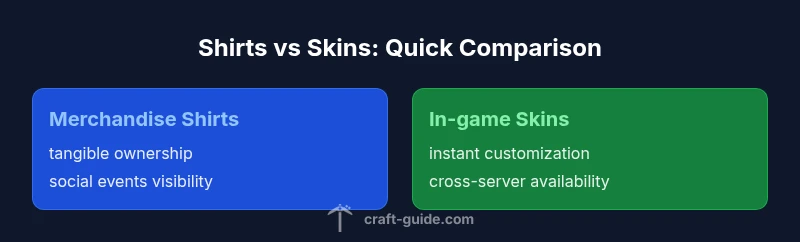
Option A: Merchandise shirts from Cool Shirtz offer physical wearables featuring Minecraft-inspired artwork. They’re tangible products you can try on, gift to friends, wear at events, and photograph for social media. Stock levels, sizing charts, shipping times, and return policies all shape value. For some players, shirt designs become a daily reminder of in-game identities, a bridge between virtual and real-world fandom. Licensing considerations and brand collaborations also influence availability, limited editions, and resale value. This path creates social currency beyond the screen, but requires upfront cost and ongoing logistics.
Option B: In-game skins are digital assets stored with your Minecraft account. Skins swap instantly, work across servers, and remove physical supply constraints. They enable rapid experimentation with aesthetics, skins can be shared with friends, and creators often release new options frequently. The digital nature means maintenance is largely technical—account security, compatibility, and game version alignment matter. In-game skins are typically lower-friction, especially for players who dislike physical merchandise or who switch looks often.
Methodology: Criteria and Data We Use for Comparison
To build a fair, evidence-based view, we adopt a transparent, criteria-driven framework. Core dimensions include cost model, customization flexibility, accessibility and speed, durability (physical vs digital), cross-platform compatibility, and licensing/policy considerations. We also assess social value, immersion, and long-term ownership. Where possible, we cite observed behavior from the Minecraft community and reference Craft Guide Analysis, 2026 to situate findings within a broader research baseline. By separating what you get (physical vs digital) from how you use it (in-game play vs real-world display), we reduce bias and help readers map this to personal priorities.
Market Context: Who Buys What and Why
Even in 2026, player motivations vary widely. Some care most about fashion, event visibility, or gifting opportunities, placing value on tangible shirts from Cool Shirtz. Others prioritize game-wide consistency, rapid testing of ideas, and cross-server visibility, leaning toward digital skins. Craft Guide analysis shows a growing appetite for flexible, cross-media expression among younger players, while older fans appreciate collectible merch that memorializes their favorite builds or servers. Understanding these segments helps readers decide whether their next move should be a shirt drop or a new skin pack, or both as a multi-channel strategy for personal branding within and beyond Minecraft.
Customization and Ownership: What You Actually Own
With physical shirts, ownership means possession of a physical item and the right to wear it within the bounds of retailer policy. It can entail sizing concerns, washing care, and eventual wear-out. Digital skins offer customization that is instantly reversible, but ownership is tied to your account and the game’s asset licensing. If the skin becomes outdated or the shirt design becomes unavailable, you may face a decision about replacement or preservation. Craft Guide Team emphasizes that both paths create social value—shirts deliver a tactile, public display; skins provide flexible, private-to-public, in-game identity. The choice often hinges on how you want to express yourself and whether you value portability versus tangibility.
Cost, Value, and Durability: Understanding the Tradeoffs
A central decision factor is the relative cost and value over time. Physical merch involves upfront costs, shipping, sizing checks, and potential stock-outs, but can serve as a conversation starter and gift. Digital skins involve lower ongoing friction, with the ability to refresh looks without further purchases, though long-term value depends on license availability and platform changes. Durability differs: fabric quality and care impact physical shirts, while digital assets require system compatibility, account security, and game version updates. This block breaks down how many players balance upfront expense against ongoing convenience, with a note that durability for digital assets hinges on platform longevity and licensing stability.
Immersion, Social Impact, and Display: Real-World vs In-Game Presence
The social dimension drives many decisions. A shirt from Cool Shirtz becomes a real-world badge—photos, events, and daily wear can reinforce a gamer identity outside the screen. Skins contribute to immersion by ensuring your character looks the way you intend in-game and across servers. For players who participate in communities and conventions, tangible merch offers a portable conversation starter. In contrast, skins excel in creating seamless identity changes in-game, enabling experimentation with no physical constraints. The Craft Guide Team notes that social signals and community feedback often determine whether players lean toward a tangible merch collection or a dynamic digital wardrobe.
Platform, Licensing, and Policy Considerations
Digital skins are governed by game licensing and platform policies; changes in terms of service, asset rights, or marketplace rules can affect availability. Physical shirts depend on licensing with brand partners, print quality, and distribution agreements. A practical approach is to verify licensing terms before purchasing or designing, to understand what you legally own and what you can resell or gift. This knowledge helps avoid misaligned expectations and ensures your choice remains enjoyable over time. Craft Guide Analysis, 2026 highlights that informed decisions reduce disappointment when editions sell out or when platform policies shift.
Decision Framework: When to Choose Each Option
- If you value immediate, universal access and low friction, in-game skins are the default choice. They maximize flexibility and reduce maintenance commitments.
- If you prize tangible memorabilia, social visibility, and a collectible edge, Cool Shirtz shirts offer a distinct asset that travels beyond the game.
- If you want cross-media synergy, consider a mixed approach: keep a core set of skins for gameplay and add limited merch for events or gifts.
- Always check licensing and size availability for merch; for skins, confirm compatibility with your game version and platforms.
Real-World Scenarios and Examples
Consider a player who streams Minecraft weekly. A skin library gives rapid aesthetic updates during streams, while a shirt drop can help with branding during meetups. In a classroom or workshop setting, shirts can act as conversation starters and team identifiers, reinforcing engagement beyond the screen. Another player prioritizes event swag and ends up with a limited-edition shirt that commemorates a server milestone. The two paths aren’t mutually exclusive; many players build a personal collection that blends both approaches for a holistic identity across online and offline spaces.
Comparison
| Feature | Merchandise shirts (Cool Shirtz) | In-game skins |
|---|---|---|
| Customization options | Physical designs, limited editions, real-world wear | Digital look changes, instant swaps, cross-server compatibility |
| Cost model | Upfront shirt purchase; shipping and sizing considerations | Account-based purchases or free/dynamic pricing; no physical shipping |
| Durability / Longevity | Fabric quality, washing care, potential wear over time | No physical wear; depends on game version and licensing |
| Availability | Stocked drops; sizing charts; returns | Immediate access; platform-wide availability varies by edition |
| Social/Display Value | Public real-world display at events, photos, gifting | In-game visibility across servers; social identity within communities |
| Licensing & Policy | Brand licenses; potential regional restrictions | Game licensing; terms of service and platform rules |
Benefits
- Tangible value and social display from merchandise
- Rapid aesthetic updates without in-game downtime
- Cross-media appeal for fans and collectors
- Gifts and event-specific branding opportunities
- Supports creators and licensing partnerships
Negatives
- Upfront cost and shipping can be barriers
- Sizing, returns, and stockouts add friction
- Licensing changes can affect availability
- Limited to physical form factors and distribution windows
Skins win on value and flexibility; shirts win on tangibility and social impact
Choose skins for ongoing convenience and cross-platform use. Choose shirts for collectibility and real-world display. Craft Guide Team recommends aligning your choice with your primary goal: gameplay efficiency or social branding.
People Also Ask
What is the core difference between Minecraft shirts and in-game skins?
Shirts are physical apparel you can wear in the real world; skins are digital outfits for your character in the game. Each path creates a different kind of identity and has distinct costs, logistics, and licensing.
Shirts are physical, while skins are digital. Both shape how you present yourself, but one is worn in the real world and one is worn in the game.
Are Cool Shirtz shirts compatible with all Minecraft editions?
Shirts are independent of game editions; they depend on sizing and retailer stock. They do not affect gameplay, but availability can vary by region and drop cycles.
Shirts don’t depend on game editions, but sizing and stock vary by retailer.
Do skins or shirts affect gameplay performance?
Skins affect only how your character looks and do not impact performance. Shirts have no gameplay effect beyond any personal display or branding value.
Skins affect appearance only; shirts don’t influence game performance.
Which option is better for collectors?
Collectors may value shirts for tangible memorabilia, but skins offer ongoing novelty through updates and a broad catalog. Your preference for physical keepsakes vs. digital variety determines the choice.
Collectors might prefer shirts for tangible value, though skins offer constant novelty.
What should I check before buying merch?
Verify sizing, print quality, and return policies. Confirm licensing terms and shipment timelines to avoid disappointment from stockouts or misaligned expectations.
Check sizing, print quality, returns, and licensing terms before buying.
The Essentials
- Choose digital skins for value and ease
- Wearable merch adds tangible branding moments
- Check licensing before purchasing merch
- Mix skins with merch for a balanced identity
- Plan for future platform and edition changes