Couch Minecraft: Cozy Vanilla Couch Builds Guide
Learn to craft cozy vanilla couches in Minecraft with step-by-step builds, color options, and placement tips. Perfect for beginners to advanced builders looking to elevate interiors without mods.


Build a cozy couch in vanilla Minecraft using simple blocks like stairs, slabs, and carpets. This guide shows 3 ready-made styles, color options, and placement tips to elevate any room without mods. Includes step-by-step instructions and practical decorating ideas.
Why a Couch Elevates Minecraft Interiors
In many minecraft builds, seating is an afterthought. A well-placed couch can anchor a living room, a cabin, or a snug cozy corner, making the space feel lived-in and believable. For players focusing on practical tutorials, a couch Minecraft is more than decoration: it signals scale, style, and function. According to Craft Guide, thoughtful furniture choices can dramatically improve the perceived quality of a build, even when the blocks used are simple vanilla materials. When you introduce a couch, you invite players to imagine conversations, hiding spots, and social hubs right inside your world. The goal is to create an inviting seat that respects the room’s proportions, matches the lighting, and aligns with the surrounding blocks. Start by measuring your room’s footprint; plan a seating area that doesn’t obstruct doors or pathing. This block will explore how to translate real-world couch concepts into Minecraft blocks, using stairs as the frame, slabs to add depth, and carpets for cushions. The result should look comfortable from eye level, not just from a top-down map.
The Craft Guide team emphasizes that even a simple couch can define a room’s character. By thinking about scale and color, you can make a small corner feel intentional and cozy, a principle we apply in every tutorial. For couch Minecraft projects, begin with a clear silhouette and a single color family to keep the build cohesive.
note”:null},
bodyBlocks2
Vanilla Materials: What You Actually Need
A great couch in vanilla Minecraft relies on a few sturdy, repeatable components. The aim is to assemble a seat that reads as a sofa without introducing items that break the block-based illusion. The core framework uses Oak Wood Planks as the base, with Oak Wood Stairs forming the arms and back. Oak Wood Slabs can thicken cushions or create a low-profile edge. Carpets colored to your room’s palette simulate cushions, and Dye can tailor those colors to fit lighting and other furniture. If you want a slightly taller back, use additional stairs to build a backrest of two or three blocks high. For a sleeker, modern look, you can substitute smooth slabs for the cushion edge and place carpets on top to give a soft finish. Optional accessories like Trapdoors can act as armrests or back supports for more texture. Remember to keep your color choices cohesive with the rest of the room; a mismatched palette will distract from the couch’s silhouette.
Craft Guide analysis shows that sticking to 2-3 tones helps the couch read clearly from across the room, especially in dim lighting. This makes the space feel designed rather than cobbled together.
note2”:null},,
bodyBlocks3
Basic Couch Constructions: 3 Ready-to-Use Styles
Here are three reliable vanilla-style couches you can build in under 30 minutes each. Use these as templates and adapt the color palette to your room.
Traditional Sofa
- Build a 3-block long seat using Oak Wood Planks. Place Oak Wood Stairs at each end for arms. Add 1-2 rows of Carpet on top for cushions. Finish with a backrest using more stairs.
- Reason: Clear profile and classic silhouette that reads as a sofa from eye level.
- Tip: Use lighter boards for the frame to make the cushions pop against dark walls.
Modern Low-Profile Couch
- Create a 4-block long base with Oak Wood Slabs to keep a slim look. Place Stairs only on the back edge as a shallow backrest. Top with a single row of Carpet in a solid color.
- Reason: Minimalist look that suits modern builds and brighter rooms.
- Tip: Pair with a matching rug and a single-floor lamp for balance.
Corner Couch (L-Shape)
- Form an L by placing a 3-block long section along the wall and a 2-block leg along the adjacent wall. Use Slabs to bevel the edge and Carpet cushions on top.
- Reason: Maximizes seating in tight spaces and reads well in corner areas.
- Tip: Use Trapdoors at arm heights to create texture without increasing height.
Craft Guide notes that mixing shapes within a single room creates visual interest, so feel free to combine these styles across different walls to tell a cohesive story.
tip”:
Tools & Materials
- Oak Wood Planks(Base frame and long surfaces for the couch)
- Oak Wood Slabs(Edge thickness for cushions and subtle shapes)
- Oak Wood Stairs(Arms and back support to define the silhouette)
- Carpet (any color)(Cushions; dye to match room palette)
- Dye (for carpet colors)(Tints to customize cushion colors)
- Trapdoors(Optional armrests or back texture)
Steps
Estimated time: Total estimated time: 15-25 minutes
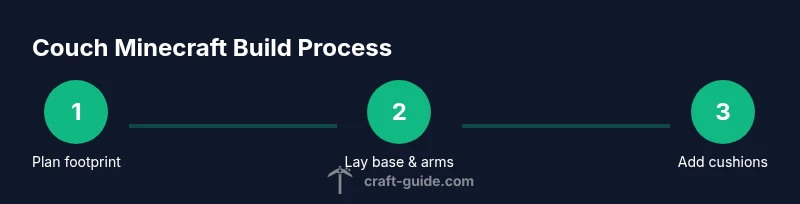
- 1
Plan the footprint
Measure the room in blocks and mark where the couch will sit. This ensures the couch doesn’t block doors or pathways and fits the space comfortably. Why: A well-sized couch reads as intentional furniture and supports future layout planning.
Tip: Use string or wool to mark a temporary boundary before placing blocks. - 2
Lay the base with planks
Create a rectangle the length of your chosen style using Oak Wood Planks. This forms the seat frame and helps keep the couch level with the floor. Why: A sturdy base prevents wobbling visuals and makes the sofa feel solid.
Tip: Align the long side with a wall for natural framing. - 3
Add the back and arms
Attach Oak Wood Stairs at the ends for armrests and stack stairs or slabs to build a backrest. The back height should align with the room’s seating line of sight. Why: Defines the couch’s silhouette and improves readability from distance.
Tip: If your space is tight, keep the back low to avoid blocking light. - 4
Create cushions with carpet
Place Carpet on top of the plank surface to simulate cushions. Use different colors for seat cushions vs. back cushions to add depth. Why: Texture and color read as comfort, not just color blocks.
Tip: Experiment with light-blue or warm-toned carpets to influence mood. - 5
Fine-tune the edges
Add 1-block-thick edges with Slabs on the front to give a rounded look. Optional: place Trapdoors as small armrests for extra texture. Why: Small details improve realism and tactile feel in builds.
Tip: Avoid cutting corners with too many blocks; keep it cohesive. - 6
Place and test in room
Position the couch in the planned spot, adjust nearby furniture, lighting, and paths. View the room from eye level in-game to ensure balance. Why: Realistic placement depends on whole-room balance, not just the sofa.
Tip: Move the couch a block or two if it visually blocks a doorway.
People Also Ask
What materials do I need to start a couch build in vanilla Minecraft?
You’ll primarily use Oak Wood Planks, Oak Wood Slabs, Oak Wood Stairs, Carpet, and optional Dye to color the cushions. Trapdoors can add armrests if desired. Start with a simple base and expand using these core blocks.
Use oak planks, stairs, slabs, and carpet to start; add dye for color if you want a specific look.
Can I make a couch in a small space without blocking doors?
Yes. Use a compact layout like a 4x2 footprint with low back height, and lean toward warm, light colors to maximize perceived space. Corner couches are especially efficient for tight rooms.
Opt for a compact L-shape or a straight, low-profile couch to save space.
Are there harder or easier ways to build cushions?
Carpets on top of a planked base are the simplest approach. For more texture, stack carpets or swap the height of the back with additional stairs. Experiment with color to match or contrast the room.
Carpets are the easiest cushion proxy; you can layer for depth.
How can I make the couch look cozier with lighting?
Place a warm glow from torches or lanterns nearby and use softer colors for cushions to create a welcoming mood. Avoid harsh, bright lighting directly on the couch.
Use warm lighting and soft colors to create a cozy look.
Can I create different couch styles in the same room?
Absolutely. Use the three basic styles—traditional, modern, and corner—in alternating sections of a room. Keep color families consistent to maintain harmony.
Feel free to mix styles as long as the color and scale stay cohesive.
What’s the best way to extend a couch into a seating arrangement?
Build a long sofa that connects to a secondary seating area or a coffee table. Use consistent materials so the extension reads as part of a cohesive set.
Extend the couch carefully to keep the flow of the room intact.
Watch Video
The Essentials
- Plan the footprint to fit your room
- Mix textures with stairs, slabs, and planks
- Color with carpets to unify the decor
- Test lighting to avoid unflattering shadows
- Experiment with variations for different builds